
Claim Your Free Estimate Today
Table of Contents
- Can You Really Fix a Sewer Backup Without Digging?
- Step 1: Diagnose the Blockage with a Sewer Camera Inspection
- Step 2: Clear the Line with Hydro Jetting vs Snaking
- Step 3: Repair the Pipe with Trenchless Methods Like CIPP Lining
- Understanding Trenchless Sewer Repair Cost and Value
- Emergency Steps to Take While You Wait for a Plumber
- When Digging Is the Only Option
- Conclusion: Your No-Dig Path to a Clear Sewer Line
- Frequently Asked Questions
Last Updated: September 7, 2026
Can You Really Fix a Sewer Backup Without Digging?
Yes, most sewer backups can be fixed without digging, provided the pipe has not completely collapsed. Trenchless sewer repair restores or replaces underground pipes with minimal excavation and has become the standard of care for many residential blockages. At Acclaimed Drain And Plumbing Solutions, LLC, we resolve sewer backup issues using camera diagnostics and no-dig repair techniques that protect your landscaping.
The key distinction is between clearing a blockage and repairing the pipe itself. A clog from grease or root intrusion is a clearing problem, while cracked, offset, or deteriorated pipes require structural rehabilitation.
Below is a diagnostic and repair sequence, so you know what to expect and can ask your plumber the right questions.
Step 1: Diagnose the Blockage with a Sewer Camera Inspection
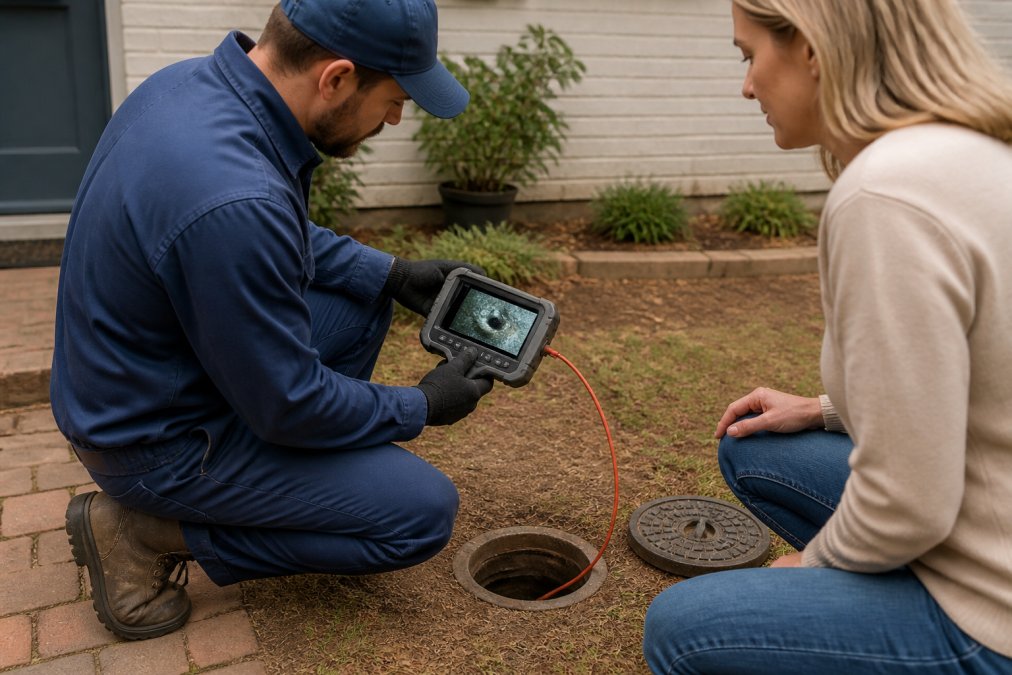
A sewer camera inspection is the only reliable way to determine why your line is backing up. A waterproof camera on a flexible rod is sent through an access point, and the live video feed reveals the exact location, nature, and severity of the problem.
Skipping this step leads to guesswork, repeated cleanings, and wasted money. A plumber who recommends repairs without first running a camera is not giving you a complete diagnosis.
What a Camera Reveals That Guessing Cannot
The camera tells you whether you have a simple blockage or a failing pipe. Common findings include grease buildup, foreign objects, root intrusion through joints, offset pipe sections, and cracks that allow soil to enter.
Step 2: Clear the Line with Hydro Jetting vs Snaking
Once the camera identifies the blockage, the next decision is how to clear it. A drain snake is a rotating cable that physically breaks through clogs, while hydro-jetting uses highly pressurized water to scour the pipe walls clean.
Hydro jetting vs snaking is not a competition; they solve different problems. Snaking punches a hole through a solid blockage so water can flow again, but it leaves debris on the pipe walls. Hydro-jetting removes grease, scale, and roots completely, restoring the full interior diameter.
| Method | Best For | Limitation |
|---|---|---|
| Drain Snake | Solid clogs, foreign objects | Leaves residue on pipe walls |
| Hydro-Jetting | Grease buildup, root intrusion, recurring backups | Not for severely deteriorated pipes |
Watch Out
Do not use a chemical drain cleaner before a camera inspection (the EPA). These products can damage pipe materials and create hazardous conditions for the plumber working on your line.
Do not use a chemical drain cleaner before a camera inspection (the EPA). These products can damage pipe materials and create hazardous conditions for the plumber working on your line.
Step 3: Repair the Pipe with Trenchless Methods Like CIPP Lining
If the camera reveals cracks, corrosion, or open joints, clearing the line is only a temporary fix. The pipe will fail again, and the sewer backup will return. This is where trenchless repair methods, specifically Cured-in-Place Pipe (CIPP) lining, become the solution.
How CIPP Lining Actually Works
CIPP lining is a process with a specific sequence. First, the plumber thoroughly cleans the host pipe with hydro-jetting to remove all debris, grease, and roots. Next, a felt or fiberglass tube saturated with thermosetting epoxy resin is inserted into the line, either by pulling it through from an access pit or by inverting it with air pressure so it turns itself inside out as it travels down the pipe.
Once in position, the liner is inflated to press tightly against the interior walls of the old pipe, then cured. Hot water curing is the traditional approach and takes several hours; UV curing uses a liner embedded with fiber optics and can harden the resin in under an hour. After curing, the plumber runs a camera through the new pipe to verify there are no voids, wrinkles, or delaminated sections.
The result is a smooth, jointless, structural pipe within the old one. CIPP is not a coating; it is a full structural replacement that carries the load of the surrounding soil.
Lifespan and Warranty Expectations
A properly installed CIPP liner has a design life of 50 years, per ASTM F1216 (astm.org). However, the actual lifespan depends heavily on installation quality; a liner over a poorly cleaned pipe, or one not fully cured, can fail within a few years.
Most manufacturers offer a transferable warranty on the liner material, typically 10 to 25 years. Before signing, ask for both warranties in writing and confirm what is covered.
Pipe Material Compatibility: What Works and What Does Not
CIPP lining is not a universal fix. The condition and material of your host pipe matter significantly.
- PVC and ABS: These modern plastics are excellent candidates for CIPP lining, provided they have not collapsed. The smooth interior allows for strong adhesion.
- Cast Iron: Lining cast iron is common and effective, especially for pipes with internal corrosion and pitting. The liner seals the rough interior and restores flow capacity.
- Clay: Older clay tile pipes are also good candidates, provided the joints are not too offset. The liner bridges small gaps and seals root intrusion points.
- Orangeburg: This bituminous fiber pipe from the mid-20th century is often too deteriorated and fragile to support a liner. If the camera shows Orangeburg that is soft, delaminating, or crushed, pipe bursting or excavation is usually the better choice.
- Corrugated Metal: Rare in residential sewer laterals, but if present, corrugated metal is not suitable for CIPP lining because the liner cannot bridge the corrugations effectively.
A contractor will often recommend CIPP for clay or cast iron, but will pivot to pipe bursting or excavation if the camera reveals extensive offset joints (more than 1/4 inch) or a belly. A belly is a dip in the pipe where water pools; a liner cannot correct this grade problem.
When Pipe Bursting Is the Better Call
Pipe bursting is the other primary trenchless method, used when the existing pipe is too damaged to line but soil conditions allow a new pipe to be pulled through. A bursting head is inserted into the old pipe from an access pit; as it is pulled through, it fractures the old pipe outward and simultaneously pulls a new high-density polyethylene (HDPE) pipe into place behind it.
Pipe bursting requires two small access pits, typically 4 to 6 feet square, at either end of the damaged section. It is more disruptive than CIPP lining because of these pits, but far less disruptive than a full trench. It is the right choice when the old pipe has collapsed, is severely deformed, or is made of Orangeburg.
The trade-off is that pipe bursting requires more clearance and is not suitable for all yard conditions. If the line runs under a large tree with extensive roots, or too close to other underground utilities, the bursting head may cause damage.
Pro Tip
Ask your plumber to show you the camera footage and explain why they are recommending CIPP lining versus pipe bursting. The decision should hinge on the pipe material, the degree of structural damage, and the presence of bellies or severe offsets.
Ask your plumber to show you the camera footage and explain why they are recommending CIPP lining versus pipe bursting. The decision should hinge on the pipe material, the degree of structural damage, and the presence of bellies or severe offsets.
Understanding Trenchless Sewer Repair Cost and Value
Trenchless sewer repair cost is generally higher upfront than a simple cleanout, but significantly less expensive than traditional pipe replacement. Because no trench is dug, you save on landscaping restoration, driveway repair, and the labor of moving tons of soil.
Cost varies widely based on pipe length, diameter, accessibility, and the condition of the existing line. Expect a quote only after a camera inspection and site evaluation.
Key Takeaway
The real cost comparison is not liner versus digging. It is a permanent structural repair versus repeated emergency cleanouts that never address the underlying pipe failure.
The real cost comparison is not liner versus digging. It is a permanent structural repair versus repeated emergency cleanouts that never address the underlying pipe failure.
For a long-term solution, a quality trenchless repair should come with a workmanship guarantee, and you should confirm the expected lifespan of the liner material before committing.
Emergency Steps to Take While You Wait for a Plumber
A sewer backup is a health hazard, and how you respond in the first hour matters (the CDC). Stop using all water in the house immediately, including toilets, sinks, and showers. Every gallon you send down the drain adds pressure to an already failing system and increases the risk of sewage overflow into your living space.
Claim Your Free Estimate Today →
If sewage is backing up into a floor drain or tub, do not attempt to clear it yourself. Open a window for ventilation and avoid contact with the water, as it may contain harmful bacteria.
Document Everything for Your Insurance Claim
This is the step most homeowners miss, and it can cost you thousands of dollars. Before any work begins, document the situation thoroughly. This evidence is critical for a potential homeowners insurance claim.
Start by taking photos and videos of any sewage backup, capturing the affected rooms, standing water, and damaged belongings. Then document the timeline: when you first noticed the backup, when you stopped using water, and when you called the plumber.
Next, preserve any physical evidence. If debris or a foreign object came up through a drain, do not throw it away. Place it in a plastic bag and label it.
Does Homeowners Insurance Cover Sewer Backup?
The short answer is: it depends on your policy. Standard homeowners insurance policies typically do not cover sewer backups. They are considered a maintenance issue or a preventable loss, not a sudden and accidental event.
However, many insurers offer a separate sewer backup endorsement or rider for an additional premium, usually between $50 and $250 per year. This endorsement covers damage to your home and belongings caused by a sewer or drain backup, but not the cost of repairing the sewer line itself.
If you have this endorsement, your claim is subject to your policy deductible. The coverage limit is often separate from your main dwelling coverage, typically ranging from $5,000 to $25,000. Check your policy declarations page to see if you have this endorsement and what the limit is.
What to Do If Your Claim Is Denied
An insurer often denies a sewer backup claim because the cause is determined to be gradual deterioration or root intrusion, excluded as a maintenance issue. If denied, first ask the adjuster for a written explanation, then review your policy language carefully.
If the appeal fails, contact your state’s department of insurance. Every state has a consumer complaint process, and regulators will review whether the insurer acted in good faith.
Protecting Your Property While You Wait
While you wait for the plumber, focus on preventing further damage. If sewage is backing up into a basement floor drain, place a heavy object like a sandbag or brick over the drain cover to slow the flow.
If you have a sump pump, check that it is working; it can help remove groundwater adding pressure to your sewer line. If the backup is in a finished basement, move furniture and belongings away from the affected area.
Watch Out
Never mix cleaning chemicals with sewage water. The combination can create toxic fumes. Use only clean water and a mild detergent to rinse affected surfaces after the plumber has cleared the line.
Never mix cleaning chemicals with sewage water. The combination can create toxic fumes. Use only clean water and a mild detergent to rinse affected surfaces after the plumber has cleared the line.
The Value of a Pre-Existing Condition Inspection
If you are buying a home or have never had your sewer line inspected, consider a camera inspection before an emergency occurs. Many municipalities offer free or low-cost sewer line inspections as part of a home sale or water bill credit program. Knowing your line’s condition before a backup gives you time to plan a trenchless repair on your schedule.
Documenting your line’s condition with a camera inspection also strengthens a future insurance claim. If you can show the line was in good condition before a sudden event, such as a tree root puncturing the pipe after a storm, you have a stronger case for coverage.
When Digging Is the Only Option
Trenchless repair is not a universal solution. If the pipe has completely collapsed, the line is severely bellied, or the pipe run is too damaged to support a liner, excavation becomes necessary. A belly is a dip in the pipe where water pools and debris settles, and a liner cannot correct this grade problem.
Traditional excavation involves digging a trench along the pipe run, removing the damaged section, and installing new pipe. This is disruptive, but sometimes the only honest fix.
Watch Out
If a plumber recommends a full sewer line replacement without showing you camera footage of the damage, get a second opinion. The evidence should always drive the repair recommendation.
If a plumber recommends a full sewer line replacement without showing you camera footage of the damage, get a second opinion. The evidence should always drive the repair recommendation.
Conclusion: Your No-Dig Path to a Clear Sewer Line
The path to fixing a sewer backup without digging starts with an accurate diagnosis and ends with the right repair method for your specific pipe condition. Camera inspections, hydro-jetting, and CIPP lining have made most backups resolvable without destroying your yard.
At Acclaimed Drain And Plumbing Solutions, LLC, we provide sewer camera inspections, hydro-jetting, and trenchless sewer liner technology to restore your line’s structural integrity. Our team evaluates the full system, documents findings with video, and explains your options so you can decide with confidence.
Get your sewer line evaluated today and stop the backups for good. Claim your free estimate and let our licensed technicians show you the no-dig difference.
Frequently Asked Questions
Can you repair a sewer line without digging up the yard?
Yes. Trenchless methods like CIPP (cured-in-place pipe) lining and pipe bursting allow a plumber to repair or replace a sewer line with minimal excavation. These techniques access the pipe through small access points, protecting landscaping, driveways, and structures. A sewer camera inspection first confirms whether the pipe’s structural integrity allows for lining or if pipe bursting is the better choice.
Will homeowners insurance cover trenchless sewer repair?
Coverage varies by policy. Most standard homeowners policies exclude damage from wear and tear, root intrusion, or lack of maintenance. However, if a sudden event like a pipe collapse caused by a covered peril damages your property, the policy may help. Contact your insurance agent to confirm what your policy includes. Some companies offer separate sewer line coverage as an endorsement.
Is hydro jetting effective for clearing sewer backups?
Hydro jetting is highly effective for clearing grease, sludge, and soft blockages, and it also scours the pipe walls to remove buildup. For hard obstructions like tree roots, a plumber may first use a drain snake or cutter to break through, then follow with hydro jetting to clean the line. A camera inspection after jetting verifies the line is fully clear and checks the pipe’s condition.
How long does a trenchless sewer liner last compared to a new pipe?
A properly installed CIPP liner typically lasts 50 years or more. This lifespan is comparable to new PVC pipe, which is also rated for 50 to 100 years. The liner’s epoxy resin resists root intrusion and corrosion, addressing the two most common causes of sewer line failure.
