
Claim Your Free Estimate Today
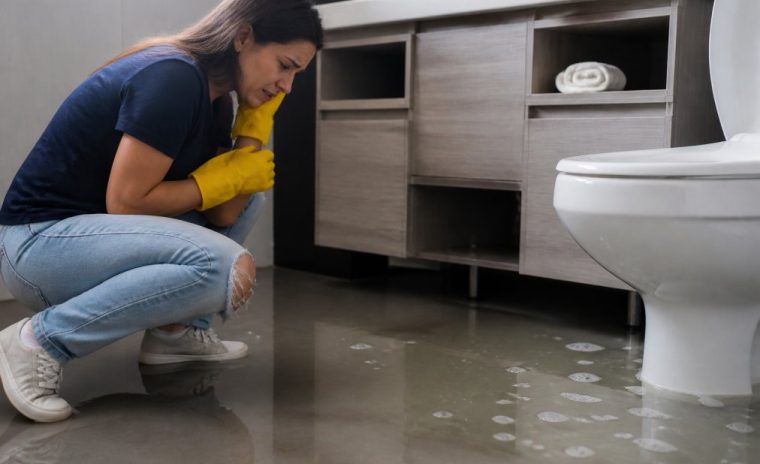
Table of Contents
- Warning Signs of Main Sewer Line Blockage
- Common Causes of a Sewer Line Backing Up
- How to Clear a Main Sewer Line Safely
- Hydro Jetting vs Snaking: Which Method Works
- Sewer Camera Inspection Benefits for Diagnosing Backups
- DIY vs. Professional Diagnostic Tools
- Costs, Insurance, and Safety Hazards of Sewer Backups
- When to Call a Professional Plumber
- Frequently Asked Questions
Last Updated: September 15, 2026
Warning Signs of Main Sewer Line Blockage
A mainline backup rarely starts with a flooded floor. If you’re asking why is my sewer line backing up, the answer usually begins with warning signs you dismissed days earlier. Catching these signals early separates a cleared blockage from a replaced lateral.
Gurgling Sounds and Slow Drains Across Multiple Fixtures
Gurgling from a toilet, tub, or sink means air is being pulled through water that should drain freely (the EPA). One slow drain points to a local clog; several point to the main line.
- Toilets that bubble when you run the washing machine
- Water rising in a shower when the kitchen sink drains
- Every drain in the house emptying slower than it did last month
If two or more drains misbehave together, the problem sits in the shared sewer lateral, not the trap.
Sewage Odors and Water Backing Up in Unlikely Places
Sewage odors near a floor drain or cleanout signal escaping sewer gas. Water backing up in a basement drain, laundry tub, or lowest-level fixture is the clearest sign the main line is blocked, wastewater finds the lowest point first.
Common Causes of a Sewer Line Backing Up
Causes fall into three buckets: what you put down the drain, what grows into the pipe, and what the pipe itself does over time.
Tree Root Infiltration and Pipe Collapse
Tree roots seek moisture, and a sewer lateral is a steady water source. Roots enter through joints and hairline cracks, expand, and catch debris until they form a blockage; left long enough, root pressure and soil movement can collapse the pipe. Older clay and cast iron laterals are especially vulnerable. Only a sewer camera inspection can confirm root infiltration versus a simple clog.
Fats, Oils, Grease, and Flushable Wipes
Fats, oils, and grease (FOG) cool and harden inside pipes, narrowing the diameter until only a trickle passes (Document Display (PURL) | NSCEP). “Flushable” wipes are the second culprit: they don’t break down like toilet paper, they clump, snag on roots and grease, and build debris fast. Coffee grounds, paper towels, and hygiene products do the same.
Watch Out
Never pour grease down a drain or trust a “flushable” label. Both create blockages that a drain snake often can’t clear, and both are entirely preventable.
Never pour grease down a drain or trust a “flushable” label. Both create blockages that a drain snake often can’t clear, and both are entirely preventable.
How to Clear a Main Sewer Line Safely
Clearing a main line safely means stopping the water, locating the cleanout, and knowing when to stop before you damage the pipe:
- Stop using all water in the house immediately.
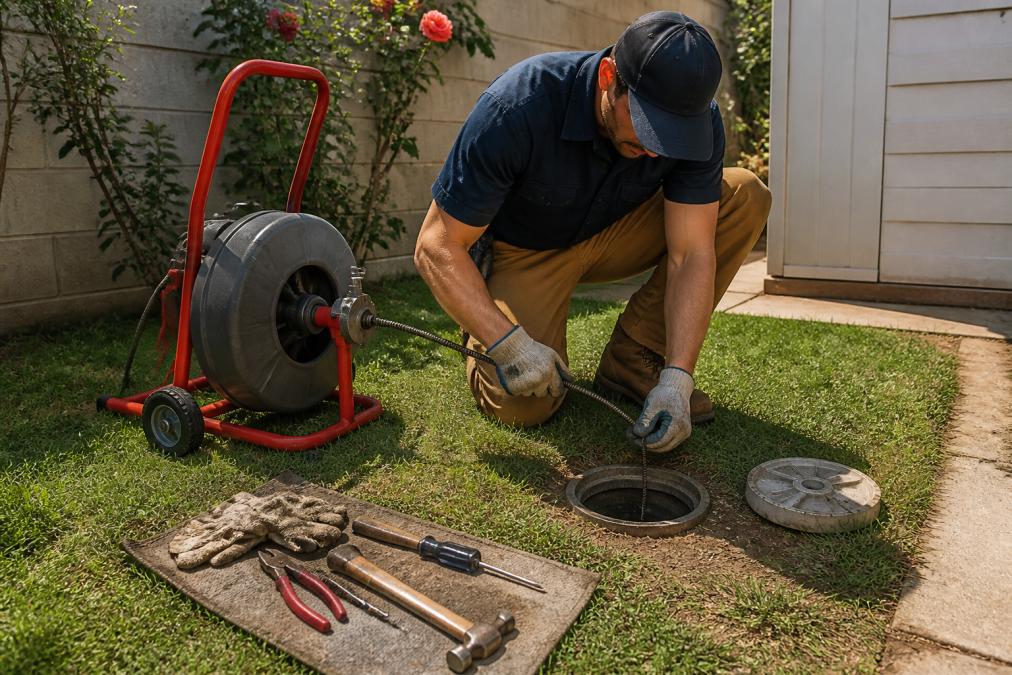
- Locate the main cleanout, usually near the foundation or property line.
- Remove the cleanout cap slowly, standing to the side.
- If you have a drain snake or auger, feed it into the cleanout, not a fixture.
- Never pour chemical drain cleaner into a main line; it rarely reaches the blockage and can damage pipes.
- If water doesn’t drain after snaking, stop and call a professional.
If sewage is already overflowing, treat it as a health hazard and skip the DIY attempt.
Hydro Jetting vs Snaking: Which Method Works
Hydro jetting and snaking solve different problems. A drain snake bores a hole through a clog, restoring flow but leaving grease and roots on the pipe walls. Hydro-jetting scours the full pipe diameter with high-pressure water, removing buildup rather than poking through it.
| Method | Best For | Limitation |
|---|---|---|
| Drain snake / auger | Simple clogs, soft blockages | Leaves residue, roots regrow |
| Hydro-jetting | Grease, roots, heavy buildup | Needs a clear diagnosis first |
For recurring backups, hydro-jetting paired with a camera inspection is the more durable fix. For a one-time soft clog, snaking may be enough.
Sewer Camera Inspection Benefits for Diagnosing Backups
Sewer camera inspection benefits start with certainty. A camera shows exactly what’s blocking the line, where it sits, and whether the pipe is cracked, root-invaded, or collapsed. Without it, every fix is a guess; with it, you know whether you need clearing, a spot repair, or trenchless repair. We document findings with photo and video so you see what we see before deciding.
Pro Tip
Ask for the camera footage before approving any major repair. A reputable plumber will show you the blockage and the pipe condition, not just describe it.
Ask for the camera footage before approving any major repair. A reputable plumber will show you the blockage and the pipe condition, not just describe it.
DIY vs. Professional Diagnostic Tools
Most guides tell you to call a pro. Almost none tell you how to figure out whether you’re looking at a fixture clog you can handle or a mainline failure that needs a truck, the most useful thing to learn before you spend money.
Start With the Fixture Test, Not a Tool
Before you buy or rent anything, run a free test that separates a branch-line clog from a mainline clog:
- Fill several fixtures at once, a sink, a tub, and a toilet tank.
- Release them one at a time and watch the others.
- If one fixture backs up only when it is used, the clog is local to that branch line.
- If using one fixture causes gurgling, rising water, or a backup in a different fixture, the clog is in the shared main line.
That result tells you whether a hand tool has any chance of helping. A branch-line clog near a trap is a reasonable DIY target; a mainline clog is not.
Tools You Can Reasonably Use Yourself
- Hand auger (drum auger): a manual crank snake, typically 15 to 25 feet of cable, meant for traps and short branch runs. It will not reach a sewer lateral.
- Corded or cordless drain snake: a powered drum auger with 25 to 50 feet of cable, the realistic upper limit of DIY reach.
Tools That Belong to a Professional
The Decision Framework
Watch Out
Never pour chemical drain cleaner into a main line or a cleanout. It rarely reaches a mainline blockage, it can damage older pipes, and it creates a caustic hazard for whoever opens the line next. If a plumber arrives to a line full of chemical cleaner, they may have to delay work for their own safety.
Never pour chemical drain cleaner into a main line or a cleanout. It rarely reaches a mainline blockage, it can damage older pipes, and it creates a caustic hazard for whoever opens the line next. If a plumber arrives to a line full of chemical cleaner, they may have to delay work for their own safety.
Pro Tip
If you do call a pro, ask for the camera footage and the locator marking before you approve any repair. A camera inspection that shows you the blockage and its location turns a guess into a decision, and it is the same evidence you will need if you file an insurance claim.
If you do call a pro, ask for the camera footage and the locator marking before you approve any repair. A camera inspection that shows you the blockage and its location turns a guess into a decision, and it is the same evidence you will need if you file an insurance claim.
Key Takeaway
The DIY-versus-professional line is not about effort or willingness. It is about reach and visibility. Hand tools reach a few dozen feet and see nothing. A camera and locator see everything and mark the spot. If you cannot see inside the pipe, you are guessing, and guessing on a sewer line is how a clearing turns into a replacement.
The DIY-versus-professional line is not about effort or willingness. It is about reach and visibility. Hand tools reach a few dozen feet and see nothing. A camera and locator see everything and mark the spot. If you cannot see inside the pipe, you are guessing, and guessing on a sewer line is how a clearing turns into a replacement.
Costs, Insurance, and Safety Hazards of Sewer Backups
What Sewer Line Work Typically Costs
Pro Tip
Ask for a written estimate that separates the diagnostic (camera inspection), the clearing, and any repair or replacement. Bundled quotes hide which line item is driving the price, and they make it hard to compare bids.
Ask for a written estimate that separates the diagnostic (camera inspection), the clearing, and any repair or replacement. Bundled quotes hide which line item is driving the price, and they make it hard to compare bids.
Does Homeowners Insurance Cover a Sewer Backup?
A few practical points worth knowing:
Watch Out
Do not assume you are covered. Call your insurer and ask two specific questions: (1) Do I have water backup or sewer backup coverage, and what is the limit? (2) Do I have service line coverage for the buried pipe? Get the answers in writing before you authorize major work.
Do not assume you are covered. Call your insurer and ask two specific questions: (1) Do I have water backup or sewer backup coverage, and what is the limit? (2) Do I have service line coverage for the buried pipe? Get the answers in writing before you authorize major work.
Safety Hazards of Raw Sewage Exposure
If sewage has entered your home:
Key Takeaway
Cost, coverage, and safety are the three questions homeowners actually have when a sewer line backs up. Get a written estimate that separates diagnosis from repair, confirm your backup and service line endorsements in writing, and treat any sewage contact as a biohazard until the area is cleaned and disinfected.
Cost, coverage, and safety are the three questions homeowners actually have when a sewer line backs up. Get a written estimate that separates diagnosis from repair, confirm your backup and service line endorsements in writing, and treat any sewage contact as a biohazard until the area is cleaned and disinfected.
When to Call a Professional Plumber
Frequently Asked Questions
Can a main sewer line unclog itself?
A main sewer line will not clear itself. Minor clogs from grease or wipes may shift slightly with water pressure, but the underlying blockage remains. Tree roots, pipe collapse, and heavy debris accumulation only get worse over time. If you notice recurring backups, slow drains across multiple fixtures, or gurgling sounds, the line needs professional attention. Waiting allows wastewater to pool and can lead to sewage overflow inside your home.
How do you fix sewage backing up into your home?
Stop using water immediately to prevent more sewage from entering. Avoid contact with contaminated water, which carries bacteria and viruses. If the backup is from your private lateral, a plumber can clear it with a drain snake or hydro-jetting. If it is from the municipal sewer main, contact your city’s public works department. After clearing, disinfect affected areas and check whether a backflow preventer is installed to stop future sewer line backing.
What are the warning signs of a failing sewer line?
Watch for gurgling sounds from toilets or drains, water backing up in tubs when you run the washing machine, sewage odors inside or outside your home, and slow drainage across multiple plumbing fixtures at once. Soggy patches or unusually green grass in your yard can indicate a leaking or collapsed pipe underground. These signs of main sewer line blockage typically worsen without a sewer camera inspection to pinpoint the exact problem.
Is hydro jetting or snaking better for a clogged sewer line?
Snaking uses a rotating cable to punch a hole through a clog, which works for simple blockages but does not clean pipe walls. Hydro jetting uses high-pressure water to scour the entire pipe diameter, removing grease, scale, and debris buildup. For recurring clogs or heavy FOG accumulation, hydro jetting is more thorough. A sewer camera inspection before either method confirms which approach fits your situation and rules out pipe collapse.
A backed-up sewer line is stressful, but it’s also diagnosable and fixable when you act early instead of guessing. Acclaimed Drain And Plumbing Solutions, LLC brings licensed, insured technicians, professional diagnostic equipment, and trenchless sewer liner technology to restore steady flow without tearing up your yard. We provide free estimates, financing options for eligible projects, and a maintenance membership program to prevent the next backup. Claim your free estimate today.
