
Claim Your Free Estimate Today

Table of Contents
- Why a Slow Drain Is an Early Warning Sign
- How Blockages Build Up Over Time
- How to Fix a Slow Drain Before It Gets Worse
- Signs of a Main Sewer Line Clog You Should Not Ignore
- When to Call a Professional Plumber for a Slow Drain
- Preventative Maintenance That Keeps Drains Flowing
- Frequently Asked Questions
Last Updated: September 16, 2026
Why a Slow Drain Is an Early Warning Sign
To ignore a slow drain is like ignoring a check engine light: it rarely means nothing. When water takes longer to clear a sink, tub, or shower, debris, grease, or scale has already narrowed the pipe. If you ignore a slow drain, the blockage grows and a minor inconvenience becomes a backup affecting your whole plumbing system.
How Blockages Build Up Over Time
Blockages are cumulative, not sudden. Every bit of soap scum, hair, grease, and food that goes down a drain leaves a thin film on the pipe wall, catching the next bit of debris, so the opening shrinks each week.
The process follows a predictable pattern:
- A thin layer of grease or biofilm coats the pipe interior
- Hair and fibrous debris tangle against that layer
- Mineral scale from hard water hardens the buildup
- Water flow slows as the passage narrows
- Pressure builds upstream of the restriction
- Wastewater and sewage back up into fixtures
Pro Tip
The P-trap under your sink catches most debris before it reaches the main line. If multiple fixtures drain slowly at once, the problem is almost certainly past the P-trap and into the branch or main line.
The P-trap under your sink catches most debris before it reaches the main line. If multiple fixtures drain slowly at once, the problem is almost certainly past the P-trap and into the branch or main line.
How to Fix a Slow Drain Before It Gets Worse
You can clear many slow drains yourself if you catch them early. Match the method to the blockage instead of reaching for the harshest option first.
DIY Methods That Work (and Their Limits)
A plunger is the right first move for a sink or toilet: seal the drain and work it with steady pressure to dislodge soft clogs. A drain snake, or hand auger, reaches deeper into the P-trap and branch line to pull out hair and debris. Follow both with a hot water flush.
Why Chemical Drain Cleaners Can Backfire
Chemical drain cleaners are the most overused and misunderstood product in home plumbing. They rely on caustic soda or acid to dissolve organic material and work best on light grease clogs; on hair, soap scum, or mineral scale, they often pass right through.
Signs of a Main Sewer Line Clog You Should Not Ignore
A main line clog behaves differently from a single-fixture blockage, and the fix is different. When one sink drains slowly, the restriction is usually in that fixture’s P-trap or branch line. When the main line is restricted, every fixture that feeds it slows at once.
Watch for these signals:
- Two or more fixtures draining slowly at once. This is the single most reliable indicator. A kitchen sink and a bathroom sink on opposite ends of the house share only the main line, so if both are sluggish, the restriction is downstream of where their branch lines meet.
- Gurgling sounds from toilets or tubs when water runs elsewhere. Gurgling means air is pulled through a fixture’s trap because the pipe behind it is partially blocked, the water you ran displaces air that has nowhere to go but up through the nearest trap.
- Foul odors rising from drains. A functioning drain has a water seal in the P-trap that blocks sewer gas. When a clog causes pressure changes or a trap dries out, hydrogen sulfide and methane can enter the home. Persistent odor is a ventilation or blockage problem, not a cleaning problem.
- Wastewater backing up into a tub or shower when you run the washing machine. A washer discharges 30 to 50 gallons per cycle. If that volume reappears in your lowest fixture, the main line is nearly or fully blocked and the tub is the system’s relief point.
- Standing water around the floor drain or cleanout. Water pooling at the cleanout means the blockage is at or just past that access point, telling a plumber exactly where to start.
- Sewage smells in the basement or lowest level. Sewer gas is heavier than air, so it settles in the lowest part of the structure. A smell concentrated in a basement is a stronger signal than one near an upper-floor drain.
Why the Cause Depends on the Drain
The symptoms look similar, but the material causing the blockage differs by drain, and that changes both the risk and the fix.
- Kitchen sinks clog primarily from fats, oils, and grease, plus food particles and coffee grounds. Grease pours down warm and liquid, then cools and congeals against the pipe wall, combining with soap and starch to form a hard, waxy layer water cannot cut through. Kitchen clogs tend to sit close to the sink, in the P-trap or the horizontal run to the wall.
- Bathroom sinks and showers clog primarily from hair and soap scum. Hair does not dissolve, it knots into a mat that catches soap residue, skin cells, and toothpaste. Shower clogs are often the deepest single-fixture clogs because the trap sits below the floor and the run to the main line is longer.
- Toilets clog from paper and solids, but a toilet that backs up when no other fixture is running usually points to the toilet’s own trapway or the branch line, not the main.
- Floor drains and laundry standpipes clog from lint, detergent residue, and, in older homes, years of sediment. A laundry standpipe that overflows during the spin cycle is a classic early main line warning.
Pro Tip
If you can isolate which fixtures are affected, you can roughly locate the blockage. One fixture slow means the clog is at that fixture. Everything on one side of the house slow means a branch line. Everything everywhere slow means the main. That single observation is often the most useful thing you can tell a plumber before they arrive.
If you can isolate which fixtures are affected, you can roughly locate the blockage. One fixture slow means the clog is at that fixture. Everything on one side of the house slow means a branch line. Everything everywhere slow means the main. That single observation is often the most useful thing you can tell a plumber before they arrive.
When to Call a Professional Plumber for a Slow Drain
Most articles jump straight to “call a plumber” without telling you how to decide. A more useful framework: match the symptom to the tool, and know when your tools run out.
Claim Your Free Estimate Today →
What You Can Safely Diagnose Yourself
Before you call anyone, gather information that makes the eventual service call faster and cheaper, or tells you no call is needed.
- Check the P-trap first. Place a bucket under the trap, unscrew the slip nuts, and remove the trap. If it’s full of hair, soap scum, or grease, you’ve found your clog and cleaning it out often restores full flow. If the trap is clean but the drain is still slow, the blockage is past the trap in the branch or main line.
- Run a hand auger (drain snake) through the branch line. Feed the cable until you feel resistance, then crank. If it comes back coated in grease or hair, you’re clearing the right spot. If it comes back clean and the drain is still slow, the restriction is beyond a hand tool’s reach, typically 25 feet or more into the line.
- Test fixtures one at a time. Run each fixture individually and note which are slow. This is the fastest, free way to distinguish a single-fixture clog from a branch or main line problem.
- Listen and smell. Gurgling and sewer odor are diagnostic, not cosmetic. They point to a ventilation or pressure problem a plunger will not fix.
Where DIY Stops and a Professional Starts
Call a professional when any of the following is true:
- The drain resists both plunging and snaking. If a hand auger cannot clear it, the blockage is too far, too hard (mineral scale, root intrusion), or too large for hand tools.
- Multiple fixtures are affected. This points to the main line, which requires equipment homeowners do not have.
- You smell sewer gas. This is a safety issue, not a convenience issue. Sewer gas contains hydrogen sulfide and methane, and in a confined space it is both a health hazard and, at sufficient concentration, flammable.
- You see sewage backing up into multiple fixtures. Stop using water immediately. Every flush or load of laundry pushes more wastewater into the house and raises the risk of water damage.
- The pipe is old or has a history of clogs. Recurring clogs in the same spot usually mean the pipe itself is the problem, corrosion, bellies (low spots where water sits), or root intrusion at a joint.
- You have already used a chemical drain cleaner. Caustic and acid cleaners leave a pool of reactive liquid in the pipe, and snaking a drain full of residue can splash it back. Tell the plumber what you used and when.
What a Professional Actually Does
A professional service call is not just a bigger snake. The tools and sequence matter:
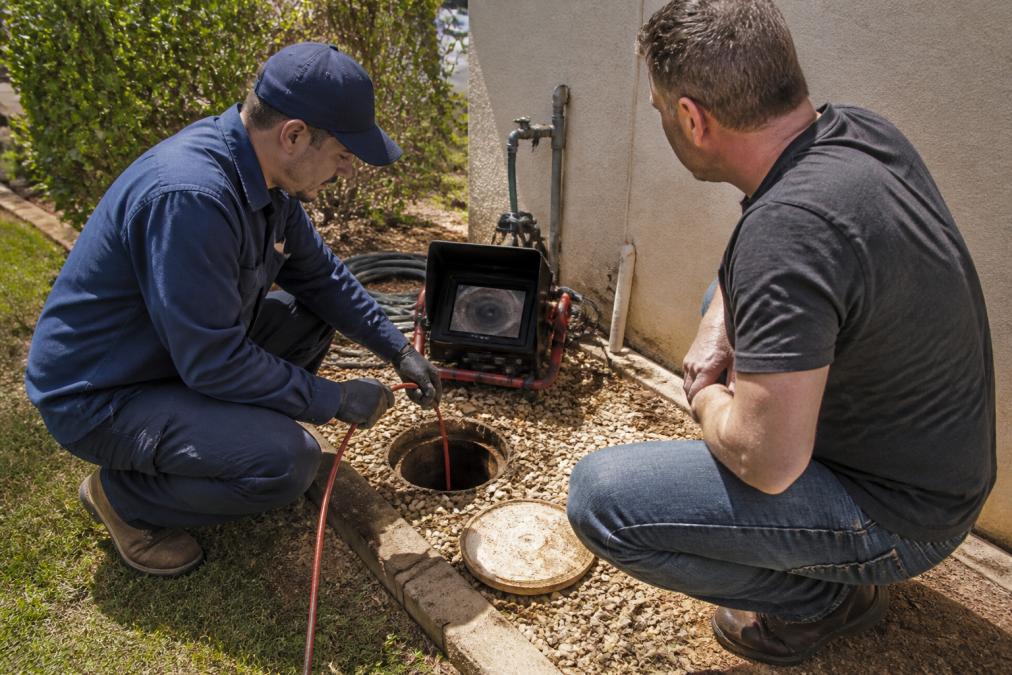
- Sewer camera inspection. A camera on a flexible reel is fed through the cleanout or a pulled toilet, showing the pipe interior in real time so the plumber can see whether the blockage is grease, roots, a crack, a collapse, or a belly, and measure how far down it sits. This is the only way to diagnose the cause rather than clear the symptom.
- Hydro-jetting. A high-pressure water jet, typically 3,000 to 4,000 PSI for residential lines, scours the full interior circumference of the pipe. Unlike a snake, which punches a hole through a clog, hydro-jetting removes buildup from the pipe wall, which is why a snaked drain often clogs again in weeks while a jetted drain stays clear.
- Root removal and pipe repair. If the camera shows root intrusion at a joint, the plumber can cut the roots and, if the pipe is compromised, recommend a repair. Trenchless liner technology lets many failing main lines be rehabilitated without excavating the yard.
The Cost Logic of Waiting
The reason professionals push early intervention is arithmetic. A routine drain clearing is a scheduled, predictable expense. A main line backup that floods a finished basement or crawlspace is an emergency expense plus water extraction, possible flooring and drywall replacement, and mold remediation. The longer a blockage sits, the more likely it progresses from a slow drain to a backup, and from a backup to a pipe failure under pressure.
Watch Out
If you see sewage backing up into multiple fixtures, stop using water immediately. Every flush or load of laundry pushes more wastewater into the house and raises the risk of water damage.
If you see sewage backing up into multiple fixtures, stop using water immediately. Every flush or load of laundry pushes more wastewater into the house and raises the risk of water damage.
Key Takeaway
The decision rule is simple: if one fixture is slow and a snake clears it, you are done. If multiple fixtures are slow, if the snake comes back clean, or if you smell sewer gas, the problem is past the point where homeowner tools can reach, and that is when a camera inspection pays for itself by telling you what is actually wrong.
The decision rule is simple: if one fixture is slow and a snake clears it, you are done. If multiple fixtures are slow, if the snake comes back clean, or if you smell sewer gas, the problem is past the point where homeowner tools can reach, and that is when a camera inspection pays for itself by telling you what is actually wrong.
Preventative Maintenance That Keeps Drains Flowing
Preventative maintenance costs far less than emergency repair and is the best way to avoid a slow drain in the first place. The goal is to keep debris from building up to the point of restriction.
A practical maintenance schedule looks like this:
| Frequency | Task | Why It Matters |
|---|---|---|
| Weekly | Run hot water through each drain for 30 seconds | Flushes soft grease before it sets |
| Monthly | Clear sink strainers and pop-up stoppers | Removes hair and soap scum at the source |
| Quarterly | Flush drains with a baking soda and vinegar mix | Loosens light buildup without harsh chemicals |
| Annually | Schedule a professional drain inspection | Catches main line issues before they back up |
Frequently Asked Questions
Can a slow drain lead to pipe bursts or water damage?
Yes. A slow drain means wastewater is not clearing properly, so pressure builds up behind the blockage. That pressure can crack pipe joints, loosen fittings, or force water through weak spots in the plumbing system. Over time, standing water and moisture can rot subflooring, damage drywall, and encourage mold growth. If you ignore a slow drain long enough, a minor blockage can turn into a burst pipe or sewage backup that requires emergency repair.
How do I know if a slow drain is a sign of a main sewer line issue?
Watch for multiple fixtures draining slowly at the same time, gurgling sounds from toilets or tubs, sewage odors near floor drains, or water backing up in unexpected places like the shower when you run the washing machine. These are classic signs of a main sewer line clog. A single slow sink usually points to a local clog, but when several drains act up together, the main line is the likely culprit. A camera inspection confirms it.
Is it safe to use chemical drain cleaners on a slow drain?
Chemical drain cleaners can damage pipes, especially older metal or PVC lines, and they rarely clear the full blockage. They often burn through only part of the clog, leaving debris that reaccumulates. The chemicals are also hazardous to skin, eyes, and lungs, and they can harm septic systems. If a clog persists after a plunger or drain snake, it is safer to have a professional inspect the line with a camera than to keep pouring chemicals down the drain.
What does preventative maintenance for drains actually include?
A preventative maintenance visit helps catch small issues before they become emergencies. It also extends the life of your plumbing system and reduces the chance of sewage backups, which are far more expensive and disruptive than routine maintenance.
