
Claim Your Free Estimate Today

Table of Contents
- Why Your Sewer Backups Keep Happening
- Emergency Steps to Take During a Sewer Backup
- Diagnosing the Problem: Sewer Line Inspection Cost and Process
- Hydro Jetting vs. Snaking: Which Method Actually Works
- Trenchless Sewer Repair: Pros and Cons of Modern Solutions
- Preventative Maintenance to Stop Backups Before They Start
- Sewer Backup Insurance Coverage: What Your Policy Actually Covers
- Frequently Asked Questions
Last Updated: August 11, 2026
Why Your Sewer Backups Keep Happening
Recurring sewer backups are rarely accidents, they’re symptoms of deeper problems demanding professional diagnosis, not temporary fixes. At Acclaimed Drain And Plumbing Solutions, LLC, we’ve found that homeowners often treat backups as isolated events when they’re actually warning signs of structural issues, blockages, or capacity problems that will return until the root cause is addressed.
The most common culprits are tree root intrusion (roots penetrate hairline cracks and create blockages that worsen over time), grease and debris accumulation (narrows the pipe’s effective diameter and traps additional material), pipe collapse or structural damage (from age, settling, or poor installation), and undersized piping in older homes (can’t accommodate modern water usage). What separates a one-time backup from a recurring nightmare is whether you address the underlying cause or just clear the immediate clog. A drain auger might temporarily restore flow, but if tree roots caused the blockage, they’ll regrow.
Pro Tip
The biggest mistake homeowners make is calling a plumber only when sewage backs up, then assuming the problem is solved once flow is restored. Schedule a sewer camera inspection during the first backup, not after the third one. Early diagnosis prevents emergency calls and gives you time to plan repairs instead of reacting in crisis mode.
The biggest mistake homeowners make is calling a plumber only when sewage backs up, then assuming the problem is solved once flow is restored. Schedule a sewer camera inspection during the first backup, not after the third one. Early diagnosis prevents emergency calls and gives you time to plan repairs instead of reacting in crisis mode.
Emergency Steps to Take During a Sewer Backup
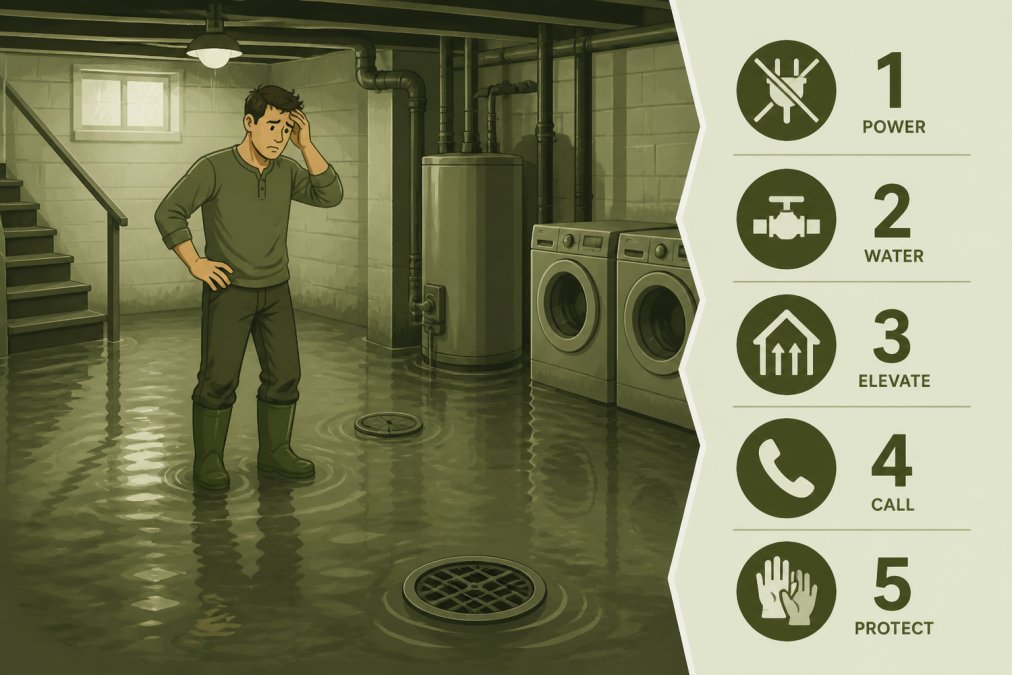
When sewage is backing up into your home, you’re facing both an immediate health hazard and potential structural damage. The first priority is containment and safety.
Stop using water immediately. Every drain in your home flows toward the same main line that’s already backed up. Using water will force sewage further into your home or basement. Turn off the main water supply if the backup is severe, or simply avoid all water use until professional help arrives.
Locate your main cleanout, typically a pipe with a cap near your home’s foundation or in your yard. Do not attempt to open it yourself, the pressure release can spray contaminated material. Mark its location for your plumber and stay clear of the area.
Protect your property and health. Sewage contains dangerous pathogens and bacteria. Avoid contact with backed-up water, and keep children and pets away from affected areas. If sewage has entered your home, document the damage with photos for insurance purposes.
Call for emergency service. Professional plumbers can access your system safely, identify the blockage, and determine whether you’re dealing with a temporary clog or a structural failure.
Watch Out
Never enter a basement or confined space with sewage backup without professional guidance. Methane gas and toxic fumes can accumulate in these spaces and cause serious injury or death. Ventilate thoroughly and let licensed plumbers handle confined space entry.
Never enter a basement or confined space with sewage backup without professional guidance. Methane gas and toxic fumes can accumulate in these spaces and cause serious injury or death. Ventilate thoroughly and let licensed plumbers handle confined space entry.
Diagnosing the Problem: Sewer Line Inspection Cost and Process
Determining why your sewer backups are recurring requires seeing inside your sewer line. A sewer scope uses a waterproof camera attached to a flexible cable, allowing plumbers to visually inspect the interior of your pipe from one end to the other.
Your plumber locates your main cleanout or another access point, feeds the camera line into the pipe, and watches a monitor displaying real-time video of the pipe’s interior. The camera records the inspection, creating documentation of any cracks, collapses, tree root intrusion, grease buildup, or other damage.
What a sewer camera inspection reveals determines your repair options. Tree roots appear as dark, hair-like intrusions penetrating the pipe wall. Grease and debris show as buildup reducing the pipe’s diameter. Cracks or fractures indicate structural failure. Bellied sections trap water and waste. Offset joints suggest pipe movement or settling.

The cost of a sewer camera inspection depends on your pipe length, accessibility, and complexity. Contact Acclaimed Drain And Plumbing Solutions, LLC for a free estimate that accounts for your home’s actual conditions. Inspection costs far less than repairing a problem you haven’t properly diagnosed.
Key Takeaway
A sewer camera inspection is the only way to know if your recurring backups are caused by tree roots, grease, structural damage, or capacity issues. Without this diagnosis, any repair is essentially a guess.
A sewer camera inspection is the only way to know if your recurring backups are caused by tree roots, grease, structural damage, or capacity issues. Without this diagnosis, any repair is essentially a guess.
Hydro Jetting vs. Snaking: Which Method Actually Works
When your sewer line is blocked, two primary clearing methods exist: mechanical snaking and hydro jetting.
A drain auger (commonly called snaking) uses a motorized cable with a cutting head to break through blockages. It’s effective for solid blockages and generally less expensive than hydro jetting. However, it doesn’t clean the pipe walls, it just creates a path through the obstruction. Grease can reaccumulate quickly, and tree roots often regrow from remaining fragments.
Hydro jetting uses high-pressure water streams (typically 4,000 to 8,000 PSI) to scour the entire interior pipe surface, removing grease, mineral deposits, debris, and even some tree roots. This creates a cleaner pipe and longer-lasting results but is more expensive and requires professional expertise to avoid damaging older or fragile pipes.
The choice depends on what’s causing your blockage. For grease and debris accumulation, hydro jetting provides superior cleaning and longer-lasting results. For tree root intrusion, neither method is permanent. For solid blockages, snaking may be sufficient. Your plumber’s camera inspection determines which approach makes sense for your specific problem.
Best For
Hydro jetting works best for recurring grease buildup and mineral deposits. Snaking is appropriate for one-time solid blockages when you’ve identified and eliminated the root cause.
Hydro jetting works best for recurring grease buildup and mineral deposits. Snaking is appropriate for one-time solid blockages when you’ve identified and eliminated the root cause.
Trenchless Sewer Repair: Pros and Cons of Modern Solutions
When your sewer line needs repair, traditional excavation destroys landscaping, driveways, and patios. Trenchless sewer repair technology offers an alternative that avoids most of this disruption.
Trenchless repair uses pipe lining (cured-in-place pipe or CIPP) to create a new pipe inside your existing damaged sewer line. A flexible tube coated with resin is inserted into the old pipe, then inflated and cured in place, forming a new structural pipe. This requires only small access points rather than full excavation.
The advantages are significant: your landscaping remains largely undisturbed, installation is faster (often completed in a day), and the new pipe is smooth, reducing future debris accumulation. However, trenchless repair works best for pipes with moderate damage. Severely collapsed pipes or pipes with major structural failures may require traditional excavation. The process also reduces your pipe’s interior diameter slightly, which can be problematic in already undersized systems.
Claim Your Free Estimate Today →
Acclaimed Drain And Plumbing Solutions, LLC utilizes trenchless sewer liner technology to minimize property disruption while delivering lasting repairs. Your plumber will assess whether your specific situation is appropriate for trenchless repair or whether traditional methods are necessary.
| Repair Method | Best For | Advantages | Limitations |
|---|---|---|---|
| Trenchless Lining | Cracks, leaks, root intrusion | Minimal excavation, fast, preserves property | Reduces pipe diameter, not for severe collapse |
| Traditional Excavation | Severe collapse, major structural failure | Addresses worst-case scenarios, full replacement | Extensive disruption, longer timeline, higher cost |
| Spot Repair | Isolated damage sections | Targeted, less invasive | Only works for localized problems |
Preventative Maintenance to Stop Backups Before They Start
The most cost-effective approach to recurring sewer backups is preventing them from happening.
Avoid pouring grease down drains. Grease solidifies as it cools, accumulating in your pipes and the municipal sewer line. Dispose of cooking grease in the trash, not the drain.
Be selective about what you flush. Modern plumbing is designed for human waste and toilet paper only. “Flushable” wipes, feminine hygiene products, paper towels, and other materials don’t break down like toilet paper and create blockages.
Maintain your clean-outs and drains. Periodically inspect accessible cleanouts for signs of damage or leakage. Professional drain cleaning every few years removes buildup before it causes backups.
Address tree root intrusion early. If you have large trees near your sewer line, monitor for slow drains or frequent backups. Early intervention prevents roots from completely penetrating and collapsing your pipe.
Consider a maintenance membership program. Acclaimed Drain And Plumbing Solutions, LLC offers preventative maintenance plans that include periodic inspections, drain cleaning, and priority emergency service.
Pro Tip
Schedule a sewer camera inspection every 3-5 years if you have an older home or frequent drainage issues. This costs far less than emergency repairs and gives you time to plan repairs instead of reacting to backups.
Schedule a sewer camera inspection every 3-5 years if you have an older home or frequent drainage issues. This costs far less than emergency repairs and gives you time to plan repairs instead of reacting to backups.
Sewer Backup Insurance Coverage: What Your Policy Actually Covers
Many homeowners assume their homeowner’s insurance covers sewer backups. Most standard policies do not. This gap in coverage can leave you facing thousands in uninsured damage.
Standard homeowner’s insurance excludes sewer backup damage because backups result from maintenance issues and preventable conditions rather than sudden, unexpected events. Your policy covers sudden pipe bursts from freezing, but not gradual blockages from grease or tree roots.
Some insurers offer sewer backup coverage as an optional endorsement or rider. This coverage typically reimburses you for damage caused by backups, including cleanup, restoration, and replacement of damaged property. Coverage limits and deductibles vary by policy.
The cost of this coverage is generally modest, often $50 to $200 annually, but it can save you thousands if a major backup occurs. Review your current policy to see what’s actually covered. Contact your insurance agent about adding sewer backup coverage if it’s not included, and ask about coverage limits and deductibles so you understand what you’d actually receive in a claim.
Professional documentation matters for insurance claims. When you experience a backup, have a licensed plumber document the cause through camera inspection. This documentation supports your claim and helps your insurer understand whether the backup resulted from a covered event or a maintenance issue.
Recurring sewer backups are fixable, but they require professional diagnosis and appropriate repair methods. Whether your problem stems from tree roots, grease accumulation, structural damage, or capacity issues, the solution begins with understanding what’s actually happening in your sewer line. A professional sewer camera inspection reveals the cause and guides you toward the right repair.
Acclaimed Drain And Plumbing Solutions, LLC provides comprehensive sewer diagnostics, repair options, and preventative maintenance to keep your system flowing reliably. From emergency service to planned repairs, our team delivers the professional expertise and clear communication you need to make informed decisions about your plumbing. Claim Your Free Estimate Today and let us show you why homeowners throughout Southern Arizona trust us with their most critical plumbing problems.
Frequently Asked Questions
Why does my sewer line keep getting backed up?
Recurring sewer backups usually stem from tree root intrusion, pipe collapse, grease buildup, or structural damage in your main drain line. Older homes with clay or cast-iron pipes are especially vulnerable. A professional sewer camera inspection reveals the exact cause, whether it’s roots breaking through, debris accumulation, or pipe deterioration. Once you know the root cause, you can choose a permanent fix instead of patching the problem repeatedly.
How much does a sewer line inspection cost?
Sewer line inspection costs vary based on your property size, line length, and accessibility. Rather than guess, request a free estimate from a licensed plumber who can assess your specific situation. Many inspections use video camera technology that provides clear documentation of the problem, helping you make an informed decision about repair options without surprises.
Does homeowners insurance cover sewer backup damage?
Standard homeowners insurance typically does not cover sewer backup damage. However, most insurers offer sewer backup coverage as an optional add-on endorsement for a modest annual premium. Coverage usually includes damage from backups originating in the public sewer line or main drain, though limits and exclusions vary. Contact your insurance agent about adding this protection, it’s affordable compared to the cost of sewage damage remediation.
Can trenchless sewer repair actually fix recurring backups permanently?
Yes, trenchless pipe lining can provide a permanent solution for many recurring backup problems, especially those caused by cracks, root intrusion, or structural damage. The process seals the interior of your existing pipe without excavation, restoring flow and preventing roots from re-entering. It’s less disruptive than traditional digging and works well for most residential main lines. A professional inspection determines whether trenchless repair is suitable for your specific situation.
