
Claim Your Free Estimate Today
Table of Contents
- Step 1: Know What Counts as a Plumbing Emergency
- Step 2: What to Do During a Plumbing Emergency
- Step 3: How to Find a 24/7 Plumber Near Me
- Step 4: Questions to Ask an Emergency Plumber
- Step 5: Understanding Emergency Plumbing Service Costs
- Step 6: Vetting Checklist for Homeowners
- Step 7: How a 24/7 Plumber Near Me Can Help
- Frequently Asked Questions
Last Updated: September 20, 2026
Step 1: Know What Counts as a Plumbing Emergency
A plumbing emergency threatens property, health, or safety, or shuts off water to your whole home. A dripping faucet can wait; a burst pipe cannot. Here’s the practical split:
Call immediately (emergency):
- Burst pipes or water spraying from a wall
- Sewage backing up into tubs, showers, or floor drains
- No water anywhere in the house
- A failed water heater leaking from the tank
- Gas line odors or suspected leaks
Schedule same-day or next-day (urgent, not emergency):
- One clogged drain that still drains slowly
- A running toilet
- A single fixture with low water pressure
- A slow leak under one sink
Step 2: What to Do During a Plumbing Emergency
Your first move is to stop the water, not start dialing, every minute adds to the damage and the bill. Do this in order:
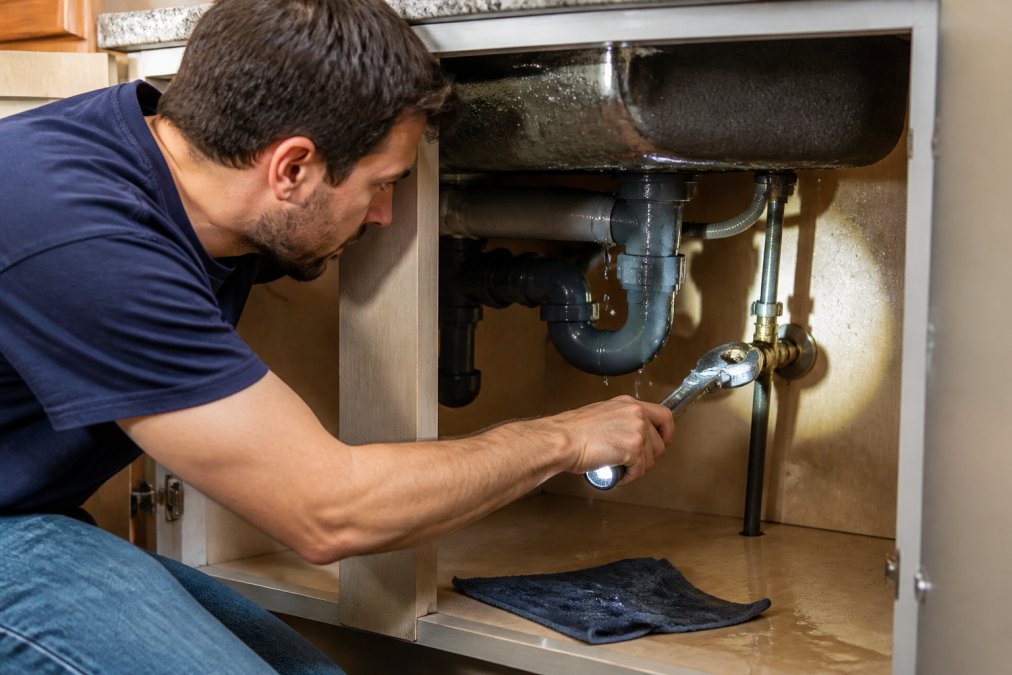
- Shut off the main water valve. It’s usually near the water meter or where the main line enters the house. Turn it clockwise until it stops.
- Kill the power to any flooded area at the breaker box, but only if you can reach it while standing on dry ground.
- Open a low faucet to drain remaining water from the pipes.
- Move furniture, rugs, and electronics away from the water.
- Document everything with photos for your insurance claim.
- Call a 24/7 plumber and describe the problem clearly.
Watch Out
Never pour chemical drain cleaner into a fully blocked drain. If the drain is completely stopped, the chemicals sit in the pipe and can burn through older fittings or splash back when you run water. You’ll turn a clog into a pipe replacement.
Never pour chemical drain cleaner into a fully blocked drain. If the drain is completely stopped, the chemicals sit in the pipe and can burn through older fittings or splash back when you run water. You’ll turn a clog into a pipe replacement.
Step 3: How to Find a 24/7 Plumber Near Me
Finding a 24/7 plumber near me is a two-part job: locate candidates, then verify they are genuinely round-the-clock rather than a call center that routes to voicemail after 9 p.m. Most homeowners skip the second part and find out at 2 a.m. with water on the floor.
Where to look (in order of reliability)
- Your state plumbing license board’s online lookup. Search by company name or license number to confirm the business is legally allowed to do plumbing work in your state. If it is not in the database, stop there.
- Your utility or water provider’s referral list. Many municipal water departments publish lists of licensed local plumbers, not endorsements, but screened for active licensure.
- Your homeowners insurance app or claims line. Insurers keep lists of plumbers they have paid claims to, a soft signal of reliability.
- Google Maps and Apple Maps with the ‘Open 24 hours’ filter. Cross-check the hours against the company’s own website; mismatches are a red flag.
- Neighborhood apps and local Facebook groups. Search the group for the company name before you call. Repeat complaints about no-shows or surprise fees surface fast.
The five-minute phone vetting checklist
Call the number before you have an emergency, ideally on a Sunday evening or holiday. The first 60 seconds tells you almost everything.
- A live person answers within three rings. Voicemail, an automated menu with no human option, or an answering service that cannot dispatch means the listing is not truly 24/7.
- The dispatcher can state the on-call technician’s name or ETA range. A real dispatcher has a schedule. A call center reads from a script.
- They can quote the after-hours call-out fee on the phone. Refusing any number before arrival is a warning sign.
- They confirm the license number when asked. Have them read it back, then verify it on the state board site.
- They ask what the problem is and give a rough arrival window. Vague answers like ‘sometime tonight’ suggest they are brokering the job to whoever picks up.
- They confirm whether the technician is an employee or a subcontractor. Employees generally arrive in marked vehicles with company ID; subcontractors may not.
- They tell you what to do while you wait, shut off the main valve, kill power to a flooded area. A company that skips this is not thinking about your property.
Red flags to hang up on
- The person who answers cannot tell you the company’s legal name.
- They ask for a credit card number before dispatching a technician.
- They quote a price ‘starting at’ a number that sounds too low, then explain add-ons only after arrival.
- They pressure you to authorize work before any diagnosis.
- They cannot name a physical business address in your metro area.
Why ‘near me’ matters more than you think
A plumber 45 minutes away in clear traffic is an hour away at 2 a.m. on a holiday weekend. Ask for the technician’s starting point, not the office address. Local, employee-based shops with their own trucks usually beat national brokerages on arrival time. Prioritizing proximity ensures that finding a local plumber remains a manageable task even when emergency repairs are required during the most inconvenient hours.
Pro Tip
Save a 24/7 plumber’s number in your phone before you have an emergency. When water is pouring through your ceiling, you don’t want to be comparing search results on a cracked phone screen.
Save a 24/7 plumber’s number in your phone before you have an emergency. When water is pouring through your ceiling, you don’t want to be comparing search results on a cracked phone screen.
Step 4: Questions to Ask an Emergency Plumber
The right questions to ask an emergency plumber protect your wallet and your home. Ask before you authorize any work.
Before they arrive:
- “What’s your emergency call-out fee, and does it apply to the repair?”
- “How soon can a technician actually be here?”
- “Are you licensed and insured in this state?”
When they arrive:
- “Can you show me the source of the problem?”
- “What are my options, and what does each one cost?”
- “Is this a repair or a replacement situation?”
- “Will you provide a written estimate before starting?”
Step 5: Understanding Emergency Plumbing Service Costs
Emergency plumbing service costs run higher than standard rates because you pay for after-hours availability, faster dispatch, and priority scheduling. Most companies charge a call-out fee plus labor and parts. The question is whether the premium is reasonable for your problem.
The three components of every emergency bill
1. Call-out or trip fee. What the company charges just to send a technician to your door, separate from the repair. Typical after-hours call-out fees run roughly $75 to $200 depending on your metro area and time of day. Ask whether the fee is credited toward the repair if you approve the work.
Claim Your Free Estimate Today →
What actually drives the total
| Cost Factor | What Affects It | How to Control It |
|---|---|---|
| Call-out fee | Time of day, weekend/holiday rates | Ask upfront; confirm it credits toward repair |
| Labor rate | Hourly rate, after-hours multiplier | Request a written estimate before work starts |
| Parts and materials | Fixture type, pipe size, availability | Ask for standard vs. premium options |
| Access difficulty | Crawl spaces, slab, wall openings | Ask about trenchless or minimally invasive methods |
| Scope of repair | Simple fix vs. full line replacement | Get the diagnosis explained before approving |
| Permit requirements | Local code, work type | Ask who pulls the permit and who pays for it |
Emergency vs. non-emergency: when to pay the premium
Paying an after-hours premium makes sense when waiting until morning would cause more damage than the premium itself, rarely for a slow drain or a running toilet.
Worth the after-hours premium:
- Active water leak you cannot stop at the fixture or main valve
- Sewage backing up into living space
- No water anywhere in the house
- Water heater leaking from the tank itself
- Any smell of gas
Usually fine to wait for business hours:
- One slow drain that still drains
- A running toilet
- A single dripping faucet
- Low water pressure at one fixture
- A water heater that is working but making noise
Protecting yourself from an inflated quote
- Get the diagnosis before the price. A technician who quotes before showing you the problem is guessing.
- Ask for a written estimate that separates labor, parts, and any permit fees.
- Ask what the price would be during business hours. The difference is the emergency premium. If it is more than double, ask why.
- Ask about financing for large jobs like sewer line replacement or repiping. Many companies offer payment plans.
- Never pay in full before the work is complete. A deposit for materials is normal; full payment upfront is not.
Federal Trade Commission’s consumer guidance on home repair recommends getting estimates in writing and never paying in full before the work is complete.
Watch Out
If a technician refuses to give a written estimate, changes the price after starting work without your approval, or demands cash only, stop the job and call another company. You are not obligated to continue.
If a technician refuses to give a written estimate, changes the price after starting work without your approval, or demands cash only, stop the job and call another company. You are not obligated to continue.
Step 6: Vetting Checklist for Homeowners
Use this checklist before you let anyone touch your plumbing, five minutes prevents most bad outcomes.
- License number verified through the state licensing board
- Liability insurance and bonding confirmed in writing
- Written estimate provided before work starts
- Live dispatcher answered when you called
- Technician arrived in a marked vehicle with proper ID
- Company explained the diagnosis with photos or camera footage
- You were given repair options, not just one ultimatum
- Payment terms and financing explained clearly
- Warranty or guarantee offered on parts and labor
- Work area protected and cleaned before the technician left
Key Takeaway
The single best protection against a bad emergency plumbing experience is a five-minute phone call before the emergency happens. Test the number, verify the license, and save the contact.
The single best protection against a bad emergency plumbing experience is a five-minute phone call before the emergency happens. Test the number, verify the license, and save the contact.
Step 7: How a 24/7 Plumber Near Me Can Help
A 24/7 plumber near me solves problems that cannot wait until business hours. Water damage compounds by the hour, and sewage backups create health hazards that get worse, not better.
What a genuine round-the-clock service provides:
- Immediate water damage mitigation to limit structural and flooring damage
- Emergency dispatch with technicians who carry common parts on their trucks
- Accurate diagnostics using sewer cameras and leak detection equipment
- Same-day service for urgent problems that fall short of a true emergency
- Preventative maintenance to stop the next emergency before it starts
Frequently Asked Questions
How much do 24 hour plumbers cost?
Emergency plumbing service costs vary based on the time of day, the complexity of the job, and your location. Most companies charge a higher rate for after-hours calls, including an emergency call-out fee plus labor and parts. Request a written estimate before work begins and ask about any additional charges. For a personalized quote, contact a local licensed plumber directly.
What qualifies as a plumbing emergency versus a routine repair?
A plumbing emergency poses an immediate risk to health, safety, or property. Examples include burst pipes, sewer backups, no water, or gas leaks. Routine repairs, like a dripping faucet or slow drain, can wait for normal business hours. If you are unsure, call a 24/7 plumber for advice. They can help you decide whether immediate service is necessary.
What should I do while waiting for an emergency plumber to arrive?
First, shut off the main water valve to stop the flow. For gas leaks, leave the building and call from a safe location. Move valuables away from the affected area and use towels or buckets to contain water. Do not attempt permanent repairs. Document the damage with photos for insurance. Stay calm and keep the area ventilated.
How can I verify if a local plumber is licensed and insured?
Ask for their license number and insurance certificate. In most states, you can verify a plumber’s license through the state licensing board’s website. A legitimate company will provide this information without hesitation. Also, check for online reviews and ask for references. Never hire an unlicensed plumber, as you may be liable for accidents or poor workmanship.
