
Claim Your Free Estimate Today
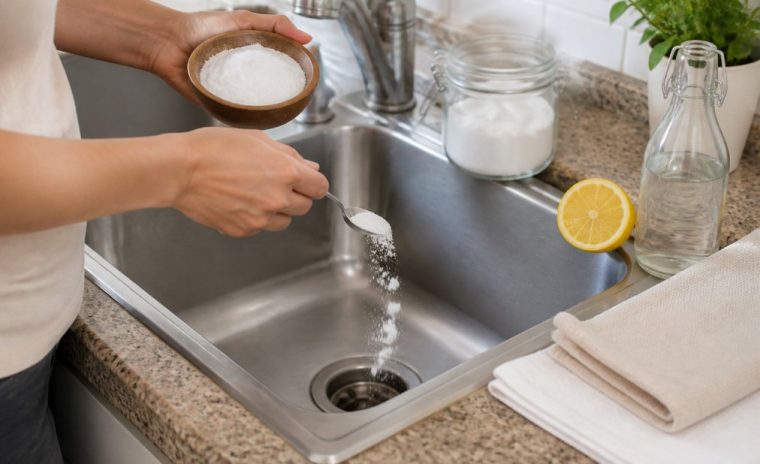
Table of Contents
- Why Natural Drain Cleaners Matter for Your Pipes
- Best Tools for Manual Drain Clearing
- Natural Drain Cleaning Methods That Work
- Preventative Drain Maintenance Tips
- When to Call a Professional Plumber for a Clog
- Pipe Material Compatibility: What You Need to Know
- Conclusion
- Frequently Asked Questions
Last Updated: September 19, 2026
Why Natural Drain Cleaners Matter for Your Pipes
Chemical drain cleaners work fast, but they corrode pipes, damage PVC fittings, and leave toxic residue, costs most homeowners don’t consider until it’s too late.
Natural alternatives to chemical drain cleaners work well for most clogs. Baking soda, vinegar, boiling water, and mechanical tools clear blockages safely, cost pennies, and protect your family and environment.
Best Tools for Manual Drain Clearing
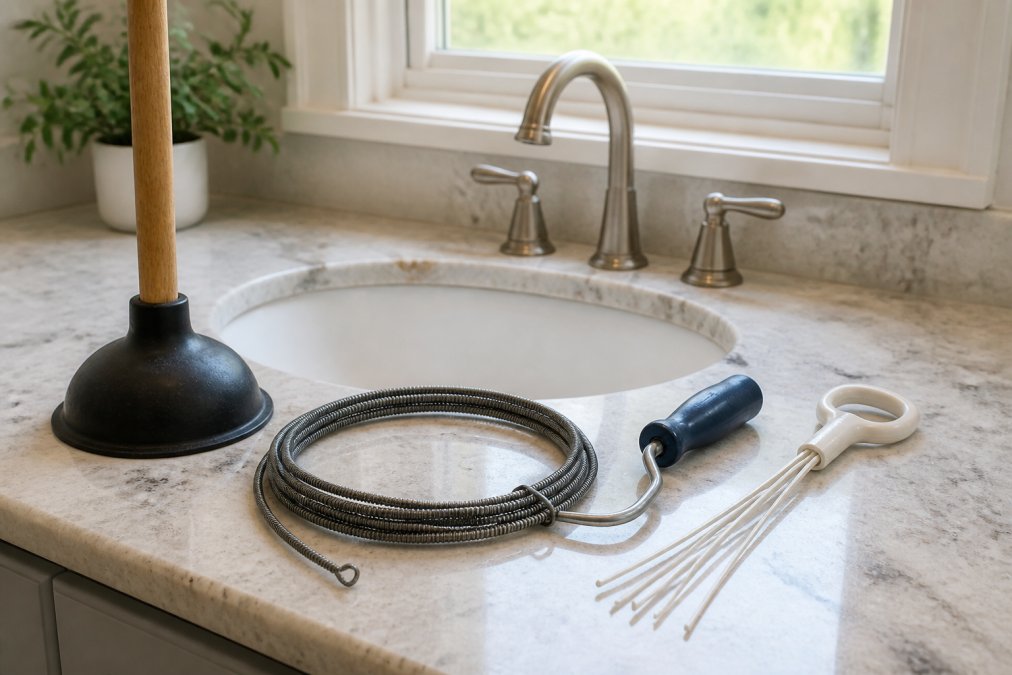
Mechanical removal clears most clogs faster than liquid solutions and requires no chemicals.
Plungers: Immediate Pressure Release
A plunger creates suction that dislodges clogs in sinks and tubs. Fill with water to cover the cup, press down firmly, pull up sharply to create suction, and repeat 15-20 times. Plungers work on hair, soap scum, and food debris but fail on solid objects or deep blockages.
Pro Tip
Keep the plunger in a dedicated spot near your bathroom. The faster you use it after noticing slow drainage, the easier the clog is to clear.
Keep the plunger in a dedicated spot near your bathroom. The faster you use it after noticing slow drainage, the easier the clog is to clear.
Drain Snakes: Reaching Deep Clogs
A drain snake is a flexible metal cable that reaches deep into pipes and breaks up obstructions. Insert and turn the handle to feed it deeper; when you feel resistance, twist and push to break up the clog or pull out hair.
Hair Catchers: Prevention Before the Problem
A hair catcher is a simple strainer that catches hair and debris before they enter pipes. Products like TubShroom fit standard drain openings and catch hair without blocking water flow. Pull out the catcher every few days and rinse the hair into the trash.
Natural Drain Cleaning Methods That Work
If mechanical removal fails, natural solutions often clear remaining clogs without pipe damage using household ingredients that break down buildup.
Baking Soda and White Vinegar
Pour ½ cup baking soda down the drain, follow with 1 cup white vinegar, cover the opening, and wait 30 minutes. The fizzing reaction creates carbon dioxide bubbles that lift hair clogs, soap scum, and grease buildup. Flush with boiling water to clear remaining debris.
Key Takeaway
This method is completely safe for all pipe materials, septic systems, and the environment. It’s also the cheapest option at roughly 25 cents per application.
This method is completely safe for all pipe materials, septic systems, and the environment. It’s also the cheapest option at roughly 25 cents per application.
Boiling Water for Grease Buildup
Pour 1-2 gallons of boiling water slowly down the drain to dissolve grease. Most kitchen clogs from cooking oils clear with one treatment. Safety note: Boiling water damages PVC pipes, use hot tap water instead. Metal pipes handle boiling water safely.
Dish Detergent and Hot Water
Pour 2 tablespoons of dish detergent down the drain, followed by hot water. Let it sit 15 minutes, then flush with more hot water. This works on fresh grease buildup.
Salt and Baking Soda Combination
Mix ½ cup salt with ½ cup baking soda, pour down the drain, and follow with boiling water. The abrasive texture clears soap scum and mineral deposits while baking soda neutralizes odors. Use monthly for preventative maintenance.
Lemon Juice for Odor and Soap Scum
Pour ½ cup lemon juice down the drain, followed by boiling water. The citric acid dissolves soap scum and mineral deposits while leaving a fresh scent. This works best on bathroom sinks.
| Method | Best For | Cost | Time Required |
|---|---|---|---|
| Baking Soda & Vinegar | Minor clogs, odor removal | $0.25 | 30 minutes |
| Boiling Water | Grease buildup | Free | 5 minutes |
| Dish Detergent & Hot Water | Kitchen grease | $0.10 | 20 minutes |
| Salt & Baking Soda | Preventative maintenance | $0.50 | 10 minutes |
| Lemon Juice | Soap scum, odor | $0.50 | 15 minutes |
Preventative Drain Maintenance Tips
Regular maintenance prevents clogs. Use a hair catcher in every shower and tub drain, pour boiling water down kitchen drains weekly, flush bathroom drains with hot water and baking soda monthly, wipe grease from pans before washing, and never pour cooking oil down the drain.
Watch Out
Avoid pouring coffee grounds, food scraps, or grease down any drain. These create the blockages that require serious intervention. Use a sink strainer to catch food before it enters your pipes.
Avoid pouring coffee grounds, food scraps, or grease down any drain. These create the blockages that require serious intervention. Use a sink strainer to catch food before it enters your pipes.
When to Call a Professional Plumber for a Clog
Some clogs require professional help. Knowing when to stop trying saves time, prevents pipe damage, and avoids repeated failed attempts.
Identifying Clog Depth and Type
Diagnose the clog type before deciding whether to tackle it yourself. Different clogs require different approaches, and some need professional equipment.
Red Flags: Stop and Call a Professional
Multiple fixture involvement: Water backs up into the shower when flushing the toilet, or the kitchen sink gurgles when the washing machine drains. This indicates a main line blockage.
What Professional Plumbers Use
Motorized drain augers: Powered versions of manual snakes that clear clogs 50+ feet down and break through solid blockages manual tools cannot touch.
Claim Your Free Estimate Today →
Cost Comparison: DIY vs. Professional
Natural methods cost under $1 and take 30 minutes. Professional drain clearing costs $150-$300 for a single drain and $300-$600 for main line service. Sewer line replacement costs $3,000-$25,000. Spending $200 on professional clearing now is far cheaper than a $10,000 replacement from a punctured pipe.
Watch Out
Never ignore recurring clogs or sewage backups. These are signs of serious problems that worsen over time. Addressing them early with professional diagnosis prevents catastrophic failures and saves thousands in repair costs.
Never ignore recurring clogs or sewage backups. These are signs of serious problems that worsen over time. Addressing them early with professional diagnosis prevents catastrophic failures and saves thousands in repair costs.
Pipe Material Compatibility: What You Need to Know
Not all drain cleaning methods work safely on every pipe material. Understanding your plumbing prevents costly damage.
Cast Iron Pipes
Cast iron pipes were standard in homes built before 1970. They’re durable and corrosion-resistant, handling boiling water, mechanical snakes, and aggressive cleaning safely.
Compatibility with natural methods: Excellent
- Boiling water: Safe
- Baking soda and vinegar: Safe
- Drain snakes: Safe
- Salt and baking soda: Safe
PVC Plastic Pipes
PVC became standard in the 1970s and is the most common material today. PVC is lightweight and corrosion-resistant but softens above 140°F. Boiling water can warp, crack, or separate joints, the most common mistake homeowners make with natural drain cleaning.
Compatibility with natural methods:
- Boiling water: Not safe, use hot tap water (120°F) instead
- Baking soda and vinegar: Safe
- Drain snakes: Safe (use gentle pressure)
- Salt and baking soda: Safe
- Lemon juice and hot water: Safe if water is not boiling
- Dish detergent and hot water: Safe if water is not boiling
Copper Pipes
Copper is a premium plumbing material found in higher-end homes. It resists corrosion, lasts 50+ years, and handles all cleaning methods safely.
Compatibility with natural methods: Excellent
- All methods are safe, including boiling water
- Copper is unaffected by heat, acids, or mechanical tools
Galvanized Steel Pipes
Galvanized steel was common in homes built 1950-1980. These pipes have a zinc coating that prevents rust, but the coating deteriorates over time. Pipes from the 1960s are now 60+ years old and often corroded internally.
Compatibility with natural methods: Moderate to Poor
- Boiling water: Acceptable
- Baking soda and vinegar: Safe
- Drain snakes: Use caution, avoid forcing; corroded pipes can puncture
- Salt and baking soda: Safe
- Aggressive mechanical cleaning: Not recommended Maintaining your plumbing infrastructure requires a consistent approach to sanitation that prioritizes long-term pipe integrity through the regular application of eco friendly cleaning products.
Mixed Pipe Materials
Older homes often have multiple pipe materials. In mixed systems, always use the gentlest method compatible with your weakest material. For example, avoid boiling water if PVC branch lines connect to cast iron main lines, even though cast iron can handle it.
How to Identify Your Pipe Material
Look under your sink or in your basement where pipes are visible:
- Cast iron: Dark gray or black, heavy, rough texture, often painted
- PVC: White, light gray, or dark gray plastic, lightweight, smooth, labeled “PVC” or “DWV”
- Copper: Shiny reddish-brown or greenish (oxidized) metal, very smooth
- Galvanized steel: Silver-gray metal with visible threading, heavier than PVC, may show rust stains
Pro Tip
Take a photo of your visible pipes and save it. When you need to clean drains or hire a plumber, you’ll have documentation of your material type and can make informed decisions immediately.
Take a photo of your visible pipes and save it. When you need to clean drains or hire a plumber, you’ll have documentation of your material type and can make informed decisions immediately.
Conclusion
Natural alternatives to chemical drain cleaners work for most household clogs. Start with a plunger or drain snake, move to natural solutions if mechanical removal fails, and reserve professional service for persistent clogs, main line blockages, or recurring problems.
Frequently Asked Questions
How can I unclog a drain without using chemicals?
Start with mechanical methods: use a plunger to create pressure, or try a drain snake to physically remove blockages. For minor clogs, pour boiling water down the drain to dissolve grease, or apply baking soda followed by white vinegar to create a fizzing reaction that loosens debris. Dish detergent mixed with hot water works well for kitchen drains clogged with grease. These natural drain cleaners are safe for all pipe types and septic systems.
What are the best natural drain cleaners for preventative maintenance?
For routine maintenance, monthly applications of baking soda and white vinegar keep pipes clear and fresh-smelling. Boiling water flushes help dissolve grease before it solidifies. Hair catchers like TubShroom prevent clogs before they start by catching debris at the source, making them one of the most effective preventative tools.
Are natural drain cleaners effective for deep or stubborn clogs?
Natural cleaners work best for minor, slow-draining sinks caused by hair, soap scum, or grease buildup. For deep clogs, mechanical tools like drain snakes are more effective because they physically remove the obstruction. If a clog doesn’t respond to natural methods and manual tools within 24 hours, or if water backs up into multiple fixtures, call a professional plumber. Persistent clogs often signal issues deeper in the line that require professional equipment like hydro jetting or sewer cameras.
Can homemade drain cleaners damage my pipes?
Baking soda, vinegar, lemon juice, and boiling water are safe for all standard plumbing materials, including PVC, copper, and cast iron. However, use caution with boiling water on PVC pipes, as extremely hot water can soften the plastic. When in doubt about your pipe material or the severity of a clog, contact a professional plumber for guidance.
