Claim Your Free Estimate Today
Last Updated: November 8, 2026
Quick Summary
Emergency leak detection usually takes 30 minutes to 2 hours from the moment a plumber arrives, though the full window from your call to a confirmed diagnosis often runs 1 to 4 hours. That range covers dispatch, travel, and the actual search for the leak. A simple, visible pipe leak in an accessible spot might be found in minutes, while a hidden slab leak under a concrete floor can eat hours.
- Dispatch typically takes 5-15 minutes, and travel to your home adds 20-60 minutes.
- Shut off your main water valve before the plumber arrives to limit water damage.
- A visible, accessible leak is usually detected in 15-30 minutes.
- Slab leaks under concrete can take 1-3 hours to pinpoint.
- Never pour drain cleaner into a backed-up line before the plumber comes.
Water where it shouldn’t be?We find hidden leaks fast with pro tools and clear, upfront pricing.
Table of Contents
- How Long Emergency Leak Detection Takes From Call to Diagnosis
- What to Do Before an Emergency Plumber Arrives
- How Long Does a Leak Detection Test Take?
- How Long Does It Take a Plumber to Find a Leak?
- Signs of a Hidden Water Leak That Speed Up Diagnosis
- What Makes Emergency Leak Detection Take Longer
- What Happens During Professional Leak Detection, Step by Step
- When the Leak Cannot Be Found on the First Visit
- Frequently Asked Questions
How Long Emergency Leak Detection Takes From Call to Diagnosis
Emergency leak detection usually takes 30 minutes to 2 hours from the moment a plumber arrives, though the full window from your call to a confirmed diagnosis often runs 1 to 4 hours. You can book emergency plumbing repair in Tucson for urgent leaks and backups. That range covers dispatch, travel, and the actual search for the leak.
Here is the part most guides skip. “How long does emergency leak detection take” has two answers, and mixing them up is why homeowners get frustrated. The first is how fast someone gets to your door. The second is how long it takes to pinpoint the source once they are inside.
A simple, visible pipe leak in an accessible spot might be found in minutes. A hidden slab leak under a concrete floor can eat hours. Below, we break down each stage so you know what to expect, what to do while you wait, and what changes the timeline.
| Stage | Typical Time | What Happens |
|---|---|---|
| Call and dispatch | 5-15 minutes | Live dispatcher logs details, assigns tech |
| Travel to your home | 20-60 minutes | Tech drives to your address |
| Initial inspection | 10-30 minutes | Visual check, meter test, questions |
| Active detection | 30 minutes to 2 hours | Tools locate the leak source |
| Diagnosis and options | 10-20 minutes | Findings explained, repair quoted |
Dispatch and Travel Time
Dispatch is fast. A live dispatcher takes your address, the symptom, and how bad the water is, then assigns a technician.
Travel time depends on distance and traffic. For a realistic look at what drives response timing, see our breakdown of emergency plumber response time and how it varies by situation.
Two things slow travel down. First, if you cannot shut the water off, tell the dispatcher. That moves you up the queue. Second, give clear access instructions. A locked gate or a dog in the yard adds minutes you do not have.
The Detection Window Itself
The detection window is the time a technician spends actively hunting the leak. This is the part people underestimate.
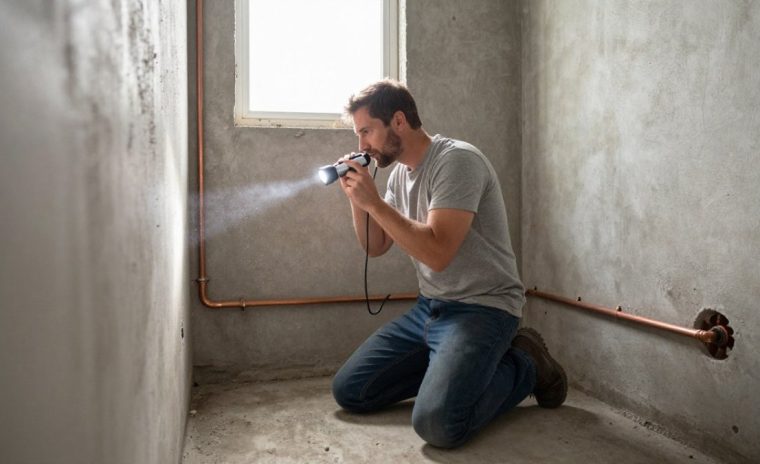
A visible drip under a sink is a quick find. A hidden leak inside a wall or under a slab is a search. The technician tests, listens, and narrows the location before opening anything up.
Typical time for each stage of emergency leak detection
Call and dispatch 5-15 minutes
Travel to your home 20-60 minutes
Initial inspection 10-30 minutes
Diagnosis and options 10-20 minutes
What to Do Before an Emergency Plumber Arrives
Shut off the water first. Find your main shutoff valve and turn it clockwise until it stops. This single step limits water damage more than anything else you can do while you wait.
Then work through this list:
- Kill the water. Main valve off. If you cannot find it, call the dispatcher for help locating it.
- Cut the power to any area where water is near outlets or appliances. Use the breaker, not a wet hand.
- Move valuables off the floor. Rugs, electronics, furniture, anything water can ruin.
- Catch the drip. Buckets and towels under the leak reduce spread.
- Document it. Photos of the damage help with insurance later.
- Do not open walls or pull apart pipes. You can make it worse or get hurt.
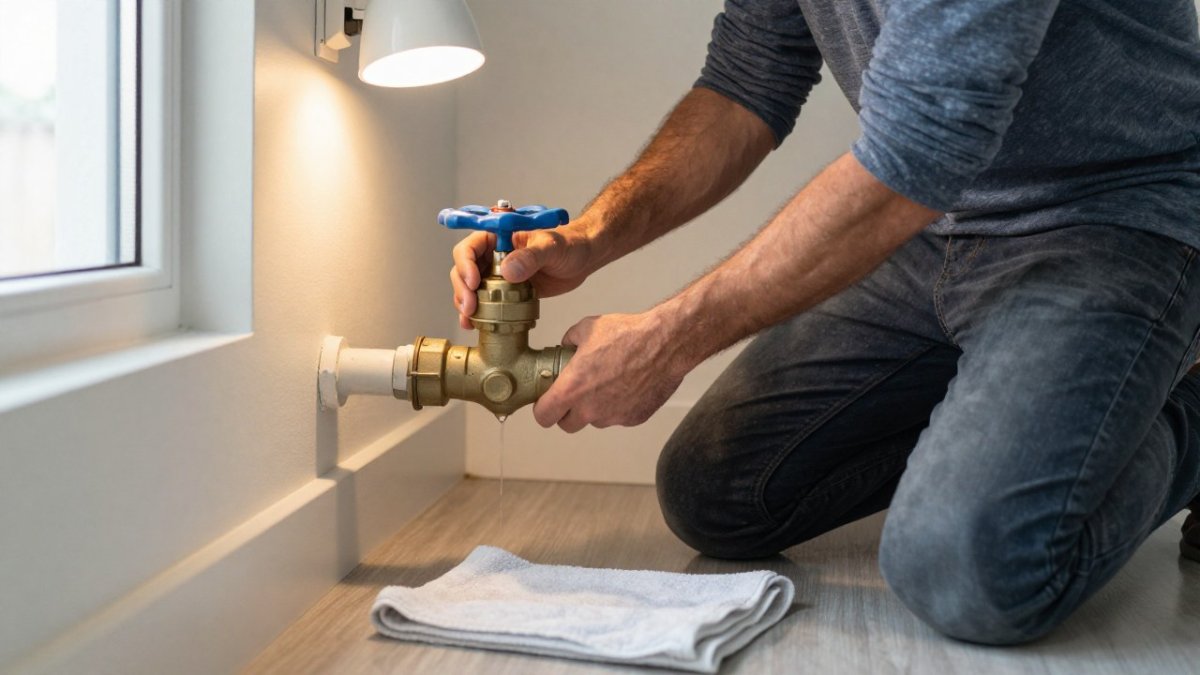
For a full walkthrough of these steps, read our guide on what to do before help arrives. It covers shutoffs, safety, and when to stop and call.
Watch out: never pour drain cleaner into a backed-up line to “fix” it before the plumber comes. It sits in the pipe, can splash back on the technician, and does nothing for a leak.
How Long Does a Leak Detection Test Take?
A leak detection test duration depends on the leak’s location and the size of the plumbing system. Simple, visible leaks test fast. Hidden leaks and larger plumbing systems take longer.
The test itself is not one thing. It is a set of checks the technician runs in order:
- Visual inspection of fixtures, cabinets, and floors
- Water meter test to confirm there is an active leak
- Pressure testing on the affected line
- Listening and thermal tools to trace the source
Each check narrows the search. The technician stops testing once the leak is confirmed and located.
How Long Does It Take a Plumber to Find a Leak?
Visible leaks are typically found fastest. Slab leaks and underground leaks generally take longer.
Here is how leak type changes the clock:
- Visible pipe leak: typically the quickest to locate
- Hidden wall leak: takes longer than a visible leak
- Slab leak under concrete: typically takes longer still
- Underground or main line leak: often the most time-consuming
System complexity matters too. Older homes with original pipes, multiple floors, or prior patchwork take longer to trace. A simple layout with one bathroom is a faster job than a large house with several supply lines.
Signs of a Hidden Water Leak That Speed Up Diagnosis
Telling the technician what you noticed saves real time. A hidden water leak often shows warning signs before it becomes an emergency. Report these when you call.
- A water bill that jumped with no change in use
- The sound of running water when nothing is on
- Damp spots, bubbling paint, or stained drywall
- A musty smell in one room
- Warm spots on a concrete floor, a slab leak clue
- Cracks in the foundation or shifting floors
- Reduced water pressure at one fixture
Each clue points the technician toward a starting area. That is time saved. For a deeper list, see our article on signs of hidden water pipe leaks.
What Makes Emergency Leak Detection Take Longer
Some jobs run long, and it is rarely the technician’s fault. The biggest factor is leak location. A leak behind an accessible panel is quick. One buried under a slab or behind a tiled wall is not. Below is how each condition shifts the clock, so you can estimate where your situation falls.
| Condition | Effect on Detection Time | Why |
|---|---|---|
| Visible, accessible leak | 15-30 minutes | Technician sees or feels the source immediately |
| Hidden wall leak | 30 minutes to 1 hour | Tools must trace behind drywall or tile |
| Slab leak under concrete | 1-3 hours | Listening equipment and thermal imaging narrow the spot before any opening |
| Underground or main line leak | 1-4 hours | Soil and depth hide the source; camera inspection may be needed |
| Large or multi-story system | Adds 30-60 minutes | More supply lines and fixtures to isolate and test |
| Saturated walls or subfloor | Adds 15-45 minutes | Water damage changes how moisture meters and thermal tools read the space |
| After-hours or dark crawlspace | Adds 15-30 minutes | Poor visibility and occupied-building access slow the search |
Accessibility is the next lever. Furniture, stored boxes, and finished basements slow the search because the technician has to move or work around them. If you can clear a path to the water heater, main valve, and any area where you have seen or heard water, you can shave time off the visit.
System complexity matters too. Older homes with original pipes, multiple floors, or prior patchwork take longer to trace. A simple layout with one bathroom is a faster job than a large house with several supply lines. Age means more corrosion and more places a leak can hide.
Watch out: if you have already opened a wall or pulled apart a fitting to “help,” tell the technician before they start. A disturbed joint can send water into a new area and make the original leak harder to isolate.
What Happens During Professional Leak Detection, Step by Step
Professional leak detection follows a set process. Knowing it helps you understand why it takes the time it does.
- Intake and safety check. The technician confirms the water is off and asks what you noticed.
- Visual inspection. Fixtures, cabinets, baseboards, and the water heater get checked.
- Meter test. With everything off, the meter tells whether water is still moving.
- Pressure testing. The affected line is isolated and tested.
- Tool tracing. Listening equipment, thermal imaging, and moisture meters narrow the spot.
- Pinpoint and confirm. The technician confirms the source before recommending anything.
- Explain and quote. You get findings, options, and a flat-rate price before work starts.
We use professional diagnostic equipment, sewer cameras, and photo and video documentation when appropriate.
When the Leak Cannot Be Found on the First Visit
Sometimes the first visit does not find it. That is normal, not a failure. Hidden leaks in slab, underground lines, or behind finished walls can need a second pass with different tools. What matters is that you leave the first visit with a clear plan and an honest explanation of what was ruled out.
When a leak is not located on the first visit, the technician will typically:
- Explain what was ruled out. You should hear which lines, fixtures, and areas were tested and cleared.
- Recommend the next step. That might be camera inspection, a targeted pressure test on an isolated line, or acoustic listening in a specific zone.
- Schedule a follow-up. Often same-day or next-day, depending on tool availability and access.
- Confirm what the follow-up costs. Ask whether the second visit is included in the original detection fee or billed separately. A flat-rate quote should state this before work begins.
A common pattern is that the first visit narrows the search to a zone, and the second visit pinpoints the source. That is not wasted time; it is how slab and underground leaks are found without opening the wrong part of the floor.
If your first visit ends without an answer, ask three questions: What was checked? What is the next test? What will it cost? For a dedicated leak detection and repair visit, you can request a free leak detection estimate.
Frequently Asked Questions
How long does a leak detection test take?
A standard leak detection test depends on the leak’s location and accessibility. Visible or accessible leaks are generally quicker to test than hidden or slab leaks, which may need acoustic listening and thermal imaging. The test time depends on how many fixtures and pipe runs the technician has to isolate and how accessible the suspected area is.
Does finding the leak include repairing it?
No. Emergency leak detection is a diagnostic service: the technician pinpoints the source and explains the repair options and pricing. Repair is a separate step that depends on what was found, such as a fitting, a section of pipe, or a slab break. Ask for the detection findings and a written repair estimate before authorizing work so you know exactly what you are paying for.
What factors can make emergency leak detection take longer?
Hidden leaks under slabs, saturated walls, subfloor and insulation can slow things down because the water travels from the source. Older homes, multi-story layouts, and hard-to-reach areas can add time.
What should I do while waiting for an emergency leak detection plumber?
Shut off the main water supply valve. Move furniture, rugs, and electronics away from the wet area and put towels or buckets down. Do not tear into walls or flooring, and do not pour drain chemicals into a suspected leak. Note when you first saw water and where.
