
Claim Your Free Estimate Today
A slow kitchen sink can be annoying. Sewage coming up through a shower drain is a different kind of problem – one that can damage floors, interrupt business, and create a sanitation concern fast. This guide to drain camera inspections explains how a small camera can show what is happening inside your pipes, so repairs are based on evidence instead of guesswork.
For Tucson-area homes and commercial properties, that clarity matters. Older sewer lines, invasive tree roots, hard-water buildup, shifting soil, and heavily used drains can all create problems below ground where no one can see them. A camera inspection helps identify the real condition of the line before anyone recommends cleaning, repair, lining, or replacement.
What Is a Drain Camera Inspection?
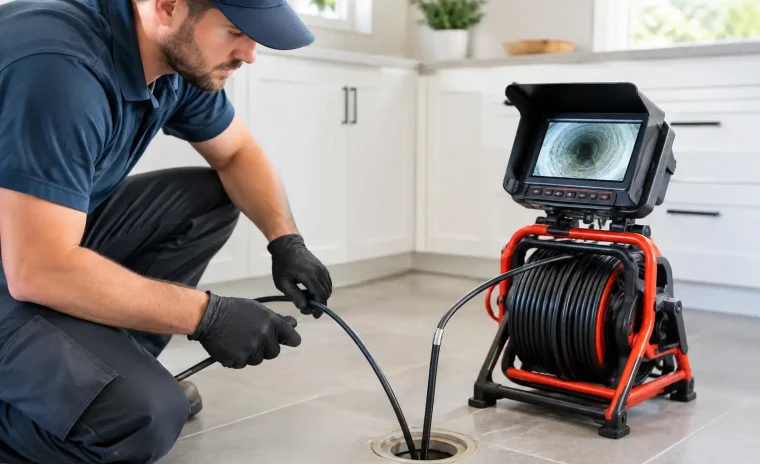
A drain camera inspection uses a waterproof, high-resolution camera attached to a flexible cable. A trained plumbing technician feeds the camera through an accessible drain opening, cleanout, or sewer line while viewing live video from above ground. The camera travels through the pipe and records what it finds.
This is not simply a way to confirm that a drain is clogged. It is a diagnostic tool that helps determine where the problem is, what caused it, and whether the pipe itself is still structurally sound. Depending on the system and access point, an inspection may cover a branch drain serving one fixture or the main sewer line running from the building to the public sewer or septic connection.
The technician can often locate problem areas from the surface, measure their distance along the line, and explain what the footage means in plain language. That makes it easier to discuss clear options before repair work begins.
When a Camera Inspection Makes Sense
Not every minor clog requires a camera. A sink that drains slowly because of a small, reachable buildup may be resolved with routine drain cleaning. But recurring symptoms, multiple affected fixtures, or sewer-related warning signs deserve a closer look.
A camera inspection is especially useful when drains repeatedly back up after being cleared, toilets gurgle when water runs elsewhere, or wastewater appears in a tub, shower, or floor drain. These signs can point to a restriction in the main sewer line rather than a single fixture drain.
Property owners should also consider an inspection before buying an older home, after a sewer backup, or before investing in major drain or sewer repairs. For commercial facilities, a camera can help document a recurring issue that is disrupting tenants, customers, or daily operations. Restaurants, retail spaces, rental properties, and multi-unit buildings often benefit from finding the source before a small drainage concern becomes an emergency call.
What the Camera Can Find Inside Your Pipes
The video can reveal conditions that a drain machine alone cannot explain. The most common findings include:
- Grease, soap residue, scale, and other buildup narrowing the pipe
- Tree roots entering through joints, cracks, or deteriorated sections
- Broken, cracked, offset, or separated pipe connections
- A sagging section of pipe that holds water and debris
- Foreign objects, construction debris, or heavy sediment
- Collapsed or badly deteriorated sewer pipe
Each finding calls for a different response. A grease-heavy kitchen line may need professional cleaning or hydro jetting. Root intrusion may require cutting roots to restore flow, followed by repair or trenchless sewer lining if the pipe has openings that will allow roots to return. A collapsed section will not be fixed by repeated clearing. It needs repair or replacement.
That is the value of diagnosis. Clearing a blockage can restore flow for the moment, but it does not automatically correct the condition that caused the blockage.
How a Professional Drain Camera Inspection Works
The process usually begins with a conversation about the symptoms. A technician may ask which fixtures are affected, when the trouble began, whether backups happen during laundry or shower use, and whether the line has been cleared before. Those details help identify the likely section of pipe to inspect.
Next, the technician selects the safest and most practical access point. A sewer cleanout is often ideal because it gives direct access to the main line without taking apart fixtures. If a cleanout is unavailable or inaccessible, other options may be considered based on the plumbing layout.
The camera is then advanced through the line while the technician watches the live feed. When a blockage, crack, root mass, belly, or other concern appears, its location and severity are noted. In some cases, the camera cannot pass through a heavy blockage until the line is first cleared. That does not make the inspection less valuable. It simply means the proper order is to restore enough opening for the camera to see the pipe beyond the obstruction.
Afterward, you should receive a straightforward explanation of what was found, what it means for the system, and the available repair paths. A dependable contractor will distinguish between work that is urgent, work that can be planned, and maintenance that may help prevent another backup.
Camera Inspection, Snaking, and Hydro Jetting: What Is the Difference?
These services often work together, but they do different jobs. A camera inspection looks inside the line. Snaking, also called cabling, breaks through or pulls out certain obstructions. Hydro jetting uses pressurized water to clean buildup from pipe walls and restore better flow.
If the camera shows soft buildup, grease, or scale in an otherwise sound pipe, hydro jetting may offer a more thorough cleaning than a cable alone. If the camera shows roots, a cable may open the line, but long-term success depends on whether the pipe joints or walls need repair. If the pipe is cracked, offset, or collapsed, cleaning is only a temporary measure.
The right choice depends on pipe material, pipe condition, blockage type, and access. Older or fragile lines require careful evaluation before high-pressure cleaning. This is one reason video evidence should guide the recommendation rather than assuming every drain needs the same service.
What a Camera Inspection Cannot Tell You
Drain cameras are highly useful, but they are not magic. Standing water, a thick blockage, or debris coating the lens can limit visibility. A camera may show the inside condition of a pipe without identifying every issue outside the pipe, such as soil movement around the line.
It also cannot replace all leak detection methods. A camera is designed for drain and sewer piping, while pressurized water lines require different testing and diagnostic tools. A qualified plumber should explain when additional testing is needed instead of overstating what the footage proves.
Still, a camera inspection gives homeowners and facility managers far better information than trial-and-error repairs. It can prevent unnecessary digging, help target a repair area, and confirm whether a drain cleaning actually reached the source of the problem.
How to Prepare for a Drain Camera Visit
Preparation is simple. Avoid running large amounts of water through the affected drains shortly before the appointment, especially if the line is close to backing up. Clear access around exterior cleanouts, utility rooms, crawlspace entries, or the fixtures connected to the problem line.
If you have records of prior sewer work, recurring backups, or drain cleaning, keep them available. For commercial properties, let the technician know about operating hours, customer-facing areas, and any access restrictions. Good planning helps keep the visit organized and reduces interruption.
If sewage is actively backing up, keep people and pets away from the affected area. Avoid using toilets, showers, washing machines, dishwashers, and sinks connected to the suspected line until a professional evaluates the situation. More water can turn a contained issue into a larger cleanup.
Turning Camera Findings Into a Lasting Repair
A useful inspection should lead to a repair plan that matches the condition of the pipe. If the line is sound but dirty, cleaning may be enough. If roots are entering through small defects, trenchless lining can sometimes create a new, continuous interior pipe without extensive excavation. If damage is localized, a targeted repair may make sense. If the sewer is severely deteriorated or has multiple failed sections, replacement may be the more dependable investment.
The best recommendation is not always the cheapest immediate option. It is the option that addresses the root cause, fits the remaining life of the system, and makes sense for your property and budget. Acclaimed Drain And Plumbing Solutions LLC helps customers understand those trade-offs with clear options, clean workmanship, and repairs built for long-term performance.
When a drain problem keeps coming back, do not settle for another temporary opening of the line. A camera inspection can show the condition you are dealing with and give you a practical path toward reliable flow again.
