Claim Your Free Estimate Today
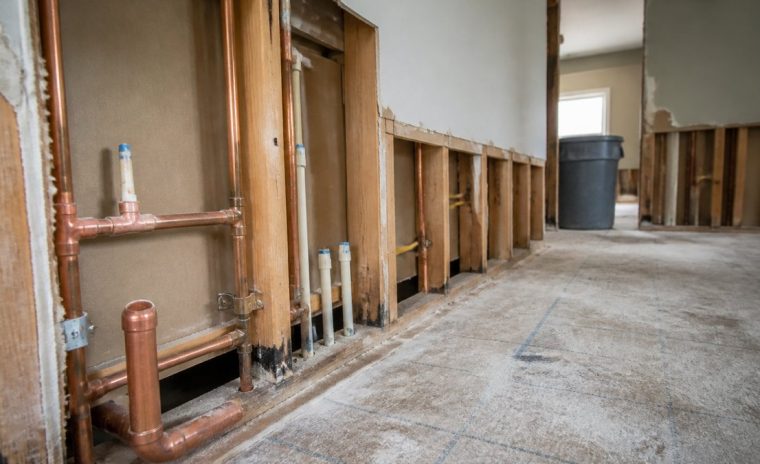
Table of Contents
- Is Whole Home Repiping Worth It? A Framework for Deciding
- Signs a House Needs Repiping
- Whole House Repiping Cost: What Drives the Price
- How Long Does It Take to Repipe a House?
- Copper vs. PEX Repiping: Pros, Cons, and Material Choice
- What to Expect During the Repiping Process
- How to Verify a Repiping Quote and Check Code Requirements
- Frequently Asked Questions
Last Updated: October 15, 2026
Is Whole Home Repiping Worth It? A Framework for Deciding
Whole home repiping is worth it when your pipes are failing, your water pressure keeps dropping, or you’re paying for the same repair twice a year. It is not worth it just because your house is old. We’ve walked Tucson homeowners through this exact decision, and the answer almost always comes down to pipe condition, not pipe age.
The rest of this guide gives you a clear framework for deciding whether whole home repiping makes sense for your house.
Key Takeaway
Age alone never justifies a repipe. Condition does. A 1975 home with copper in good shape may need nothing. A 1995 home with failing polybutylene needs a plan now.
Age alone never justifies a repipe. Condition does. A 1975 home with copper in good shape may need nothing. A 1995 home with failing polybutylene needs a plan now.
Repair vs. Replace: How to Weigh the Two Options
Repair wins when the problem is isolated. Replace wins when failures keep moving around the system.
Use this simple test:
| Situation | Better Choice | Why |
|---|---|---|
| One leak, one location | Repair | Limited fix, lower upfront cost |
| Three or more leaks in five years | Repipe | Pattern means system-wide failure |
| Water pressure drops at every fixture | Repipe | Blockage is throughout the supply lines |
| Discolored water only at one tap | Repair | Likely a single fixture or branch line |
| Insurance has paid two water damage claims | Repipe | Carriers may non-renew you |
The EPA’s guidance on lead in drinking water is also worth checking if your home was built before lead pipes were phased out.
Signs a House Needs Repiping
Signs a house needs repiping show up long before a pipe bursts. Watch for these:
- Recurring leaks in different spots
- Rusty or yellow water, especially in the morning
- Water pressure that keeps falling
- Visible corrosion or green staining on copper
- Pipes that sweat or feel soft to the touch
- A water bill that climbs with no change in use
One or two of these might mean a repair. Three or more usually means the plumbing system is near the end of its life. Hard water speeds this up, and Southern Arizona water is hard. Mineral scale builds inside the pipe and narrows the opening, so flow drops and pressure rises.
If you’re seeing these signs, a camera inspection and pressure test will confirm what’s happening before you commit to anything.
Whole House Repiping Cost: What Drives the Price
Whole house repiping cost depends on house size, pipe material, wall access, and how many fixtures need to be tied in. We give free estimates with flat-rate pricing, so you know the number before work starts.
The main cost drivers:
- Square footage and fixture count. More bathrooms, more runs. A three-bath home can carry 30-50% more labor than a one-bath home of the same size.
- Pipe material. Copper costs more in materials; PEX costs less. On a typical single-family home, the material spread between the two can run into the low thousands of dollars.
- Access. A slab foundation or finished walls add labor. Crawlspace and open-attic access is the cheapest scenario.
- Permits and inspections. Required by code in most jurisdictions and typically a few hundred dollars, but it varies by municipality.
- Drywall repair. Usually a separate line item and one of the most commonly omitted numbers in a low bid.
Watch for quotes that skip drywall repair, permit fees, or fixture reconnection. Those numbers come back later.
Long-Term Cost of Ownership and Break-Even
A repipe’s break-even point arrives when repair spending would have exceeded the repipe cost. Track what you’ve spent on plumbing repairs over the last five years. If that total is climbing year over year, the math usually favors repiping.
Run the numbers in three buckets:
- Direct repair spend. Add every service call, patch, and fixture replacement. A homeowner paying for two or three leaks a year is often already halfway to a repipe’s cost within a decade.
- Water damage and insurance. Each claim carries a deductible, and repeated claims can push a carrier toward non-renewal or a higher premium. That cost rarely shows up on a plumbing invoice but it is real.
- Utility waste. A leaking or scaled system can quietly raise the water bill. Compare a recent bill against a baseline from before the problems started.
A simple rule of thumb many practitioners use: if projected repair spending over the next five to seven years approaches or exceeds the repipe quote, repiping is the better financial call. If it is well below, repair and monitor.
Repiping also resets the clock on pipe lifespan, which matters at resale. Buyers and inspectors flag aging plumbing. A documented repipe with a warranty removes that objection and can support the asking price during negotiation.
Key Takeaway
Break-even is not a single number, it is the sum of repairs, water damage, insurance friction, and wasted water over the years you plan to stay. Add them up before you decide.
Break-even is not a single number, it is the sum of repairs, water damage, insurance friction, and wasted water over the years you plan to stay. Add them up before you decide.
How Long Does It Take to Repipe a House?
Most repipes take two to five working days, depending on house size and wall access. A single-story home with open attic and crawlspace access moves fast. A slab home with finished walls takes longer because we cut and patch more drywall.
Plan for:
- One to two days for the main runs
- One day for fixture tie-ins and testing
- One to two days for drywall patching and cleanup
Water is usually off during working hours and back on each evening. Most families stay home through the project.
Claim Your Free Estimate Today →
Copper vs. PEX Repiping: Pros, Cons, and Material Choice
Copper and PEX are both code-approved and both last decades. The choice comes down to budget, water chemistry, and how your home is built.
Copper
- Pros: Proven lifespan, handles heat well, recyclable, soldering is well understood
- Cons: Higher material cost, can corrode in aggressive water, rigid so it needs more fittings
PEX
- Pros: Lower cost, flexible so fewer fittings and faster installs, resists freezing better, no soldering
- Cons: Not for outdoor UV exposure, some insurers ask about it, not ideal for recirculation loops in every case
For most Tucson homes, PEX is the practical pick. Copper still makes sense where heat resistance or specific insurance requirements matter. We’ll walk you through both at the estimate.
What to Expect During the Repiping Process
Expect a licensed plumber to open small access points in walls and ceilings, route new water supply lines, tie in fixtures, pressure-test the system, then patch and clean up. We protect floors and furniture before we start.
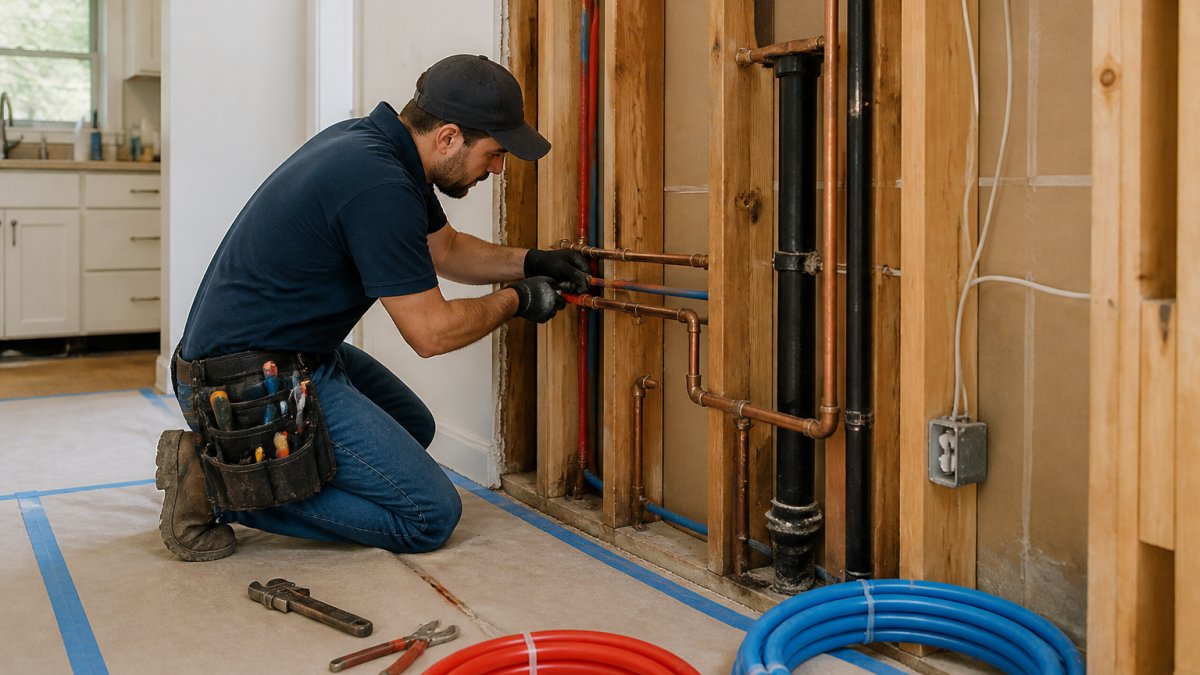
The typical flow:
- Walkthrough and protection of floors and furniture
- Access cuts at strategic points, not whole-wall demolition
- Old lines drained and new lines run
- Fixture tie-ins at every sink, toilet, tub, and appliance
- Pressure test and inspection
- Drywall patch, cleanup, and final walkthrough
Household disruption is real but short. Most homeowners say the worst part is the noise.
How to Verify a Repiping Quote and Check Code Requirements
Verify a repiping quote by checking five things: license number, permit inclusion, material spec, drywall repair, and warranty terms. If any of those are missing, ask before you sign.
Your checklist:
- Contractor license number, verifiable with the state
- Permit pulled in the contractor’s name, not yours
- Pipe material and brand written into the quote
- Drywall repair listed as a line item
- Warranty length and what it covers, in writing
- Payment schedule tied to milestones, not upfront
- Exclusions spelled out, what the quote does not cover
Permits, Inspections, and Code Stages
Permits and inspections are not optional. A repipe without a permit can fail at resale and may void insurance coverage. Local code sets the material standards and inspection steps, and the Uniform Plumbing Code overview from IAPMO explains how those standards are set.
A typical permitted repipe moves through three inspection points:
- Rough-in inspection. After new lines are run but before walls are closed. The inspector confirms material, support spacing, and routing.
- Pressure test. The system is charged and held to confirm no leaks before concealment.
- Final inspection. After fixture tie-ins and before or alongside drywall close-up, depending on jurisdiction.
Ask your contractor which inspections apply and who schedules them. A quote that never mentions inspections is a quote that has not accounted for them.
Water Quality by Pipe Type
Plumbing reliability and water quality are related but not the same question. Copper and PEX both meet health standards when installed correctly, and neither is a treatment system.
- Copper is inert in most water chemistries but can corrode in aggressive or low-pH water, which is a durability issue more than a health one.
- PEX does not leach lead and is widely accepted, though some homeowners prefer to confirm the brand and certification listed on the quote.
- Galvanized and lead service lines are the real water-quality concern. If your home still has them, replacing them improves both flow and water quality, and that is a separate scope from interior repiping.
If you have specific water-quality questions, a water test is the right next step. Repiping is a plumbing decision; water testing is a water-quality decision, and they should not be conflated in a sales pitch.
Watch Out
Never sign a repipe quote that omits the permit, the inspection stages, or the drywall scope. Those three omissions are the most common source of mid-project change orders.
Never sign a repipe quote that omits the permit, the inspection stages, or the drywall scope. Those three omissions are the most common source of mid-project change orders.
Frequently Asked Questions
How do you know when a house needs to be repiped?
The clearest signs include recurring leaks in multiple locations, discolored or metallic-tasting water, a sudden drop in water pressure across fixtures, and visible corrosion or mineral scale on exposed pipes. Homes with original galvanized steel or polybutylene plumbing are strong candidates, since these materials degrade faster than copper or PEX. If you’ve paid for three or more leak repairs in two years, repiping usually costs less than continuing to patch the same failing system.
Is it cheaper to repair pipes or replace them?
A single repair is always cheaper upfront than whole home repiping. The math shifts when leaks keep returning. Each repair involves labor, wall access, and drywall patching, and those costs add up fast on an aging system. Repiping is a one-time investment that resets your plumbing’s lifespan to 50 years or more with copper and PEX. Ask a licensed plumber to compare the total cost of ongoing repairs against a full replacement for your specific home.
Does repiping a house increase its value?
New water supply lines are a strong selling point. Buyers and home inspectors flag old galvanized or polybutylene plumbing as a risk, and a documented repipe removes that objection. You also gain practical benefits: better water pressure, fewer emergency calls, and lower insurance risk from water damage. The value bump depends on your local market, but in older homes, updated plumbing often helps a property sell faster and closer to asking price.
How do plumbers repipe a house?
A repiping crew maps the existing system, then runs new copper or PEX lines through walls, ceilings, and crawlspaces, often using the old pipes as a path to limit demolition. They connect fixtures, water heater, and main supply, then pressure-test the whole system before closing walls. Most jobs take two to five days for an average home. Expect some drywall openings, daily cleanup, and a final inspection to confirm the work meets local code.