Claim Your Free Estimate Today
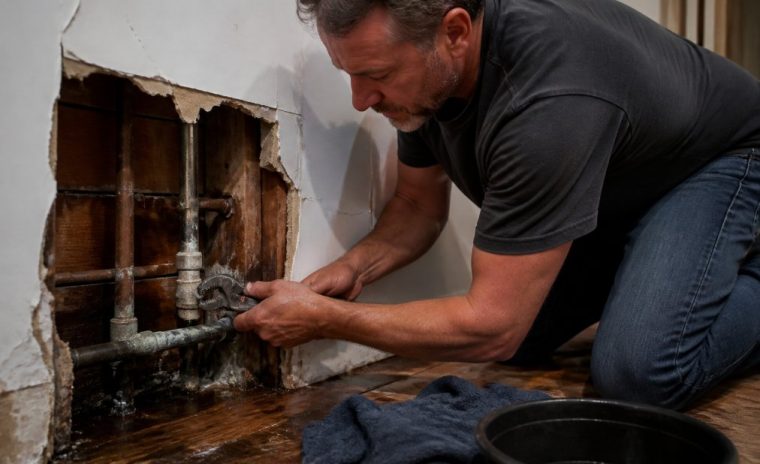
Table of Contents
- Immediate Steps to Take When a Pipe Bursts
- How to Shut Off the Main Water Supply
- Identifying the Location of the Burst
- Signs of Corroded Pipes in Old Houses
- Why Is My Water Pressure Low After a Burst
- Tools and Materials Needed for Repair
- When to Call a Professional Plumber
- Cost of Repiping an Older Home
- Frequently Asked Questions
Last Updated: August 27, 2026
Immediate Steps to Take When a Pipe Bursts
When a pipe bursts, the first few minutes determine damage severity. Locate your main shutoff valve immediately, this is the single most critical action. While moving toward it, turn off your water heater if safely accessible.
If the burst is localized to one fixture, use a secondary shutoff valve specific to that line if available. After stopping the water, open all faucets and drain valves to release remaining pressure. Document everything with photos or video for your homeowner’s insurance.
At Acclaimed Drain And Plumbing Solutions, LLC, we recommend calling a licensed plumber immediately, even if the burst seems minor. Older homes often have multiple hidden issues, and a professional can identify secondary damage that isn’t visible.
How to Shut Off the Main Water Supply
The main shutoff valve controls water entering your entire home. In older houses, it’s typically located in the basement, crawl space, or near the foundation. Finding it now, before a crisis, is essential.
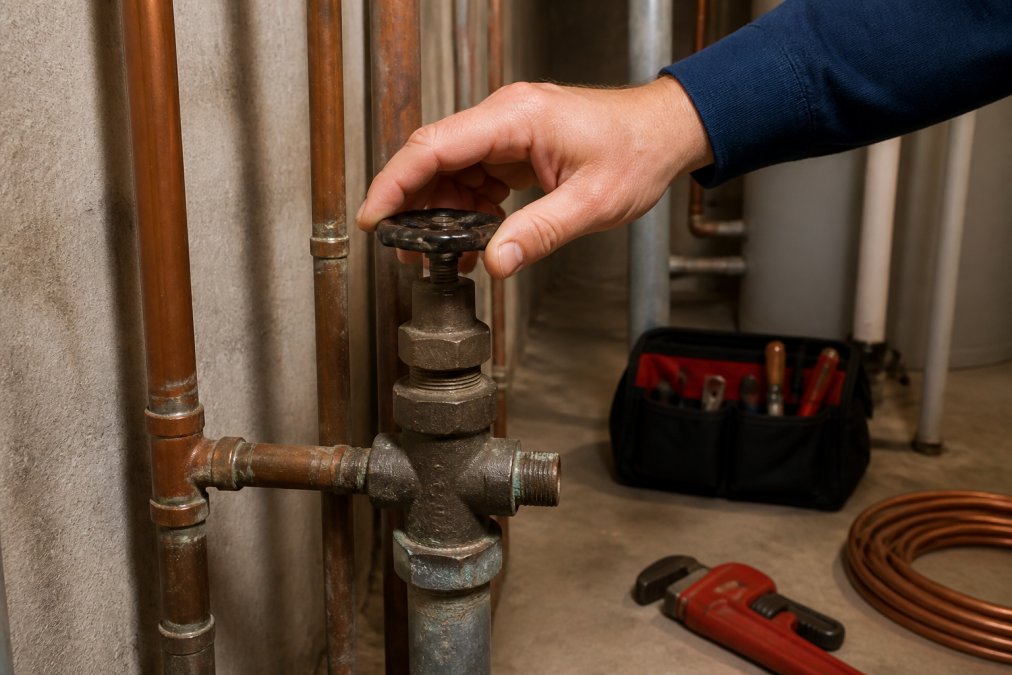
The valve usually appears as a handle or lever attached to the water supply line. If your home has a water meter, the main shutoff is often near it. Turn the handle clockwise to close the valve, applying firm pressure if it’s stiff from disuse.
If you can’t locate the main shutoff or it won’t turn, check outside your home. Some older properties have an exterior shutoff near the street or property line, marked by a small metal box. If the exterior shutoff is exposed in a cold climate, it may be buried under snow or dirt.
Once closed, water should stop flowing. If it doesn’t, you may have a secondary shutoff that needs closing, or the valve itself may be faulty. Test your shutoff regularly, at least twice a year, to prevent it from seizing during an actual emergency.
Identifying the Location of the Burst
Pinpointing where a pipe has burst helps you understand the scope of damage and accessibility. Water doesn’t always leak exactly where the break occurs, it follows gravity and the path of least resistance.
Look for active water spraying or flowing from a specific point. If you see water coming from a wall, ceiling, or floor, mark the location and check above and below it; the actual burst may be several feet away.
For underground or in-wall bursts, signs are more subtle: soft spots in flooring, discoloration on ceilings or walls, mold growth, or a persistent musty smell. Use a flashlight to trace pipes from the suspected burst location back toward the main line. This helps you understand the system layout and is invaluable when explaining the problem to a plumber.
If you can’t locate the burst, consider hiring a professional with leak detection equipment. Acoustic sensors and thermal imaging can pinpoint hidden leaks without invasive tearing.
Signs of Corroded Pipes in Old Houses
Corroded pipes are a hallmark of older homes, particularly those with original plumbing from the 1970s or earlier. Recognizing corrosion early gives you time to plan repair or replacement before catastrophic failure.
Galvanized steel pipes, once the standard for water supply lines, corrode from the inside out. The first sign is often discolored water, brown, orange, or rust-colored, indicating iron oxide particles breaking free from corroded pipe walls. Low water pressure is another red flag, as corrosion buildup narrows the interior diameter and restricts flow.
Pinhole leaks are the visual warning sign. These tiny holes develop when corrosion eats through the pipe wall. In older homes, pinhole leaks often appear in clusters; if you find one, others are likely developing nearby.
Copper pipes, installed in many homes from the 1980s onward, corrode differently. Aggressive water chemistry, particularly acidic water with low pH, causes copper corrosion. You might see blue or green discoloration on pipe joints or fittings.
Older homes with lead solder joints (common before 1986) face an additional concern. Corrosion of the solder can release lead into the water supply, a serious health hazard, especially for children and pregnant women. If your home was built before 1986, have the water tested for lead.
The most reliable way to assess pipe condition is a professional plumbing inspection with a sewer camera. This allows a technician to see inside the pipes and document corrosion, mineral buildup, and other degradation.
Why Is My Water Pressure Low After a Burst
Low water pressure after a burst can indicate several problems, some requiring immediate attention and others developing over time.
The most common reason for immediate pressure loss is air in the lines. When a pipe ruptures, water escapes and air enters the system. To purge air, open all cold water faucets in your home and let them run for several minutes, starting with the lowest faucets (basement) and working upward. This usually restores normal pressure within 10-15 minutes.
If pressure remains low after bleeding the air, the burst itself may be restricting flow. Large cracks or splits reduce the effective pipe diameter, limiting water passage. A significant rupture will require repair or replacement to restore full pressure.
In older homes, corrosion buildup inside pipes can suddenly worsen after a burst. The force of water escaping can dislodge rust and mineral deposits, which then lodge downstream and block flow. A professional plumber can flush the lines to clear this buildup, though the underlying corrosion remains.
For older homes with galvanized pipes, low pressure after a burst often signals that the entire system is near the end of its lifespan. Once one section fails, others typically follow within months or years. This is the time to consider whole-home repiping with modern materials like PEX tubing.
Tools and Materials Needed for Repair
Repairing a burst pipe requires specific tools and materials matched to your pipe type and damage extent. Older homes typically use either copper or galvanized steel.
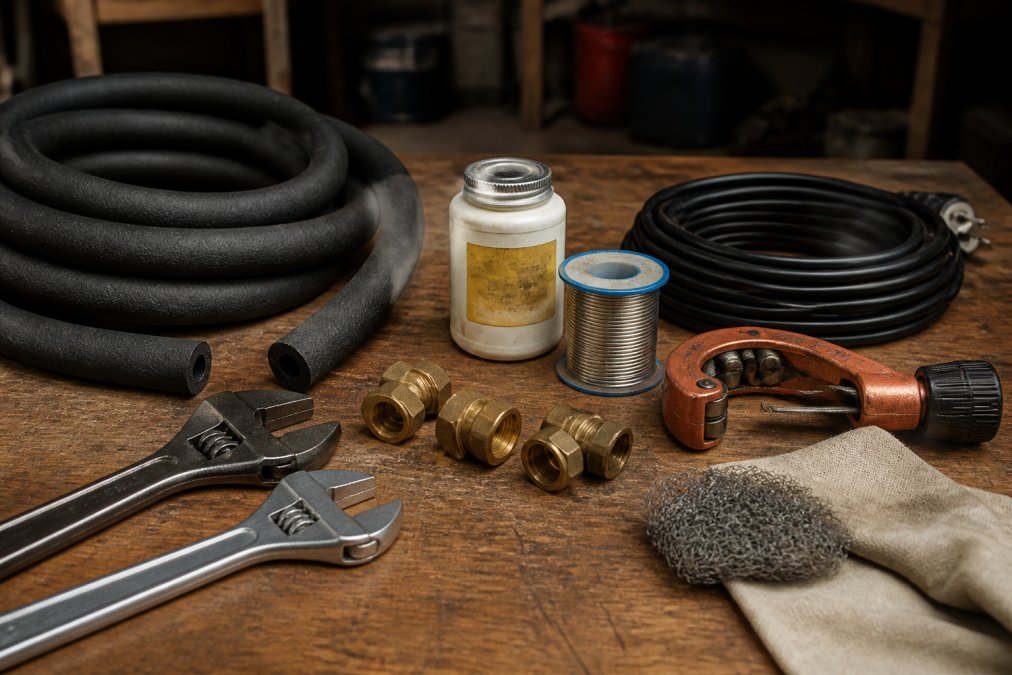
For copper pipes, you’ll need a copper pipe cutter, soldering flux, lead-free solder, and a propane torch. The pipe cutter makes clean, square cuts necessary for proper fitting. Soldering flux helps the solder bond to the copper surface, and lead-free solder creates a watertight seal.
For galvanized steel pipes, compression fittings are the most practical repair option. These fittings don’t require soldering and work by compressing a ferrule (metal ring) onto the pipe as you tighten the nut. You’ll need two adjustable wrenches, one to hold the fitting body and one to turn the nut.
Claim Your Free Estimate Today →
For temporary repairs, pipe repair epoxy putty works on both copper and galvanized pipes for small pinhole leaks. Clean and dry the area thoroughly, knead the putty, and press it firmly over the leak. It sets in 10-15 minutes. Self-fusing silicone tape stretches as you wrap it around the pipe, creating a temporary watertight seal.
For preventing future bursts in exposed pipes, pipe insulation foam or fiberglass wrap reduces freezing risk in cold climates. Heat tape provides additional protection in unheated spaces.
Safety equipment is essential. Wear safety glasses when cutting pipes, as metal shavings fly during the cut. Work gloves protect your hands from sharp edges and hot metal. Ensure you have a fire extinguisher nearby if using a torch, and never work in enclosed spaces without proper ventilation.
Most temporary repairs work for days or weeks, giving you time to arrange a professional repair. Permanent fixes should be handled by a licensed plumber.
When to Call a Professional Plumber
Some burst pipe situations are beyond safe DIY repair. Knowing when to call a professional protects your home, health, and wallet.
Call a plumber immediately if the burst involves the main water line entering your home. This is the highest-pressure part of your system, and repairing it requires specialized equipment and knowledge of local plumbing codes.
If the burst is underground or inside a wall, professional help is non-negotiable. These locations require specialized leak detection equipment to locate the exact break point. Trenchless repair technology, available from companies like Acclaimed Drain And Plumbing Solutions, LLC, can often address these breaks without excavation.
Bursts involving galvanized steel pipes in older homes warrant professional assessment. Corrosion is usually systemic; if one section failed, others are likely compromised. A plumber can evaluate whether patching makes sense or if partial or whole-home repiping is the better long-term solution.
If you’re unsure about your pipe material, the burst location, or the extent of damage, call a professional for diagnosis. Many plumbers offer free estimates. Acclaimed Drain And Plumbing Solutions, LLC provides 24/7 emergency service with live dispatchers, ensuring fast response when you need help most.
Water damage from a burst can trigger mold growth within 24-48 hours. If significant water has entered walls, flooring, or insulation, professional water damage mitigation is necessary alongside plumbing repair.
Cost of Repiping an Older Home
Repiping is one of the most significant plumbing investments a homeowner can make, and older homes often need it. Understanding what drives costs helps you evaluate whether repair or replacement makes financial sense.
The scope of repiping determines cost more than anything else. Replacing just the main water line is less expensive than replacing all supply lines throughout the home. Material choice affects cost substantially. Modern PEX tubing is less expensive to install than copper, though copper is more durable and lasts longer. PEX uses compression fittings and is faster to install, reducing labor costs.
Labor costs vary by region and complexity. Homes with easy access to pipes cost less to repipe than homes where pipes run through walls and require cutting and patching. Your local plumbing code and permit requirements affect total cost. Licensed plumbers like those at Acclaimed Drain And Plumbing Solutions, LLC handle permits and inspections as part of their service, ensuring the work meets code and protects your home’s value.
For a rough estimate, ask your plumber for a detailed breakdown: materials, labor, permits, and any water damage mitigation needed. Many plumbers offer financing options for large projects. Delaying repiping when corrosion is advanced often costs more in the long run; emergency repairs, water damage, and multiple service calls add up quickly.
Consider repiping an investment in your home’s future. Modern plumbing systems improve water pressure, reduce burst and leak risk, and may improve water quality. This investment also increases your home’s resale value and gives you peace of mind.
Burst pipes in older homes are often a sign that your plumbing system is reaching the end of its lifespan. What starts as one emergency repair frequently leads to another within months. At Acclaimed Drain And Plumbing Solutions, LLC, we help homeowners understand whether temporary fixes or long-term solutions like repiping make sense for their situation. Our team provides thorough diagnostics, clear explanations, and practical repair options so you can make informed decisions. Contact us for a free estimate on your burst pipe repair or repiping project, and let’s protect your home from future emergencies.
| Repair Scenario | Best Approach | Timeline | When to Act |
|---|---|---|---|
| Single pinhole leak in copper | Compression fitting or soldering | Hours to 1 day | Immediately to prevent spread |
| Main water line burst | Professional replacement or trenchless repair | 1-3 days | Emergency, same day |
| Galvanized pipe corrosion throughout home | Full or partial repiping | 3-7 days | Within weeks before more bursts |
| Frozen pipe causing burst | Thaw and repair/replace | Hours to 1 day | Immediately; prevent future freezing |
| Underground burst | Trenchless repair or excavation | 1-3 days | Emergency, same day |
Pro Tip
Before calling a plumber, locate your main shutoff valve and practice turning it off and on. This simple step can save thousands in water damage if a burst occurs when you’re not home or during off-hours.
Before calling a plumber, locate your main shutoff valve and practice turning it off and on. This simple step can save thousands in water damage if a burst occurs when you’re not home or during off-hours.
Watch Out
Never attempt to solder copper pipes if you’re unfamiliar with the process. Improper soldering creates weak joints that fail under pressure, potentially causing a worse burst than the original problem. This is one repair where professional work is worth the cost.
Never attempt to solder copper pipes if you’re unfamiliar with the process. Improper soldering creates weak joints that fail under pressure, potentially causing a worse burst than the original problem. This is one repair where professional work is worth the cost.
Key Takeaway
Low water pressure after a burst often resolves by bleeding air from the lines. If pressure remains low after 15 minutes of running all faucets, the burst itself is restricting flow and requires professional repair.
Low water pressure after a burst often resolves by bleeding air from the lines. If pressure remains low after 15 minutes of running all faucets, the burst itself is restricting flow and requires professional repair.
Supporting keyword mentions:
For context on why water pressure drops after a burst, understanding why is my water pressure low after a burst requires knowing that air enters the system when the pipe ruptures. Signs of corroded pipes in old houses typically include discolored water and pinhole leaks. The cost of repiping an older home varies based on scope and materials, but it’s often the most cost-effective long-term solution when corrosion is systemic.
External sources for credibility:
American Society of Plumbing Engineers guidelines on residential water supply systems recommend professional assessment for any burst in the main water line or underground sections. EPA guidance on lead in drinking water and corrosion control notes that homes with lead solder joints built before 1986 should have water tested. National Association of Home Builders resources on aging plumbing systems documents that galvanized steel pipes typically last 50-75 years, making replacement critical for homes built in the 1950s-1970s.
Frequently Asked Questions
Should I shut off the main water valve if a pipe bursts?
Yes, immediately. Shutting off the main shutoff valve stops water flow and prevents further damage to your home. Locate your main water supply line, typically in the basement, crawl space, or near the foundation, and turn the valve clockwise until it stops. This is your first critical action during any burst pipe emergency. If you cannot locate it or the valve is stuck, call a licensed plumber right away.
How do I know if a pipe has burst behind a wall?
Signs include unexplained water stains on walls or ceilings, soft or discolored drywall, a sudden drop in water pressure throughout your home, or the sound of running water when all fixtures are off. Older homes with galvanized steel pipes or corroded copper are especially vulnerable. If you suspect a hidden burst, do not ignore it, water damage and mold can develop quickly. A licensed plumber can use leak detection equipment and sewer camera inspection to pinpoint the problem.
What is the cost of repiping an older home?
Repiping costs depend on the size of your home, the type of existing pipes (galvanized steel, copper, or PEX), how accessible the plumbing system is, and local labor rates. Whole-home repiping is a significant investment, but it eliminates recurring burst pipe problems and improves water pressure and quality. Contact a licensed plumber for a free estimate tailored to your specific situation and home age.
Will homeowners insurance cover a pipe burst?
Coverage depends on your policy and the cause of the burst. Sudden, accidental bursts are often covered, but damage from lack of maintenance, freezing, or gradual corrosion may not be. Review your policy or contact your insurance agent to understand your coverage. If a burst occurs, document the damage with photos and contact your insurer promptly to file a claim.