Claim Your Free Estimate Today
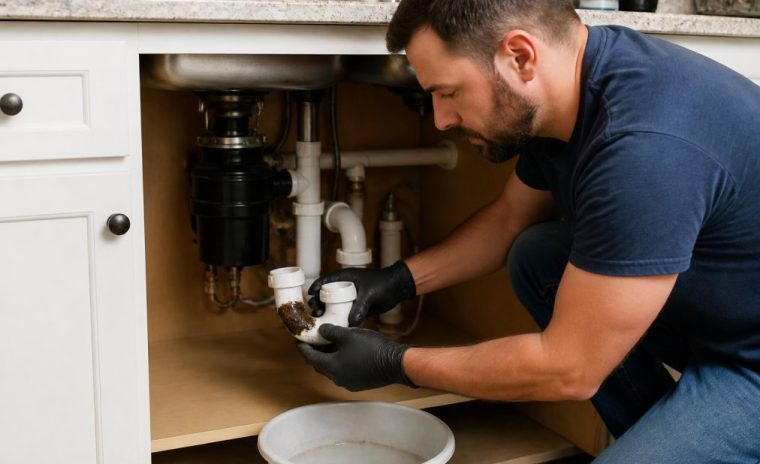
Table of Contents
- Understanding Why Sink Backups Recur
- Diagnosing the Source: Local Clog vs. Main Sewer Line Blockage
- Step-by-Step Solutions for Recurring Sink Backups
- Best Tools for Clearing Stubborn Sink Clogs
- Hydro Jetting vs. Snaking for Recurring Backups
- Preventative Maintenance to Stop Backups Before They Start
- When to Call a Professional Plumber
- Conclusion
- Frequently Asked Questions
Understanding Why Sink Backups Recur
A recurring sink backup happens when water drains slowly or backs up repeatedly, even after clearing it. Most homeowners assume it’s a simple clog, but recurring backups signal something deeper: either a persistent obstruction that keeps reforming, or a systemic drainage issue. The backup goes away temporarily, then returns within weeks, telling you that you’re treating the symptom, not the cause.
Common causes of recurring backups
Grease and soap scum buildup is the most common culprit in kitchen sinks. As grease cools, it solidifies and coats drain line walls. Soap scum compounds the problem by sticking to the grease. You clear it, but the grease coating remains, so another clog forms within days or weeks.
Food particle accumulation happens faster than most realize. Bits that slip past the garbage disposal lodge against grease buildup or catch on the P-trap. Over time, more particles pile up, and the clog returns because you’re only removing particles, not the underlying grease trapping them.
Garbage disposal issues create a specific pattern. If your disposal isn’t grinding food fine enough, larger particles enter the drain line and get stuck downstream, creating recurring backups.
Blocked plumbing vents create a less obvious but real problem. Your drainage system needs air to function properly. If the vent is blocked by debris, leaves, or animal nests, water drains slowly everywhere in your home.
P-trap issues happen when the P-trap itself becomes partially blocked or develops a persistent obstruction, causing clogs to form repeatedly in the same spot.
Diagnosing the Source: Local Clog vs. Main Sewer Line Blockage
Before spending time and money, determine whether the problem is local to one fixture or systemic in your main sewer line. The distinction matters because solutions are completely different.
How to tell if the problem is in your main line
Single fixture backing up? The clog is local. Multiple fixtures backing up simultaneously is a red flag for a main sewer line issue. Check by running water in other drains simultaneously. If your kitchen sink backs up but bathroom sinks drain fine, the problem is isolated to the kitchen drain line.
Listen for gurgling sounds when water drains from other fixtures. Gurgling happens when air can’t flow freely through the drainage system. If you hear it from multiple drains, the blockage is likely in the main line downstream.
Check your cleanout access point. Most homes have a cleanout cap at ground level where the main drain line exits the house. If water is pooling around this area or sewage is backing up here, your main sewer line is blocked. This is not a DIY fix.
Watch for slow drainage everywhere. If every fixture drains slowly and the problem started suddenly, suspect a main line blockage. Recurring backups in just one sink usually mean the problem is local.
Look for soggy patches in your yard. A main sewer line blockage or break can cause water to pool in your yard. Dead patches of grass or unusually wet soil can signal a main line issue.
If you determine the problem is in your main sewer line, call a professional. Acclaimed Drain & Plumbing Solutions, LLC uses sewer camera inspections and professional diagnostic equipment to identify exactly where the blockage is and what’s causing it. For local clogs, proceed with the step-by-step solutions below.
Step-by-Step Solutions for Recurring Sink Backups
These methods work best when applied in sequence. Start with the simplest and move to more aggressive techniques only if earlier steps don’t solve the problem.
Step 1: Clear the P-trap and drain line
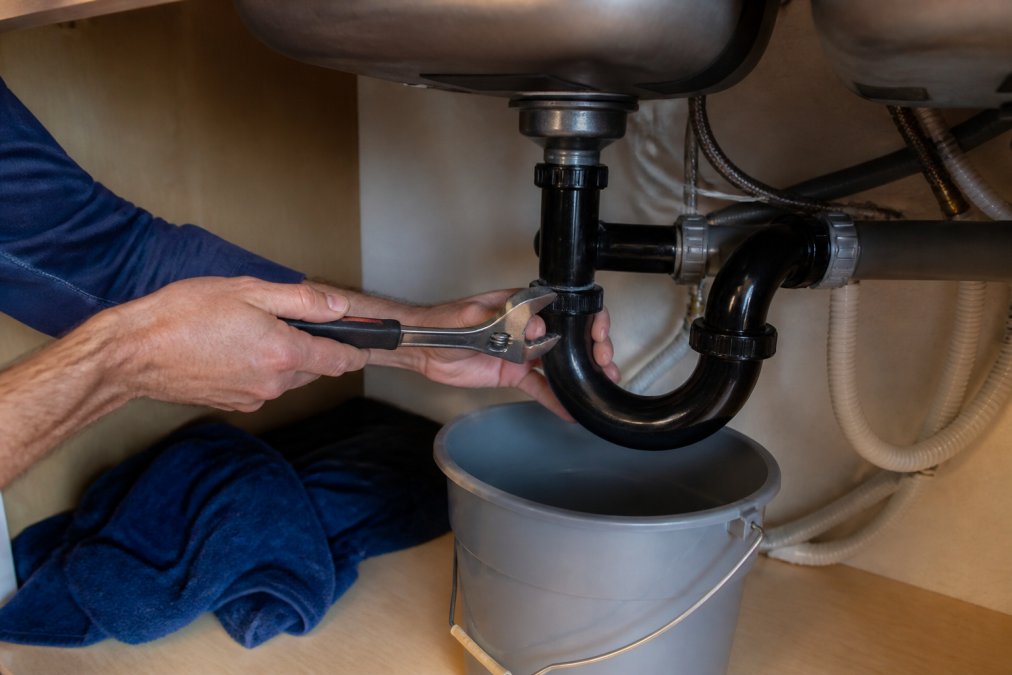
The P-trap is the curved section of pipe directly under your sink. It’s the easiest place to clear and often where debris gets stuck.
What you’ll need: A bucket, adjustable wrench, old towels, and a flashlight.
The process:
Place a bucket under the P-trap to catch water. Loosen the slip nuts using your wrench, then unscrew them by hand. Slide the P-trap out carefully and look inside with your flashlight. Remove accumulated debris, hair, soap scum, or grease with your fingers or a small brush and rinse thoroughly with hot water. While the P-trap is off, use a flashlight to look up into the drain line opening. If you see debris or buildup, use a wire brush to scrub it away. Reinstall the P-trap, hand-tightening the slip nuts first, then use your wrench to snug them. Don’t over-tighten. Run water slowly to check for leaks.
Expected result: If the backup was caused by debris in the P-trap, you’ll see immediate improvement. If the problem persists, the blockage is deeper in the drain line.
Step 2: Remove grease and soap scum buildup
Once the P-trap is clear, address the grease coating your drain line walls. This is what causes clogs to reform.
Boiling water method: Boil a large pot of water (2-3 quarts) and carefully pour it slowly down the drain. The heat helps dissolve grease and soap scum. Repeat two or three times, spacing pours a few minutes apart.
Baking soda and vinegar method: Pour about half a cup of baking soda down the drain, followed by one cup of white vinegar. The mixture will fizz and bubble. Cover the drain opening with a plug or cloth to keep the reaction contained in the pipe. Let it sit for 30 minutes to an hour, then flush with hot water.
Enzymatic drain cleaner: Enzymatic cleaners use natural enzymes to break down organic matter like grease and food particles. They’re safer than chemical drain cleaners and won’t damage your pipes. Follow the product instructions, which typically involve pouring the cleaner down the drain and letting it sit overnight.
What to avoid: Chemical drain cleaners create extreme heat and can damage older pipes. Skip them in favor of the methods above.
Step 3: Clear food particles and debris
If grease isn’t the primary issue, food particles and general debris may be the culprit.
Using a drain snake: A drain snake is a flexible coil of metal that you feed down the drain. As you turn the handle, the coil rotates and breaks up debris or pulls it back up. Feed the snake down slowly, turning the handle as you go. You’ll feel resistance when the snake hits the clog. Keep turning and pushing until the clog breaks apart or the blockage clears. Drain snakes are inexpensive (under $20) and effective for food particles and hair.
Manual debris removal: If you can see debris in the drain opening, use needle-nose pliers or a wire hook to pull it out. This works for hair, soap clumps, and food particles within reach.
Step 4: Check the plumbing vent
If the drain still backs up after clearing the P-trap and removing grease, the vent stack may be blocked.
Locate your vent stack: It’s a pipe that extends through your roof, usually near the main drain line or over the main bathroom.
Look for blockages: Climb a ladder safely and look down into the vent opening. Debris, leaves, bird nests, or ice can block it. Remove any obvious blockages carefully.
Clear the vent: Use a plumbing snake or flexible tubing to push down through the vent and clear any blockage. Install a vent cap or strainer over the vent opening to keep leaves and debris out. A blocked vent restricts air flow in your drainage system, making all drains slower. Clearing the vent often solves recurring backup problems that resist other fixes.
Best Tools for Clearing Stubborn Sink Clogs
When standard methods don’t work, the right tool makes the difference between a DIY fix and a professional service call.
Claim Your Free Estimate Today →
Plunger technique for maximum water pressure
Most people use a plunger incorrectly. The technique matters more than the tool itself.
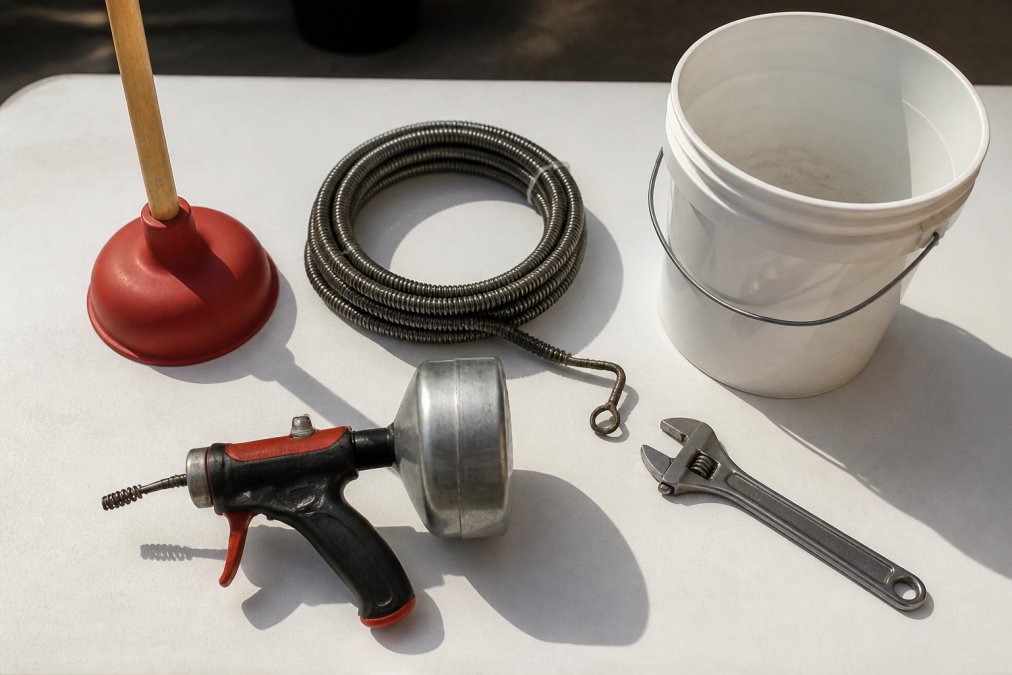
Use a cup plunger (the flat-bottomed kind, not a flange plunger). Fill your sink with a few inches of water. Position the plunger cup completely over the drain opening so it forms an airtight seal. Press down and pull up rapidly, keeping the seal intact. The goal is to create pressure and suction that dislodges the clog. Repeat this motion 15-20 times without breaking the seal.
For double sinks: Block the second drain with a wet cloth or stopper before plunging. This prevents air from escaping through the second drain, which reduces the pressure you can build. A proper plunging session takes 2-3 minutes of continuous motion. Persistence matters.
Drain snake and auger options
Manual drain snakes are 15-25 feet long, cost under $20, and work by mechanical action. They’re effective for clogs within 15-20 feet of the drain opening.
Powered augers (electric or cordless) do the rotating work for you. They’re faster and require less physical effort. A basic powered auger costs $50-150 and is worth the investment if you deal with recurring clogs (consumerreports.org). For most kitchen sink clogs within the first 10 feet, a manual snake works fine.
Hydro Jetting vs. Snaking for Recurring Backups
When mechanical clearing isn’t enough, or when you want to prevent backups from reforming, hydro jetting offers a more thorough solution than snaking alone.
Drain snaking removes the immediate blockage by breaking it apart or pulling it out. It’s effective but doesn’t address underlying buildup. Grease coating, soap scum, and mineral deposits remain on pipe walls. Clogs reform within weeks or months.
Hydro jetting uses pressurized water (typically 3,000-4,000 PSI) to blast away all buildup from pipe walls. It removes grease, soap scum, mineral deposits, and debris completely. The pipe is left clean, not just open. This is why hydro jetting solves recurring backup problems more permanently.
Hydro jetting is not a DIY solution. It requires professional equipment, training, and safety precautions. Acclaimed Drain & Plumbing Solutions, LLC uses hydro jetting for recurring backups because it addresses the root cause, not just the symptom.
When to choose each:
- Snaking: First backup, minor blockages, budget constraints
- Hydro jetting: Recurring backups, severe grease buildup, multiple blockages in the same system
Preventative Maintenance to Stop Backups Before They Start
The best fix is prevention. A few simple habits eliminate most recurring backup problems.
Eco-friendly drain maintenance routines
Weekly hot water flush: Once a week, boil a kettle of water and pour it slowly down your kitchen drain. This keeps grease from solidifying and accumulating.
Monthly baking soda treatment: Pour half a cup of baking soda down your drain, followed by vinegar. Let it sit for 30 minutes, then flush with hot water. This keeps soap scum and light grease from building up.
Quarterly enzymatic cleaner: Use a commercial enzymatic drain cleaner once every three months. These products break down organic matter before it accumulates into a clog.
These three routines, done consistently, prevent most recurring backups and cost almost nothing.
What to avoid pouring down drains: Cooking grease or oil (let it solidify in a container and throw it away), coffee grounds, pasta, rice, or other starchy foods, and hair (use a drain strainer to catch it).
Garbage disposal care and vent stack inspection
Garbage disposal maintenance: Run cold water while using the disposal, not hot. Cold water helps grease solidify so the disposal can grind it completely. Once a month, grind ice cubes in the disposal. The ice helps sharpen the blades and clears accumulated buildup inside the chamber. Don’t overload the disposal. Feed food in gradually while the water runs.
Vent stack inspection: Check your vent stack opening twice a year, especially in fall and spring. Remove any debris, leaves, or nesting material. Install a vent cap if you don’t have one. This prevents blockages that cause slow drainage throughout your home.
When to Call a Professional Plumber
Some situations require professional help. Knowing which ones saves you time and money.
Call a professional if:
- Multiple fixtures back up simultaneously (likely main sewer line issue)
- You see sewage or foul-smelling water backing up into your home
- Your yard has soggy patches or unusual pooling
- You’ve cleared the drain and it backs up again within a few days
- You hear persistent gurgling sounds from multiple drains
- You suspect a blocked vent stack but can’t safely access it
- Your home is older (built before 1970) and you’re experiencing recurring backups for the first time
Professional plumbers have tools you don’t: sewer cameras that show exactly what’s causing the backup, hydro jetting equipment for thorough cleaning, and expertise to diagnose main line issues safely. Acclaimed Drain & Plumbing Solutions, LLC provides 24/7 emergency service for backups outside normal business hours. Our team uses professional diagnostic equipment, sewer camera inspections, and photo documentation to identify the exact cause. We explain our findings clearly and give you practical options so you can make informed decisions about whether to clear, repair, or replace your system. The cost of a professional diagnosis is far less than repeated DIY attempts that don’t solve the underlying problem.
Conclusion
Recurring sink backups are frustrating, but they’re fixable. The key is diagnosing whether the problem is local to one drain or systemic in your main line, then applying the right solution.
For local clogs, start with P-trap cleaning and grease removal. If that doesn’t work, try a drain snake or check your vent stack. For recurring backups that keep coming back despite your efforts, hydro jetting solves the problem more permanently than snaking alone.
Prevention through monthly maintenance, hot water flushes, baking soda treatments, and enzymatic cleaners stops most backups before they start. These habits cost almost nothing and take minutes per month.
When the problem persists or involves your main sewer line, professional diagnosis and repair become necessary. Acclaimed Drain & Plumbing Solutions, LLC has helped homeowners in the area restore steady water flow and prevent future backups through accurate diagnostics and lasting solutions. Learn more about maintaining your home’s plumbing system to understand how your drainage system works and why preventative care matters.
Claim Your Free Estimate Today and let our team diagnose your recurring backup problem accurately.
| Solution | Best For | DIY Difficulty | Cost |
|---|---|---|---|
| P-trap cleaning | Debris and hair clogs | Easy | Free to $20 |
| Boiling water | Light grease buildup | Very easy | Free |
| Drain snake | Food particles and blockages | Moderate | $15-50 |
| Enzymatic cleaner | Ongoing maintenance | Very easy | $10-20 |
| Plunger | Quick first attempt | Easy | $15-30 |
| Hydro jetting | Recurring backups, grease buildup | Professional only | Varies |
| Vent stack clearing | Slow drainage everywhere | Moderate | $0-50 |
Pro Tip
If your backup returns within two weeks after clearing it, the root cause is still there. Don’t keep plunging the same clog. Move to hydro jetting or call a professional to diagnose what’s actually causing the recurring problem.
If your backup returns within two weeks after clearing it, the root cause is still there. Don’t keep plunging the same clog. Move to hydro jetting or call a professional to diagnose what’s actually causing the recurring problem.
Watch Out
Never pour chemical drain cleaners down a drain connected to a septic system. They kill the beneficial bacteria that break down waste. Even in homes with municipal sewer, chemical cleaners can damage older pipes. Stick with hot water, baking soda, or enzymatic cleaners for safety.
Never pour chemical drain cleaners down a drain connected to a septic system. They kill the beneficial bacteria that break down waste. Even in homes with municipal sewer, chemical cleaners can damage older pipes. Stick with hot water, baking soda, or enzymatic cleaners for safety.
Frequently Asked Questions
Can a main sewer line blockage cause recurring sink backups?
Yes. If multiple drains in your home back up or drain slowly at the same time, or if backups return within weeks despite clearing the local drain, the problem likely originates in your main sewer line. Main sewer line blockages are caused by tree roots, pipe corrosion, grease accumulation in the sewer main, or structural damage. A professional plumber can use a sewer camera inspection to confirm whether the issue is in your local drain line or main line, then recommend the appropriate repair method.
Why does my sink backup when I run the garbage disposal?
A garbage disposal can trigger backups if the impeller blades are jammed or damaged, if food particles are accumulating in the drain line downstream, or if the disposal is forcing debris into an already-compromised drainage system. Running cold water while using the disposal and avoiding fibrous foods, grease, and bones helps prevent this. If backups occur immediately after using the disposal, the disposal itself or the waste arm connected to it may be the source of the blockage.
What’s the difference between hydro jetting and snaking for recurring backups?
Drain snakes use a rotating auger to punch through blockages, but they may not fully clear grease, soap scum, or mineral deposits from pipe walls. Hydro jetting uses high-pressure water to blast away buildup and restore full drainage capacity, making it more effective for recurring backups caused by grease trap issues or soap accumulation. Snaking is faster and less expensive for simple clogs; hydro jetting is better for stubborn, recurring problems in older drainage systems with heavy debris accumulation.
When should I call a professional plumber for recurring drain issues?
Call a professional if backups return within a few weeks of clearing the drain, if multiple fixtures back up at once, if you see signs of a main sewer line blockage, or if DIY methods don’t resolve the problem. Also call immediately if you notice sewage backflow, hear gurgling sounds from drains, or detect water pressure problems across your plumbing system. A licensed plumber can diagnose the root cause and recommend permanent solutions, including pipe rehabilitation or sewer line repair if needed.