Claim Your Free Estimate Today
A commercial kitchen can look clean, operate on schedule, and still have a serious drain problem developing below the floor. Grease does not simply wash away. As it cools inside pipes, it sticks to the pipe walls and traps food debris, soap residue, and sediment. The best commercial grease clog solutions address that buildup at its source instead of briefly reopening the line and leaving the next backup waiting to happen.
For restaurants, cafeterias, hotels, bars, grocery stores, and other busy facilities, a grease-related backup is more than an inconvenience. It can stop kitchen operations, create sanitation concerns, damage flooring or equipment, and put staff in a difficult position during a rush. The right response depends on where the clog is located, how severe the buildup has become, and whether the drainage system has an underlying defect.
Why Commercial Grease Clogs Keep Coming Back
Grease clogs are rarely caused by one heavy meal service or one pan emptied into a sink. They develop gradually. Warm fats, oils, and grease enter the drain in liquid form, then cool and harden farther down the line. Over time, the drain diameter becomes smaller and water loses the ability to carry waste through the system.
A slow floor drain, sink that drains poorly, foul odor near a mop sink, or recurring backup may all point to grease accumulation. In some cases, the blockage is limited to a branch line near the kitchen. In others, grease has moved into a larger building drain or sewer line. The difference matters because the right equipment and repair scope are not the same.
Older commercial properties around Southern Arizona can also have rough, scaled, cracked, or offset piping. Those damaged areas catch grease and debris more easily than a smooth, properly sloped pipe. Clearing the grease without identifying pipe damage can restore flow for a short time, but it may not prevent the next service interruption.
Best Commercial Grease Clog Solutions Start With Diagnosis
Before choosing a treatment, a qualified plumbing team should determine what is actually restricting the line. A drain camera inspection is often the clearest way to see whether the problem is grease, a foreign object, root intrusion, pipe scale, a sagging line, or a damaged sewer connection.
This step prevents guesswork. For example, a kitchen line may appear clogged with grease, but a camera could reveal that repeated buildup is occurring at a broken fitting or a section of pipe with poor slope. In that situation, cleaning is necessary, but repair may be the long-term answer.
A proper diagnosis also helps facility managers make informed decisions. You should receive a straightforward explanation of what was found, what service is recommended, and whether there are options based on the condition of the line and your operating schedule.
Hydro Jetting for Heavy Grease Buildup
For many commercial kitchen drain lines, hydro jetting is the most effective cleaning method. This service uses controlled high-pressure water to break apart hardened grease and flush debris from the pipe walls. Unlike a basic cable machine that may create a narrow opening through a blockage, hydro jetting is designed to clean the interior of the line more thoroughly.
That difference is significant. If grease remains coated along the pipe, wastewater can begin catching on it again immediately. Hydro jetting removes much more of the material that causes repeat clogs, making it a strong option for heavily used kitchens and recurring drainage issues.
Hydro jetting is not automatically the right choice for every pipe. Older, fragile, or damaged lines should be evaluated first. A camera inspection allows the plumber to confirm the pipe can handle the service and to select the appropriate pressure and nozzle for the job. Done correctly, it is a targeted drain-restoration service, not a one-size-fits-all approach.
Mechanical Drain Cleaning for Localized Blockages
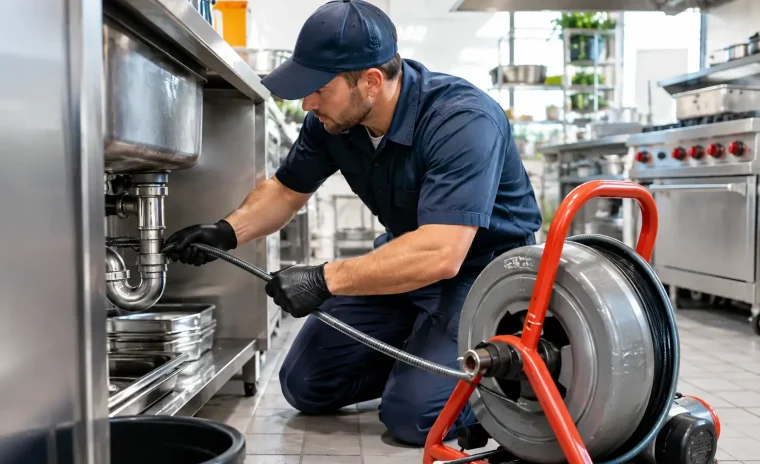
Commercial drain cabling can be useful when a blockage is localized or when a line needs immediate opening before deeper cleaning can be completed. A professional-grade cable machine uses specialized cutting heads to break through compacted debris and restore drainage.
This can be the practical choice for certain sink drains, smaller branch lines, or emergency conditions where water needs to move again quickly. However, cabling is often an opening method rather than a full grease-removal method. If the pipe walls remain coated, a maintenance cleaning or hydro jetting service may still be recommended to reduce repeat trouble.
Grease Interceptor Cleaning and Maintenance
A grease interceptor, sometimes called a grease trap, is meant to capture fats, oils, and grease before they travel into the drainage system. It is an essential part of protecting commercial kitchen piping, but it only works when it is maintained on schedule.
When an interceptor is overdue for cleaning, grease can pass through it or restrict flow inside the unit itself. Kitchen staff may notice slow drains, odors, or wastewater backing up near fixtures. Regular pumping and cleaning based on the volume of food preparation can prevent this equipment from becoming part of the problem.
Maintenance frequency depends on the size of the interceptor, menu type, daily kitchen volume, and local requirements. A high-volume restaurant may need service far more often than a small break room kitchen. Keeping service records and watching for changes in drain performance helps avoid being caught off guard.
When Drain Cleaning Is Not Enough
If a grease clog returns soon after professional cleaning, the line should be inspected for a structural issue. Cracks, separated joints, root intrusion, corrosion, bellies in the pipe, and improper slope can all create places where grease repeatedly collects.
In these cases, the durable solution may involve targeted drain repair, sewer repair, or trenchless pipe lining. Trenchless methods can be especially valuable at commercial properties because they may repair a damaged pipe with less disruption to finished flooring, landscaping, parking areas, or daily business operations.
The goal is not to recommend a larger repair when cleaning will solve the problem. It is to be candid about the condition of the system. If the pipe is sound, thorough cleaning and a maintenance plan may be all that is needed. If the pipe is failing, repeated emergency calls can cost more over time than correcting the underlying issue.
Prevention That Protects a Busy Kitchen
The most reliable grease-clog strategy combines professional cleaning with daily habits that keep unnecessary grease out of the plumbing system. Staff should scrape plates and cookware into waste containers before rinsing them. Grease, fryer oil, sauces, and food scraps should never be washed into sinks or floor drains, even when hot water is running.
Hot water and dish soap can move grease temporarily, but they do not eliminate it. Once the grease reaches cooler piping, it can solidify again. Chemical drain cleaners are also a poor substitute for maintenance. They may not remove heavy commercial buildup, can create safety concerns for staff, and may be hard on certain piping materials.
For facilities with consistent kitchen volume, scheduled drain maintenance is usually more cost-effective than waiting for a backup. The schedule should reflect real use, not a generic calendar. A restaurant with fryers and high turnover needs a different plan than an office kitchen or small café.
How to Respond When a Commercial Drain Backs Up
If wastewater is backing up into sinks, floor drains, or food-preparation areas, stop using the affected fixtures. Continued water use can spread the backup, increase cleanup costs, and create a larger sanitation issue. Keep staff away from contaminated water and avoid using harsh chemicals that could complicate the repair.
Then arrange for professional drain service that includes diagnosis, not just a quick opening. Acclaimed Drain And Plumbing Solutions LLC helps commercial property owners identify the source of drain and sewer problems, explain clear options, and complete repairs with clean workmanship and long-term performance in mind.
A dependable commercial plumbing partner can help you move from repeated clogs and emergency disruption to a drain system that handles the demands of your kitchen. If slow drains have become routine, treat that warning as an opportunity to correct the problem before the next busy shift turns it into a shutdown.