
Claim Your Free Estimate Today

Table of Contents
- How to Diagnose Low Water Pressure Before Calling a Plumber
- The Most Common Causes of Low Water Pressure in a House
- Signs of a Bad Water Pressure Regulator
- Low Water Pressure in Shower Only: What It Usually Means
- Well Water Pressure Tank Troubleshooting for Private Wells
- How to Increase Water Pressure in Your House
- Frequently Asked Questions
Last Updated: August 8, 2026
How to Diagnose Low Water Pressure Before Calling a Plumber
Low water pressure is a symptom, not a diagnosis. The cause could be anything from a partially closed shutoff valve to corroded galvanized steel pipes that have been quietly narrowing for decades. At Acclaimed Drain And Plumbing Solutions, LLC, we’ve worked through hundreds of these cases in Tucson and Southern Arizona, and the fastest path to a fix always starts with smart diagnostics before anyone picks up a wrench.
The good news: you can rule out the most obvious causes yourself in under 30 minutes. Below, we’ll walk you through a systematic approach that helps you pinpoint whether your pressure problem is isolated to one fixture, one zone, or your entire home.
Check Whether the Problem Is Isolated or Whole-Home
Start by testing every faucet and fixture in the house. Turn on the kitchen sink, both bathrooms, and an outdoor hose bib, one at a time, then simultaneously. Document what you find.
- Isolated to one fixture: The problem is almost certainly a clogged aerator, a faulty shutoff valve at that fixture, or a localized pipe restriction.
- Isolated to one area (e.g., upstairs only): Suspect a zone-specific shutoff valve, a branch line issue, or multi-story pressure dynamics.
- Whole-home low pressure: Look upstream: the main shutoff valve, the pressure regulator, the municipal water supply, or the main water line itself.
This single distinction cuts your diagnostic list in half before you’ve touched anything.
How to Test Your PSI with a Pressure Gauge
Static pressure is the pressure in your pipes when no water is flowing. Dynamic pressure is what you experience when fixtures are open. Both matter.
A simple pressure gauge, available at any hardware store, threads onto a hose bib. The Water Research Foundation’s guidance on residential water pressure notes that normal residential water pressure typically falls between 40 and 80 PSI. Anything below 40 PSI is considered low; above 80 PSI risks pipe and fixture damage.
To test:
- Shut off all water-using appliances (dishwasher, washing machine, irrigation).
- Thread the gauge onto an outdoor hose bib.
- Turn the bib fully on and read the static pressure.
- Note the reading, then open another fixture inside and re-read for dynamic pressure.
If static pressure reads fine but dynamic pressure drops sharply when multiple fixtures run simultaneously, your system is struggling with high household water demand, not a supply deficiency.
The Most Common Causes of Low Water Pressure in a House
Most low water pressure problems trace back to one of six root causes. Knowing which one you’re dealing with determines whether this is a Saturday DIY fix or a call to a licensed plumber.
Municipal Supply Issues and Seasonal Fluctuations
Your water utility delivers water at a set pressure to your neighborhood’s main water line. During peak demand periods, summer mornings in Southern Arizona when irrigation systems run simultaneously across entire subdivisions, the municipal water supply can drop noticeably for everyone on the block.
Contact your water utility and ask whether there are known pressure issues in your area, active main breaks, or scheduled maintenance. According to the EPA’s guidelines on drinking water infrastructure, municipal systems are required to maintain minimum delivery pressures, but temporary fluctuations during high-demand periods are common and legal. If your pressure is consistently low regardless of time of day, the problem is almost certainly inside your property.
Closed or Partially Closed Shutoff Valves
This is the most common cause missed after recent plumbing work. Every home has at least two main shutoff valves: one where the water service line enters the home and one near the water meter. A valve that’s only three-quarters open can cut flow rate significantly.
Locate both valves and confirm they’re fully open. Ball valves should be parallel to the pipe; gate valves should be turned fully counterclockwise. Check fixture-level shutoff valves too, particularly under sinks and behind toilets. A partially closed valve at a single fixture explains isolated low pressure without any systemic issue.
Corroded or Clogged Pipes and Mineral Buildup
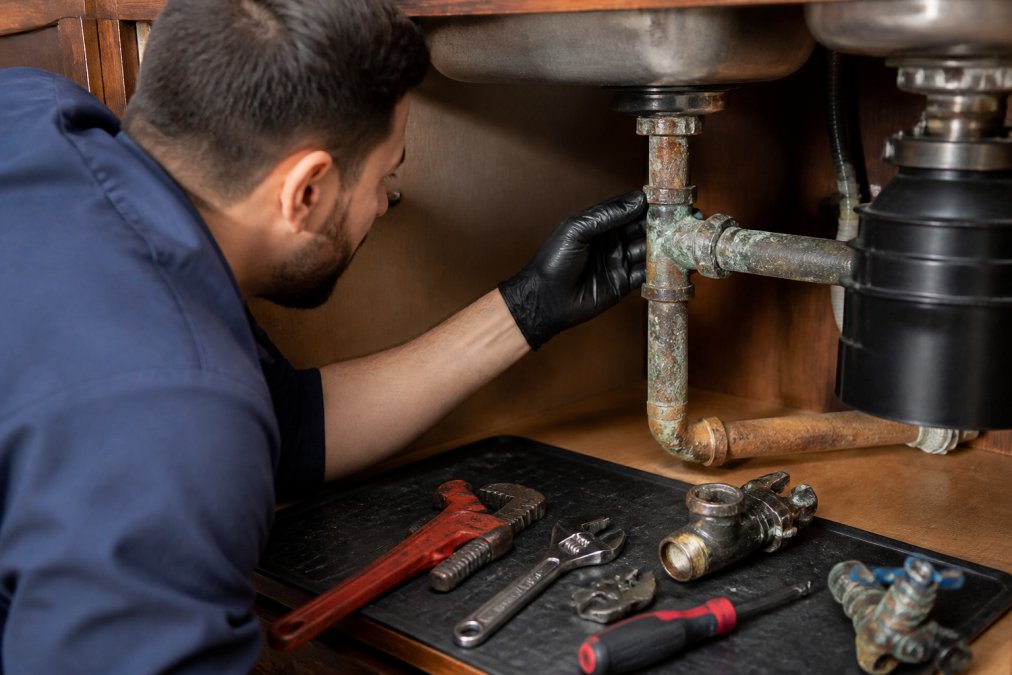
Galvanized steel pipes, common in homes built before the 1970s, corrode from the inside out. The rust and mineral buildup narrows the pipe’s interior diameter over decades until flow rate is severely restricted, even if the water pressure entering the home is perfectly normal.
Tucson’s water is notoriously hard, which accelerates sediment accumulation inside pipes and fixtures. Aerators get clogged with mineral deposits. Showerheads calcify. Water heater inlets scale over. If galvanized steel pipes are the culprit, the restriction exists throughout the plumbing infrastructure, and the only real solution is repiping with copper piping or modern PEX.
Watch Out
If your home has original galvanized steel pipes and you’re seeing whole-home low pressure, don’t just treat the symptoms. Corroded pipes can fail suddenly, causing water damage that far exceeds the cost of planned repiping. Get a professional inspection before a small problem becomes an emergency.
If your home has original galvanized steel pipes and you’re seeing whole-home low pressure, don’t just treat the symptoms. Corroded pipes can fail suddenly, causing water damage that far exceeds the cost of planned repiping. Get a professional inspection before a small problem becomes an emergency.
Hidden Water Leaks Dropping Your Flow Rate
A leak you can’t see is still stealing pressure. When water escapes the system through a crack or joint failure in a buried or wall-enclosed pipe, less water reaches your fixtures, and your pressure gauge will show it.
Signs of a hidden leak include a water meter that keeps moving when everything is shut off, wet spots on walls or ceilings without an obvious cause, or pressure that’s consistently low while utility bills are rising. Leak detection requires professional equipment. Modern acoustic leak detectors and thermal imaging can locate a break in the main water line without excavation. Acclaimed Drain And Plumbing Solutions, LLC uses professional diagnostic equipment and sewer cameras to pinpoint leaks accurately before any repair work begins.
Signs of a Bad Water Pressure Regulator
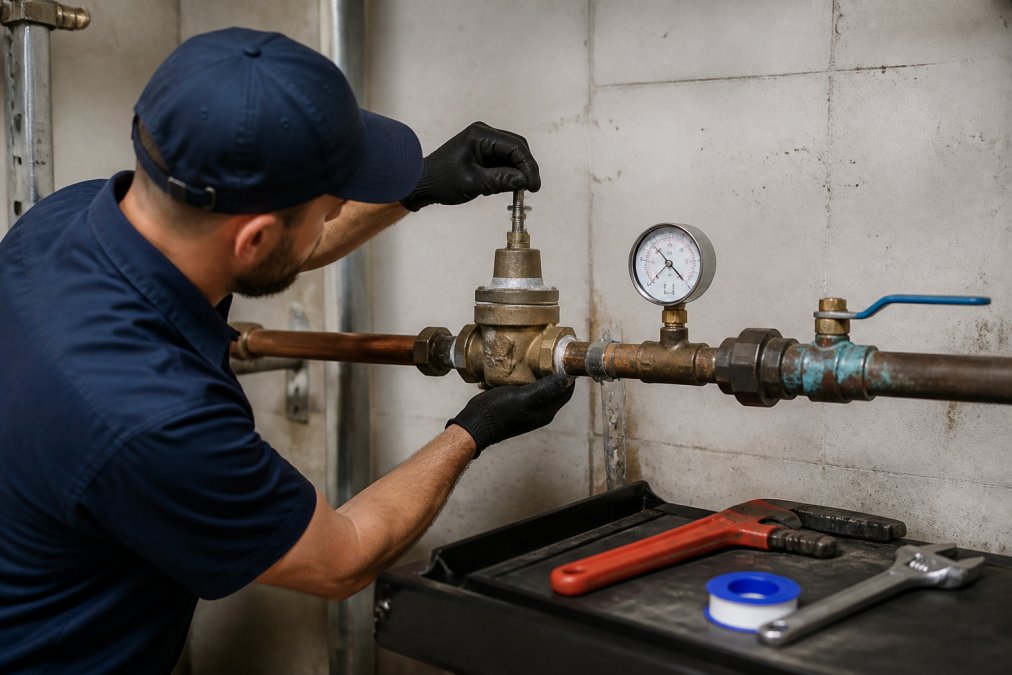
A water pressure regulator is a bell-shaped valve installed on the main water line where it enters your home. Its job is to reduce the municipal supply pressure (often 100+ PSI at the street) to a safe, usable level inside your home.
Pressure regulators typically last 10 to 15 years. When they fail, they can stick open (causing dangerously high pressure) or stick closed (causing low pressure throughout the home). Signs of a failing regulator include whole-home low pressure that appeared suddenly, pressure that fluctuates randomly, or water hammer (banging pipes) that’s gotten worse recently.
Claim Your Free Estimate Today →
Testing a pressure regulator requires a pressure gauge on both sides of the valve. If the downstream reading is significantly lower than upstream and doesn’t match the regulator’s set point, the regulator is failing. Replacement typically resolves the problem immediately.
Pro Tip
Before replacing a regulator, check whether it has an adjustment screw on top. Some regulators simply drift out of calibration over time. A licensed plumber can test and re-adjust the set point before committing to full replacement.
Before replacing a regulator, check whether it has an adjustment screw on top. Some regulators simply drift out of calibration over time. A licensed plumber can test and re-adjust the set point before committing to full replacement.
Low Water Pressure in Shower Only: What It Usually Means
Low water pressure in the shower only almost always points to a clogged showerhead, a faulty shower valve cartridge, or a partially closed shutoff valve serving that bathroom.
Start with the showerhead. Unscrew it and soak it in white vinegar overnight. Mineral buildup from hard water is the single most common cause of shower-only pressure loss in Southern Arizona homes. After soaking, use a small brush to clear the spray holes and reinstall.
If cleaning the showerhead doesn’t restore flow, the shower valve cartridge is the next suspect. Cartridges contain small ports that can clog or wear out, restricting flow even when the valve is fully open. Replacing a cartridge is a moderate DIY task, but it requires shutting off water to the bathroom and matching the exact cartridge model to your valve brand.
Well Water Pressure Tank Troubleshooting for Private Wells
For homes on private wells, well water pressure is controlled by a pressure tank and pressure switch, not a municipal water supply. The pressure tank maintains pressure between pump cycles. When it works correctly, your pump turns on at a set cut-in pressure (commonly 40 PSI) and shuts off at a cut-out pressure (commonly 60 PSI).
Common well water pressure problems include a waterlogged pressure tank (the air bladder has failed, causing the pump to short-cycle), a failed pressure switch (which tells the pump when to start and stop), or well pump failure (a worn impeller or failing motor reduces output).
According to the National Ground Water Association’s homeowner resources, pressure tanks should be inspected annually and typically last 5 to 15 years depending on water quality and cycling frequency. Well water troubleshooting goes beyond what most homeowners can safely diagnose themselves. If basic checks don’t resolve the issue, a licensed plumber with well system experience should evaluate the pump, tank, and pressure switch together.
How to Increase Water Pressure in Your House
Increasing water pressure isn’t always complicated, but the right fix depends entirely on the root cause.
| Cause | DIY Fix | When to Call a Pro |
|---|---|---|
| Clogged aerator or showerhead | Clean with vinegar, replace if needed | Not needed |
| Partially closed shutoff valve | Open valve fully | Not needed |
| Pressure regulator out of calibration | Adjust set screw (if accessible) | If adjustment fails |
| Failed pressure regulator | Not recommended | Yes, replacement required |
| Corroded galvanized pipes | Not a DIY fix | Yes, repiping needed |
| Hidden water leak | Not a DIY fix | Yes, leak detection needed |
| Waterlogged pressure tank (well) | Check air charge | Yes, if bladder has failed |
| Municipal supply issue | Contact water utility | If utility confirms no issue |
Multi-Story Home Pressure Dynamics
Gravity works against water pressure in multi-story homes. For every foot of vertical rise, water loses approximately 0.43 PSI of pressure. A two-story home with 10-foot ceilings loses roughly 4-5 PSI just getting water to the second floor.
If your ground-floor fixtures have normal pressure and your upper-floor fixtures are consistently weak, you’re likely dealing with elevation loss rather than a system fault. Solutions include adjusting the pressure regulator upward, installing a pressure-boosting pump on the supply line serving upper floors, or confirming that upper-floor branch lines have adequate pipe diameter.
Smart Home Monitoring and When to Call a Pro
Smart pressure monitors attach to your main water line and track PSI in real time, sending alerts to your phone when pressure drops below a threshold or spikes unexpectedly. These devices are particularly useful for catching slow leaks early and confirming whether pressure problems are constant or time-of-day dependent.
The DIY vs. professional threshold is straightforward: clean aerators, open valves, and contact your utility yourself. For anything involving the main water line, pressure regulator, corroded plumbing infrastructure, hidden leaks, or well pump systems, the risk of misdiagnosis outweighs the cost of professional service.
Key Takeaway
Low water pressure in a house has a specific, diagnosable cause in nearly every case. The most common DIY-fixable problems are clogged aerators, closed valves, and showerhead mineral buildup. Everything else, corroded pipes, leaks, regulator failure, well pump issues, requires a licensed plumber with proper diagnostic tools.
Low water pressure in a house has a specific, diagnosable cause in nearly every case. The most common DIY-fixable problems are clogged aerators, closed valves, and showerhead mineral buildup. Everything else, corroded pipes, leaks, regulator failure, well pump issues, requires a licensed plumber with proper diagnostic tools.
A licensed plumber brings pressure gauges, leak detection equipment, and camera inspection tools that make diagnosis accurate rather than speculative. Getting the diagnosis right the first time is almost always cheaper than replacing parts that weren’t the problem.
Dealing with persistently low water pressure is frustrating, and the wrong fix wastes both time and money. Acclaimed Drain And Plumbing Solutions, LLC provides professional leak detection, whole-home repiping, pressure regulator replacement, and water line services for homeowners across Tucson and Southern Arizona, backed by accurate diagnostics, clear communication, and 24/7 emergency availability. Claim your free estimate today and get a definitive answer on what’s actually causing your pressure problem.
Frequently Asked Questions
What is the most common cause of low water pressure?
The most common culprits are a partially closed shutoff valve, a failing water pressure regulator, or mineral buildup inside older pipes. In Tucson and Southern Arizona, hard water accelerates sediment accumulation inside galvanized steel pipes, gradually narrowing the pipe diameter until flow rate drops noticeably at every fixture. Checking your main shutoff valve and regulator first can often identify the problem without professional help, though corroded or clogged pipes typically require a licensed plumber to assess.
Does a faulty pressure regulator cause low water pressure?
Yes. A water pressure regulator controls the static pressure entering your home from the main water line. When it fails, pressure can drop well below the normal 40-80 PSI range, affecting every fixture simultaneously. Signs of a bad regulator include sudden drops in pressure across the whole house, pressure that fluctuates without explanation, or a banging sound known as water hammer. Regulators typically last 7-12 years and can be tested with a simple pressure gauge attached to an outdoor hose bib.
Why would water pressure be low in just one faucet?
When low water pressure is isolated to a single fixture, the problem is almost always local. A clogged aerator is the first thing to check, mineral buildup and sediment accumulation block the small screen at the faucet tip and restrict flow. A partially closed shutoff valve under the sink, a worn cartridge inside the faucet, or a corroded supply line serving only that fixture are other frequent causes. Cleaning or replacing the aerator takes about five minutes and costs almost nothing.
How can I tell if the low water pressure is a city-wide issue?
Contact your water utility directly or check their website for service alerts. Many municipal water supply systems post notices about main water line repairs, seasonal fluctuations, or pressure testing that temporarily lowers pressure in specific zones. You can also ask neighbors whether they’re experiencing the same drop. If the issue is isolated to your property while neighbors have normal pressure, the problem is inside your plumbing infrastructure, not the municipal supply.
