
Claim Your Free Estimate Today

Table of Contents
- Signs of a Main Sewer Line Clog You Shouldn’t Ignore
- Safety Precautions Before You Clear a Main Sewer Line
- Sewer Line Cleaning Tools You’ll Need
- How to Clear Your Main Sewer Line Step by Step
- Cost to Clear a Main Sewer Line
- Preventing Sewer Line Backups Before They Start
- When to Stop and Call a Professional Plumber
- Frequently Asked Questions
Last Updated: August 7, 2026
Signs of a Main Sewer Line Clog You Shouldn’t Ignore
A main sewer line clog is one of the most disruptive plumbing problems a homeowner can face. The main sewer line carries all wastewater from your home to the municipal sewer system or septic system. When it fails, every drain in the house fails with it. Catching it early prevents escalation into a full sewage backup.
Multiple Slow Drains and Gurgling Sounds
The clearest early signal of a main drain line blockage is multiple slow drains occurring simultaneously. When the kitchen sink, bathroom sink, and tub are all draining sluggishly at the same time, the problem is almost certainly at the main stack or the lateral line connecting your home to the street.
Gurgling sounds coming from toilets or floor drains after running water elsewhere in the house indicate air trapped behind a partial blockage. Gurgling in multiple fixtures is a reliable sign that the main sewer line needs attention soon.
Sewage Backup and Sewer Gas Odors
Sewage backup into a ground-floor toilet, tub, or floor drain is the most definitive sign of a complete or near-complete main line blockage. If flushing an upstairs toilet causes water to rise in a downstairs tub, the clog is in the main line.
Sewer gas odors inside the home are equally serious. Sewer gas is a byproduct of decomposing organic waste and contains hydrogen sulfide, which is hazardous at elevated concentrations. According to the Occupational Safety and Health Administration’s guidance on hydrogen sulfide, even low-level exposure can cause headaches and respiratory irritation. A persistent sulfur smell near floor drains or toilets indicates the drainage system may have a compromised plumbing vent or a blockage causing backflow pressure.
Safety Precautions Before You Clear a Main Sewer Line
Sewage contains pathogens including bacteria and viruses that pose genuine health risks. Before you touch any equipment or open a cleanout pipe, take these precautions seriously.
Personal protective equipment (PPE) is non-negotiable:
- Waterproof rubber gloves (heavy-duty, not latex exam gloves)
- Safety goggles or a face shield
- Old clothing you can discard or wash separately at high temperature
- Rubber boots if working near floor-level cleanouts
Ventilate the work area before opening any cleanout cap. If you’re working indoors near a basement floor drain or main stack cleanout, open windows and run a fan. Turn off the water supply to the house before inserting any snake or auger into the line.
Watch Out
Never attempt to clear a [main sewer line](/signs-of-sewer-line-damage/) if sewage has already backed up into living spaces. Standing sewage on floors contains active pathogens. Evacuate the area, ventilate, and call a licensed plumber. Attempting to snake a fully backed-up line without professional equipment can make the situation significantly worse.
Never attempt to clear a [main sewer line](/signs-of-sewer-line-damage/) if sewage has already backed up into living spaces. Standing sewage on floors contains active pathogens. Evacuate the area, ventilate, and call a licensed plumber. Attempting to snake a fully backed-up line without professional equipment can make the situation significantly worse.
Sewer Line Cleaning Tools You’ll Need
Choosing the right tool determines whether a DIY attempt succeeds or damages the pipe. Residential main sewer lines typically run between 4 and 6 inches in diameter.
Drain Snakes and Augers
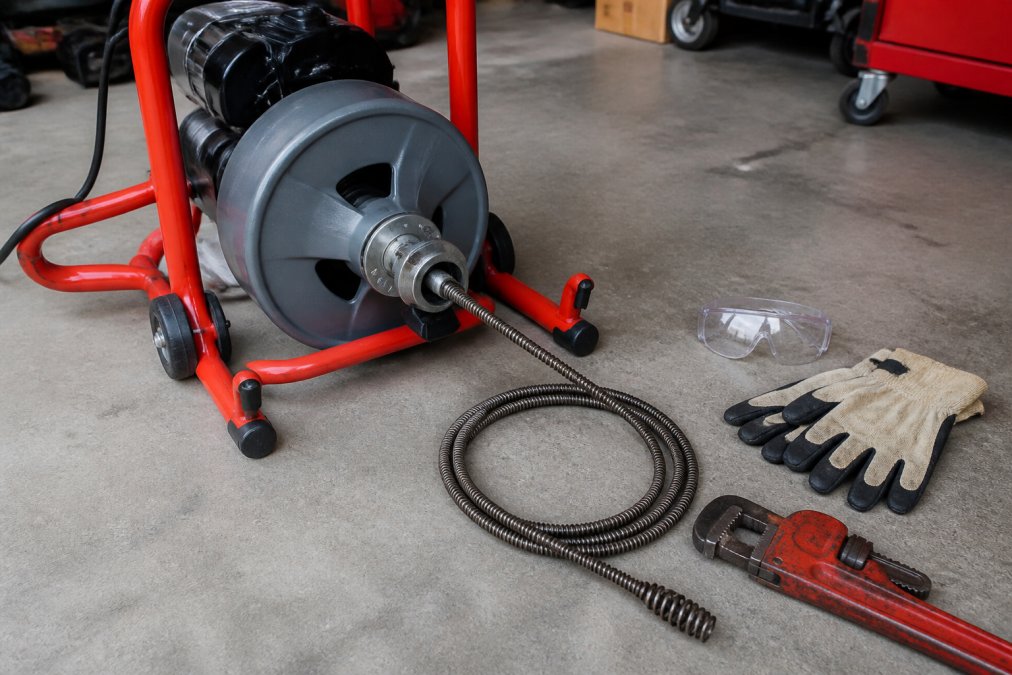
A drain snake (also called a plumbing snake or drain auger) is a flexible metal cable that you feed into the pipe to break up or retrieve a clog. For main sewer line work, you need a machine-powered drum auger, not a hand-crank model. These motorized units carry cables long enough (typically 50 to 100 feet) to reach blockages deep in the lateral line.
The cable head matters. A cutting head is best for grease buildup and soft organic clogs. A root-cutting head is required for tree root intrusion. Rental options are available at most home improvement stores, but operating a motorized drum auger requires practice to avoid kinking, snapping, or entanglement.
Hydro-Jetting Equipment
Hydro-jetting uses high-pressure water, often exceeding 3,000 PSI, to scour the pipe wall clean of grease buildup, mineral scale, and debris. Unlike a snake, which punches through a clog, hydro-jetting removes the material entirely. This is not a consumer-grade tool. The pressure levels required can damage older or weakened pipes if applied incorrectly.
How to Clear Your Main Sewer Line Step by Step
Knowing how to clear a main sewer line correctly requires working through a specific sequence. Jumping ahead or ignoring pipe material leads to wasted effort and potential pipe damage.
Step 1: Locate the Sewer Cleanout Pipe
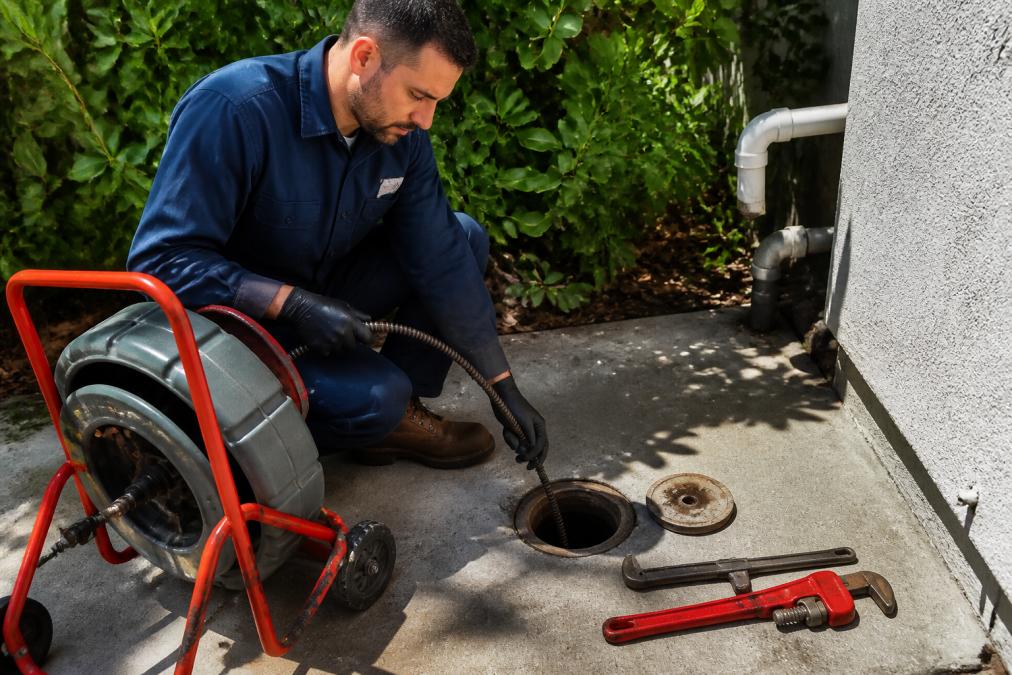
The sewer cleanout is the access point that makes main line work possible. It is a capped pipe, typically 4 inches in diameter, that provides direct entry into the main sewer line.
Common locations include:
- Along the exterior foundation wall, usually on the side closest to the street
- In the basement or crawl space, near the main stack
- In the yard, between the house and the street (often marked with a flush-to-ground cap)
- Inside a utility room or near the water heater
If you cannot locate the cleanout, check your home’s original plumbing drawings or contact a licensed plumber for a sewer camera inspection. To open the cleanout: use a pipe wrench to turn the cap counterclockwise slowly. Have towels and a bucket ready, as standing sewage may release when you break the seal.
Pro Tip
If the cleanout cap hasn’t been opened in years, apply penetrating oil and let it soak for 20 minutes before attempting to turn it. Forcing a seized cap can crack older PVC fittings.
If the cleanout cap hasn’t been opened in years, apply penetrating oil and let it soak for 20 minutes before attempting to turn it. Forcing a seized cap can crack older PVC fittings.
Step 2: Know Your Pipe Material Before You Start
Pipe material changes everything about how you approach clearing the line. Inserting a high-torque snake cable into fragile clay pipe the same way you’d work a PVC line causes collapse.
PVC (polyvinyl chloride): Common in homes built after the mid-1980s. Smooth interior walls resist grease buildup. Handles mechanical snaking and hydro-jetting well.
Cast iron: Found in homes built before the 1970s. Durable but prone to interior corrosion and scale buildup. Corroded sections can be fragile. Use lower torque settings on motorized augers.
Clay tile: Common in homes built before the 1950s. Extremely brittle and prone to root intrusion at the joints. Clay pipe sections can collapse under mechanical pressure. A sewer camera inspection before any clearing attempt is strongly recommended.
If you don’t know your pipe material, check the age of your home and look at the visible pipe section near the main stack or basement cleanout.
Step 3: Run the Plumbing Snake Through the Main Drain Line
Feed the snake cable into the line at low speed and let it advance steadily. Resistance indicates either a bend in the pipe or the blockage itself.
Claim Your Free Estimate Today →
When you hit the clog: maintain steady forward pressure while the motor runs, work the cable back and forth slightly to break up the obstruction, and do not yank the cable backward sharply. Once resistance eases, advance the cable another 10 to 15 feet to ensure the line is clear. Retract the cable slowly, wiping it clean as it comes out.
After retracting the cable, run hot water through the cleanout for several minutes to flush debris downstream. Then replace the cleanout cap and run water from multiple fixtures simultaneously to confirm drainage flow has been restored.
Step 4: Address Tree Root Intrusion
Tree root intrusion is the leading cause of main sewer line failure in established neighborhoods. Roots seek moisture and naturally find their way into pipe joints, especially in clay and older cast iron lines.
Signs that suggest roots rather than a simple grease clog include recurring blockages in the same section of pipe despite repeated snaking, blockages that clear partially but return within weeks, and resistance that feels different from soft organic material.
A root-cutting auger head can remove active root growth, but it won’t prevent regrowth. For homes with established root intrusion, enzyme-based cleaners applied monthly through a toilet or cleanout can slow regrowth between professional treatments. For severe or recurring root intrusion, the long-term solution is pipe repair or replacement, not repeated snaking.
Step 5: Post-Cleaning Sanitation and Safety
After working on a main sewer line, the cleanout area, your tools, and your PPE are all contaminated with sewage-borne pathogens.
Post-cleaning protocol:
- Rinse the snake cable with clean water, then disinfect with a diluted bleach solution before storing
- Wash rubber gloves with soap and water before removing them, then discard or disinfect
- Wipe down the exterior of the cleanout pipe and surrounding area with a disinfectant cleaner
- Wash all clothing worn during the job separately at the highest temperature the fabric tolerates
- Wash hands and forearms thoroughly with soap and water for at least 20 seconds
Inspect the cleanout cap threads and gasket before reinstalling.
Cost to Clear a Main Sewer Line
The cost to clear a main sewer line varies based on the severity of the blockage, the method required (snaking vs. hydro-jetting), access conditions, and whether additional services like a sewer camera inspection are needed.
For accurate pricing, contact a licensed plumber for a site assessment. Acclaimed Drain & Plumbing Solutions offers free estimates for sewer line work, so you know what you’re looking at before any work begins. Financing options are also available for eligible projects.
| Clearing Method | Best For | DIY Viable? | Professional Recommended? |
|---|---|---|---|
| Drain snake / auger | Soft clogs, grease buildup, paper blockages | Possible with rental equipment | Yes, for deep or recurring clogs |
| Hydro-jetting | Grease-coated pipes, scale buildup, post-root clearing | No, requires commercial equipment | Always |
| Root-cutting auger | Active root intrusion in accessible pipe | Possible but high risk | Strongly recommended |
| Sewer camera inspection | Diagnosis before or after clearing | No, requires professional equipment | Yes, for any recurring issue |
| Trenchless sewer liner | Damaged, cracked, or collapsed pipe sections | No | Yes, specialist service |
Key Takeaway
Snaking a clog yourself is reasonable for a first attempt on a PVC line with a straightforward blockage. Anything involving root intrusion, clay pipe, cast iron in poor condition, or a recurring problem is a professional job. The cost of getting it wrong is significantly higher than the cost of a service call.
Snaking a clog yourself is reasonable for a first attempt on a PVC line with a straightforward blockage. Anything involving root intrusion, clay pipe, cast iron in poor condition, or a recurring problem is a professional job. The cost of getting it wrong is significantly higher than the cost of a service call.
Preventing Sewer Line Backups Before They Start
Preventing sewer line backups is far less expensive than clearing them. Most recurring main line problems trace back to consistent habits.
What goes into the drain matters most:
- Cooking grease poured down a kitchen drain solidifies on the pipe wall over time. Dispose of grease in a sealed container in the trash.
- “Flushable” wipes are not sewer-safe and are a primary driver of main line blockages in residential systems.
- Coffee grounds, food scraps, and fibrous vegetables should not go down a garbage disposal if your home has older or narrower drain lines.
For homes with trees near the sewer lateral:
Have the sewer line inspected every two to three years with a camera. Root intrusion caught early can be addressed with cutting and enzyme treatments.
Maintenance memberships offered by licensed plumbing companies provide scheduled inspections that catch developing problems before they become emergencies.
When to Stop and Call a Professional Plumber
DIY sewer line clearing has real limits. Call a licensed plumber immediately if:
- Sewage has backed up into the home and is present on floors or in fixtures
- You’ve snaked the line and the blockage hasn’t cleared after two attempts
- The snake cable encounters hard resistance that doesn’t break up with sustained effort
- You hear cracking or feel the pipe shift while working
- The blockage clears but returns within a week or two
- You detect persistent sewer gas odors after clearing the line
- The home has clay sewer pipe and you haven’t had a camera inspection in the past few years
A sewer camera inspection is the diagnostic tool that removes guesswork. It shows the exact location and nature of the blockage, the condition of the pipe wall, and whether root intrusion or pipe damage is the underlying cause.
The Acclaimed Drain & Plumbing Solutions team provides 24/7 emergency response for active sewer backups, with live dispatchers and fast response times. When sewage is backing up into your home, waiting until business hours is not a reasonable option.
Sewer line problems don’t resolve themselves, and a partial fix that leaves the root cause unaddressed will bring you back to the same situation within months. If you’re dealing with a recurring backup, a slow drain that won’t stay clear, or an older home with pipes that haven’t been inspected in years, the right move is a professional assessment. Acclaimed Drain & Plumbing Solutions offers free estimates, sewer camera inspections, hydro-jetting, and trenchless sewer liner technology for pipes that need more than clearing. Claim your free estimate today and get a clear picture of what your sewer line actually needs.
Frequently Asked Questions
How do I know if my main sewer line is clogged?
The clearest signs of a main sewer line clog are multiple slow drains happening at the same time, gurgling sounds from toilets or floor drains, sewage backing up into tubs or sinks when you flush, and foul sewer gas odors near floor drains. A single slow drain usually points to a localized blockage, but when two or more fixtures back up together, the problem is almost always in the main drain line shared by the whole house.
Will Drano or chemical drain cleaners unclog a main sewer line?
Store-bought chemical drain cleaners are not effective on main sewer line clogs. They’re formulated for small fixture drains, not the larger pipe diameter of a main line carrying full household wastewater. Worse, harsh chemicals can damage older pipe walls, especially clay or cast iron pipes common in Tucson-area homes built before the 1990s. Enzyme-based cleaners can support routine maintenance but won’t break through a mechanical obstruction like grease buildup or tree roots.
Is it safe to use a drain snake on a main sewer line yourself?
A standard plumbing snake can safely clear soft blockages like toilet paper buildup or grease in an accessible cleanout, provided you wear gloves, eye protection, and follow proper technique. However, if the clog involves tree root intrusion, a collapsed pipe, or a blockage deeper than the snake cable reaches, DIY snaking won’t resolve it and can push debris further into the lateral line. A sewer camera inspection is the safest way to confirm what you’re dealing with before continuing.
How much does it cost to clear a main sewer line?
The cost to clear a main sewer line varies based on the type of blockage, the method required (snaking versus hydro-jetting), pipe material, and how accessible the sewer cleanout is. Tree root removal or a sewer camera inspection adds to the total. Because every situation is different, the best way to get an accurate number is to request a free estimate from a licensed plumber who can assess your specific drainage system before quoting a price.
