
Claim Your Free Estimate Today

Table of Contents
- What Is Trenchless Sewer Repair and Why It Matters
- Average Cost of Trenchless Sewer Repair
- Trenchless Sewer Repair vs Traditional Excavation
- How Long Does Trenchless Sewer Repair Take
- Does Homeowners Insurance Cover Sewer Line Replacement
- Financing Options and Payment Plans
- Post-Repair Maintenance and Long-Term Value
- Frequently Asked Questions
Last Updated: August 15, 2026
What Is Trenchless Sewer Repair and Why It Matters
Trenchless sewer repair uses specialized equipment to rehabilitate or replace damaged sewer lines without extensive excavation. Technicians use either pipe bursting or cured-in-place pipe (CIPP) lining to restore your sewer system’s structural integrity from the inside, avoiding torn-up landscaping, weeks of disruption, and lengthy completion times.
Many homeowners dealing with root intrusion, pipe collapse, or sewer blockage find that trenchless methods solve the immediate problem while preventing future failures. At Acclaimed Drain And Plumbing Solutions, LLC, we’ve helped countless homeowners in Southern Arizona avoid the nightmare scenario of traditional excavation, especially when properties have mature landscaping, driveways, or limited yard space.
However, trenchless technology isn’t always the right fit for every sewer line problem. A sewer camera inspection first determines whether your specific situation qualifies, as some pipes are too severely damaged or sit at depths that make trenchless methods impractical.
Average Cost of Trenchless Sewer Repair
Trenchless sewer repair cost in Arizona depends on the scope of damage, pipe length, soil conditions, and which trenchless method your situation requires. A 30-foot lateral line with localized root intrusion costs dramatically less than a 150-foot main line with structural failure. Similarly, properties with stable soil and easy equipment access cost less than those with caliche soil, a hardened layer common in Arizona that complicates both traditional and trenchless work.
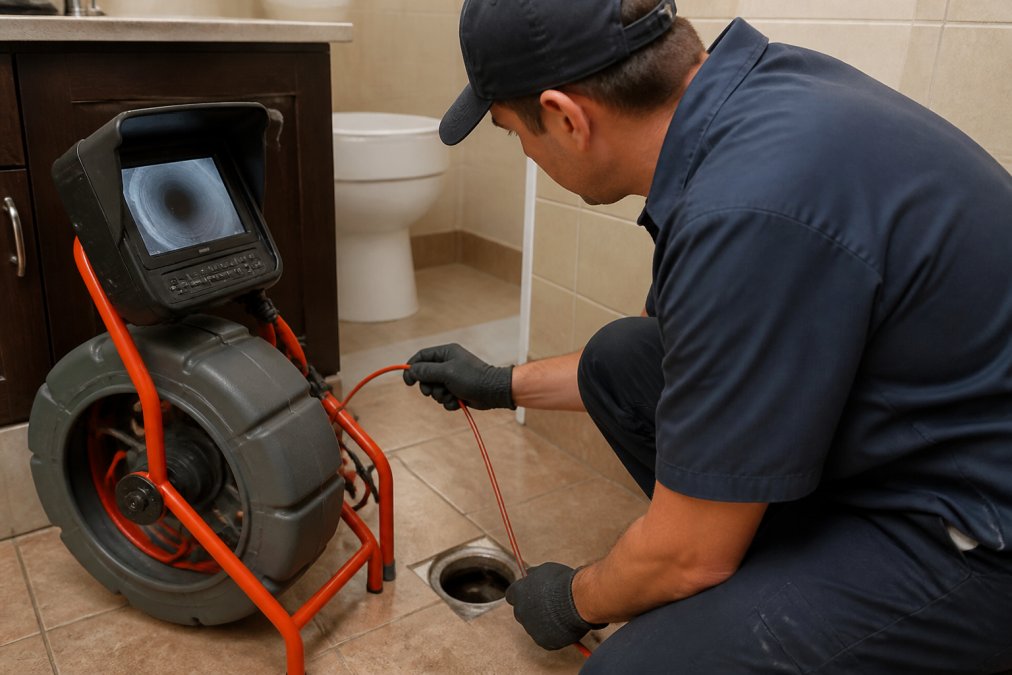
A licensed plumber performs a sewer camera inspection to document the actual condition, measure the affected length, and identify the specific damage pattern. This diagnostic step transforms guesswork into actionable data and provides an accurate estimate.
Cost Per Linear Foot
The cost per linear foot is the most useful metric for comparing trenchless sewer repair proposals, isolating the price from total project length and making it easier to verify reasonableness.
Factors influencing per-linear-foot pricing include pipe diameter (4-inch residential lines versus 6-inch or larger), the trenchless method selected, and local labor costs. A sewer lateral serving a single home typically costs less per linear foot than a sewer main serving multiple properties. CIPP lining generally costs less per linear foot than pipe bursting. Arizona’s caliche soil requires specialized equipment and slower drilling speeds, which increases labor time and cost per linear foot.
Factors Influencing Project Pricing
Pipe diameter and material: Larger diameter pipes require more material and labor than standard 4-inch residential laterals. Cast iron, clay, PVC, and concrete pipes all behave differently during trenchless rehabilitation.
Accessibility and equipment placement: Properties allowing a mobile unit to park close to the cleanout reduce setup time and labor. Tight urban lots or steep terrain increase complexity and cost.
Depth and length: Deeper sewer lines require more sophisticated equipment and longer cure times for CIPP. Longer affected sections cost more in total material and labor.
Soil composition: Arizona’s caliche layers, bedrock, or clay-heavy soil complicate trenchless work. Hydro-jetting to clear blockage before lining adds cost.
Severity of damage: Localized root intrusion costs less than widespread structural failure. Multiple problem areas requiring staged repairs increase total cost.
Local permitting requirements: Municipal codes vary across Arizona. Some jurisdictions require specific testing or inspections post-repair, which adds cost.
Trenchless Sewer Repair vs Traditional Excavation
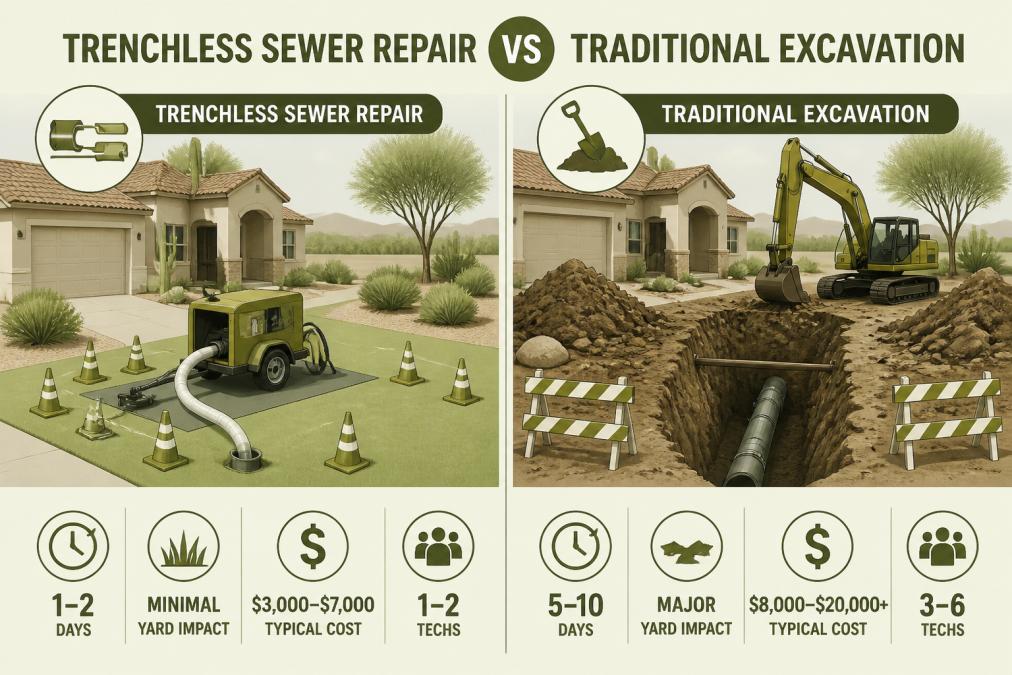
While trenchless technology often costs more per linear foot, total project cost frequently favors trenchless when you factor in restoration and landscaping repair. Traditional excavation involves digging a trench to expose the damaged sewer line, removing the old pipe, and installing a new one. This method works for any pipe condition but destroys whatever sits above the sewer line, driveways, patios, mature trees, underground utilities, or sprinkler systems.
Trenchless methods avoid that collateral damage. CIPP lining slides a resin-saturated tube into the existing pipe and cures it in place, creating a new pipe within the old one. Pipe bursting fractures the old pipe while simultaneously pulling a new one into place. Both methods restore your sewer system’s structural integrity without excavation.
Pros and Cons of Trenchless Methods
Advantages of trenchless sewer repair:
Minimal surface disruption is the headline benefit. Your yard stays largely intact, and landscaping, hardscape, and underground systems avoid damage. Speed matters too, trenchless work typically completes in days versus weeks for traditional excavation. Longevity is another factor: CIPP lining creates a smooth interior surface that resists future root intrusion, and pipe bursting installs modern PVC or polyethylene pipe that outperforms aging cast iron or clay. Both methods often carry warranties extending 10-50 years.
Disadvantages and limitations:
Trenchless methods don’t work for every situation. Severely collapsed pipes, multiple problem areas, or pipes at extreme depths may require traditional excavation. Cost per linear foot is typically higher for trenchless work, though total project cost sometimes favors it. Access requirements can be restrictive, trenchless equipment needs a clear path to the cleanout or access point. Material limitations exist: pipes with multiple collapsed sections, severe bellying, or offset joints may not be candidates for CIPP lining.
How Long Does Trenchless Sewer Repair Take
Trenchless sewer repair typically completes within 1-3 days for straightforward projects. CIPP lining requires time for the resin to cure properly, usually 24-48 hours depending on temperature and humidity. Arizona’s climate speeds this process. The actual installation work, including cleaning the pipe with hydro-jetting, inserting the liner, and positioning it, typically takes a single day for residential laterals.
Pipe bursting moves faster in terms of active work time, with residential laterals often completed in a day. However, multiple sections requiring staged work or difficult soil conditions can extend the timeline.
A critical factor is the sewer camera inspection that precedes any repair. This diagnostic step takes a few hours but determines which method is feasible and identifies complications. Setup and mobilization add a day for straightforward projects; complex access situations can extend this further.
Does Homeowners Insurance Cover Sewer Line Replacement
Most standard homeowners insurance policies exclude sewer line damage because sewer lines are considered part of your home’s foundation or structure, categories typically excluded from basic policies. However, some policies cover sewer line damage if it results from a covered peril, such as a tree falling and crushing the line.
The distinction between the sewer lateral (your responsibility) and the municipal sewer main (the city’s responsibility) also matters for insurance purposes. Your policy covers your lateral; damage to the municipal main is the city’s obligation.
Sewer backup coverage is a separate add-on available from many insurers that covers damage to your home’s interior if sewage backs up into your basement or lower levels. It’s relatively inexpensive and worth considering, especially for older homes with aging laterals prone to root intrusion.
Review your specific policy with your insurance agent. Ask explicitly whether sewer line damage is covered, under what circumstances, and whether sewer backup coverage is available.
Financing Options and Payment Plans
Trenchless sewer repair cost can represent a significant expense, which is why many homeowners explore financing options. Acclaimed Drain And Plumbing Solutions, LLC offers financing through third-party lenders with 6-24 month terms and competitive interest rates. Applications are straightforward for homeowners with reasonable credit, and some programs offer same-day approval.
Home equity lines of credit (HELOCs) or home equity loans are another option if you have built equity in your property. These often carry lower interest rates because your home secures the loan, though they require a formal application and appraisal process.
Claim Your Free Estimate Today →
Some municipalities or water districts offer rebate programs for sewer line repairs, particularly if the work improves water efficiency or reduces strain on municipal systems. These rebates don’t cover the full cost but can meaningfully reduce your net expense.
Post-Repair Maintenance and Long-Term Value
Proper maintenance after repair extends the lifespan and prevents future problems. Avoid flushing grease, wipes (even “flushable” ones), paper towels, and feminine hygiene products, which accumulate and create clogs that can damage newly repaired pipes.
Hydro-jetting annually or every few years keeps your sewer line clear of buildup. Sewer camera inspections every 3-5 years provide early warning of emerging problems. Landscaping decisions matter too, avoid planting trees or shrubs with aggressive root systems near your sewer line.
The long-term value of trenchless repair becomes clear when you consider the warranty and durability. CIPP lining typically carries 10-25 year warranties. Pipe bursting with modern materials often lasts 50+ years. Your trenchless repair essentially gives you a new sewer system with decades of reliable service ahead.
Sewer line problems don’t resolve themselves, and waiting typically makes them worse. If you’re experiencing recurring backups, slow drainage, or sewage odors, a professional sewer camera inspection reveals what’s actually happening beneath your property. Acclaimed Drain And Plumbing Solutions, LLC provides free estimates and can walk you through your options, whether trenchless repair makes sense for your situation or whether traditional excavation is the better path. With 24/7 emergency service and transparent pricing, we help homeowners make confident decisions about their sewer systems. Claim your free estimate today and stop guessing about what’s happening in your pipes.
| Trenchless Method | Best For | Typical Timeline | Key Advantage |
|---|---|---|---|
| CIPP Lining | Localized damage, root intrusion | 1-2 days | Minimal surface disruption, smooth interior |
| Pipe Bursting | Severely damaged pipes | 1-2 days | Installs new pipe, eliminates old one |
| Traditional Excavation | Complex damage, extreme depths | 1-3 weeks | Works for any condition, any depth |
Frequently Asked Questions
How much does trenchless sewer repair typically cost?
Trenchless sewer repair cost depends on pipe length, damage severity, and your property’s soil conditions. A professional sewer camera inspection determines the actual cost by identifying the exact problem and required solution. Financing options are available for most homeowners.
Can trenchless repair fix all sewer line problems?
No. Severely collapsed pipes, multiple problem areas, or extreme depths sometimes require traditional excavation. A sewer scope determines whether your specific situation qualifies for trenchless methods.
How long does CIPP lining last?
CIPP lining typically carries 10-25 year warranties, with many installations lasting 25-50 years depending on conditions and maintenance. Modern pipe materials used in pipe bursting often last 50+ years.
Is trenchless repair covered by insurance?
Most standard homeowners policies exclude sewer line damage. However, coverage exists if damage results from a covered peril. Sewer backup coverage is available as an add-on. Review your specific policy with your insurance agent.
How can I prevent future sewer problems after repair?
Avoid flushing grease and non-flushable items, schedule periodic hydro-jetting, get sewer camera inspections every 3-5 years, and avoid planting aggressive-root trees near your sewer line.
External Sources & Additional Resources
For information about Arizona plumbing codes and municipal requirements, consult Arizona Department of Housing regulations for statewide standards and local jurisdiction requirements.
The American Society of Civil Engineers guidelines on trenchless technology provides technical standards for pipe rehabilitation methods and installation best practices.
For homeowners researching insurance coverage options, the National Association of Insurance Commissioners resources offers guidance on policy exclusions and available add-ons for sewer-related damage.
Frequently Asked Questions
What is the typical lifespan of trenchless pipe lining?
Trenchless pipe lining, including CIPP (Cured-in-Place Pipe) technology, typically lasts 50+ years when installed correctly. The actual lifespan depends on the original pipe material, water chemistry, soil conditions, and maintenance practices. Regular sewer camera inspections and preventive maintenance help maximize durability and catch issues early before they require repair.
Is trenchless sewer repair worth the investment?
Trenchless sewer repair offers significant value despite higher upfront costs. You avoid extensive yard excavation, landscaping restoration, and the structural damage associated with traditional methods. For homeowners with limited yard space, mature landscaping, or properties with difficult soil conditions like caliche, trenchless methods often provide the most cost-effective long-term solution. A professional sewer scope and plumbing estimate help determine if trenchless repair makes sense for your specific situation.
What are the disadvantages of trenchless sewer line replacement?
Trenchless methods require specialized equipment and trained technicians, which can limit availability in some areas. The process depends heavily on accurate sewer camera inspection and diagnostics—poor assessment leads to poor results. Some older pipes or severely collapsed sections may not be suitable for trenchless rehabilitation and still require traditional excavation. Additionally, not all municipal codes accept trenchless methods for main line work, so local permitting requirements must be verified upfront.
How does trenchless repair compare to traditional excavation costs?
Trenchless repair typically costs more per linear foot for the actual pipe work, but total project costs often favor trenchless methods when you factor in excavation, hauling, and landscape restoration. Traditional excavation disrupts yards, driveways, and landscaping, adding thousands in restoration costs. Trenchless technology minimizes surface disruption, reducing overall expenses for homeowners with valuable landscaping or limited yard space. Your plumbing estimate should itemize both methods to show the true cost comparison.
Can trenchless sewer repair fix root intrusion?
Yes, trenchless pipe lining seals the interior of pipes, preventing roots from entering through cracks and joints. However, if roots have already caused severe pipe collapse or structural failure, traditional excavation may be necessary. A sewer camera inspection identifies the extent of root damage and whether trenchless lining or full replacement is appropriate. Hydro-jetting can clear active root blockages before lining is applied to ensure proper installation.
What permits are required for trenchless sewer repair in Arizona?
Sewer line work in Arizona requires municipal permits from your local city or county. Permitting requirements vary by jurisdiction and depend on whether work involves the sewer lateral (your private line) or the sewer main. Your plumbing contractor should handle permit applications and ensure compliance with local building codes. Failing to obtain proper permits can result in fines and complications when selling your property, so verification is essential before work begins.
How does soil composition affect trenchless sewer repair costs?
Soil conditions significantly impact pricing and feasibility. Hard caliche soil requires specialized equipment and expertise, increasing labor costs. Clay, sandy, or rocky soil each present different challenges for access and equipment placement. A site evaluation helps identify soil composition and any obstacles like tree roots or utility lines. These factors directly influence your plumbing estimate and whether trenchless rehabilitation or traditional excavation is most practical for your property.
