Claim Your Free Estimate Today
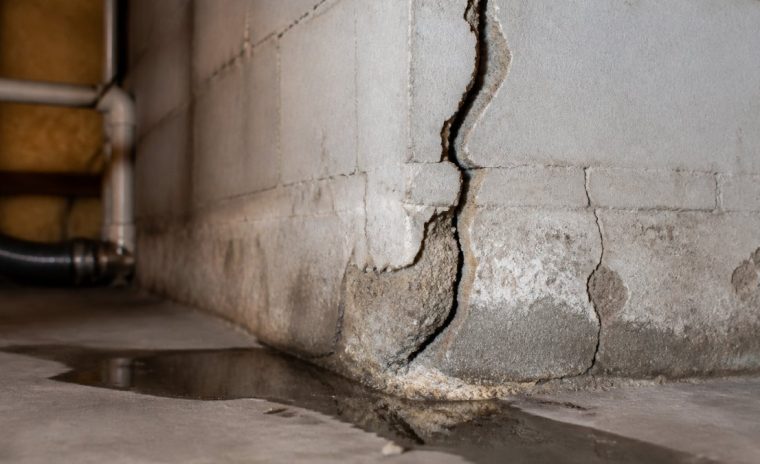
Table of Contents
- 1. Water Stains and Wall Discoloration
- 2. Foundation Cracks From Water Leaks
- 3. Signs of a Water Leak Under a Slab
- 4. Foundation Water Damage Signs: Dampness, Mold, and Efflorescence
- 5. Water Leak Under House: Uneven Floors and Sinking Slabs
- 6. Plumbing Leak or Groundwater? A Step-by-Step Diagnostic Process
- 7. Documenting Changes, Repair Costs, and Prevention
- Frequently Asked Questions
Last Updated: October 19, 2026
1. Water Stains and Wall Discoloration
Water stains are the first visible proof that moisture is moving through your foundation. Homeowners should treat any new discoloration on a basement wall or concrete floor as an early sign of foundation damage from leaks until proven otherwise.
A fresh stain looks dark and damp. An old one dries to a brown or white ring. The shape tells you a lot:
- Tide marks that rise and fall point to water that comes and goes
- Vertical streaks usually trace a crack or a failed joint
- White, chalky film signals mineral deposits left behind as water evaporates
Check the same spot every few weeks. A stain that grows is a leak that’s still active. A stain that stays put may be old damage that never got fixed.
Pro Tip
Snap a photo of every stain next to a ruler or coin. When you compare photos months later, scale is the only way to prove a stain is spreading rather than just fading.
Snap a photo of every stain next to a ruler or coin. When you compare photos months later, scale is the only way to prove a stain is spreading rather than just fading.
2. Foundation Cracks From Water Leaks
Not every crack means trouble, but some do. Foundation cracks from water leaks tend to look different from normal settling cracks, and the difference matters for how fast you act.
Hairline cracks under 1/16 inch are often cosmetic. Wider cracks, or ones that appear suddenly, suggest water is washing away soil or pushing against the wall. Watch for cracks that widen over time, since movement is the real warning sign.
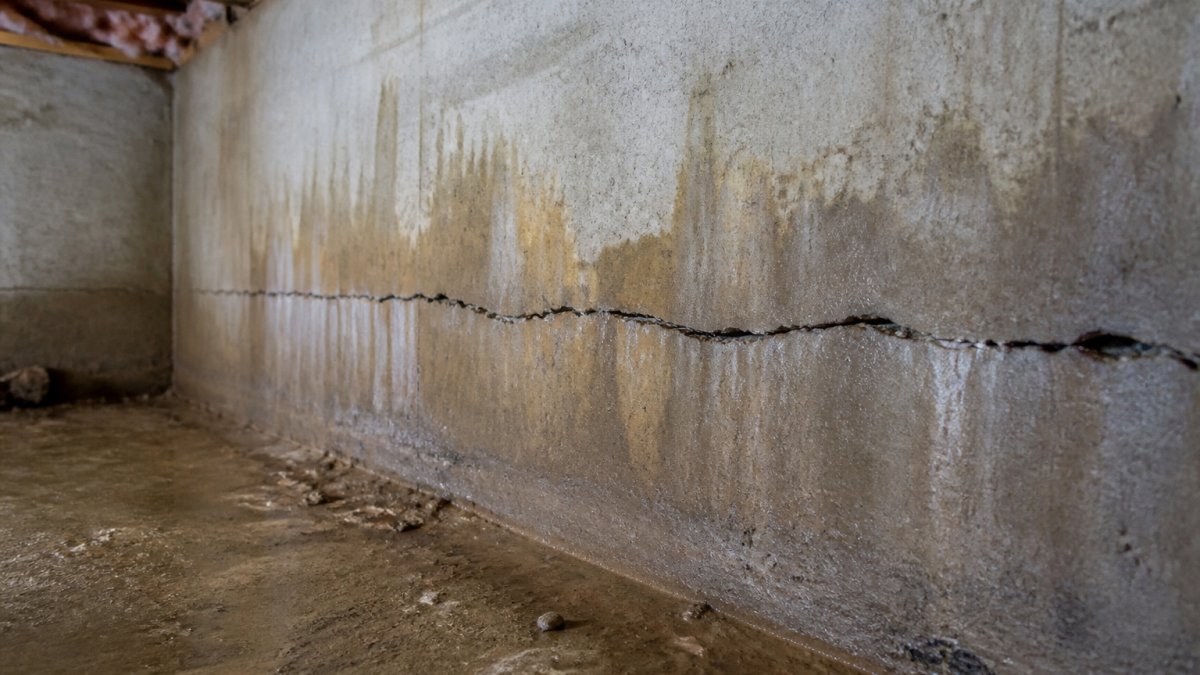
Horizontal Cracks and Wall Separation
Horizontal cracks are the ones that should make you call a professional. A horizontal crack means soil or water pressure is pushing the wall inward, and that pressure doesn’t stop on its own. Wall separation, where the wall pulls away from the floor or the frame, is a structural warning sign. If you see either, don’t wait.
3. Signs of a Water Leak Under a Slab
Signs of a water leak under a slab are easy to miss because the leak hides beneath concrete. The clues show up above it. Look for warm spots on the floor, a faint sound of running water when nothing is on, or a water bill that climbs without explanation.
A slab leak is a leak in the pipes running beneath your concrete floor. Left alone, it soaks the soil under the slab, which can lead to soil movement and a sinking floor. A spike in water usage with no change in habits is one of the clearest signals.
4. Foundation Water Damage Signs: Dampness, Mold, and Efflorescence
Foundation water damage signs often show up as dampness, musty odor, and mold growth. These point to ongoing moisture, not a one-time spill. Mildew and mold thrive where water intrusion stays hidden.
Efflorescence is the white, powdery salt left on concrete when water moves through it and evaporates. It’s not dangerous by itself, but it’s a reliable marker that moisture is passing through the foundation wall. Pair it with a musty smell and you have a strong case for a leak.
Claim Your Free Estimate Today →
Watch Out
Ignoring a musty odor because you “got used to it” is a common mistake. That smell usually means mold is growing behind a wall or under flooring, and the moisture feeding it keeps getting worse.
Ignoring a musty odor because you “got used to it” is a common mistake. That smell usually means mold is growing behind a wall or under flooring, and the moisture feeding it keeps getting worse.
5. Water Leak Under House: Uneven Floors and Sinking Slabs
A water leak under a house can shift the soil enough to move your floors. Uneven floors, a sinking slab, or a floor that feels warm underfoot are all worth investigating. Floor movement near a bathroom or kitchen often traces back to a supply line leak.
Here’s the test: set a marble on the floor. If it rolls on its own, the floor is out of level. Compare rooms over time to see if the movement is new.
6. Plumbing Leak or Groundwater? A Step-by-Step Diagnostic Process
Separating a plumbing leak from groundwater intrusion is the step most homeowners skip. Do it in order:
- Shut off every fixture. Confirm no water is running anywhere.
- Read the water meter. Note the exact number.
- Wait two hours with nothing on. Read the meter again.
- Meter moved? You likely have a plumbing leak. Meter still? Suspect groundwater or drainage.
- Check outside. Look at grading, downspouts, and pooling near the foundation.
- Test with dye. Add dye to a toilet tank to catch a silent flapper leak.
Urgency Levels and Structural Red Flags
Sort what you find into three levels. Monitor: slow stains, hairline cracks, minor efflorescence. Call soon: a meter that moves with everything off, a warm floor, a widening crack. Emergency: wall separation, a horizontal crack, standing water, or a sagging floor. The last group needs a pro now.
7. Documenting Changes, Repair Costs, and Prevention
Documentation protects you. Keep a dated log with photos of every stain, crack, and damp patch. Measure crack width with a gauge and note it. This record helps a plumber locate the leak source fast and supports any insurance or warranty claim.
Repair costs depend on the leak type, access, and how much damage has spread, so quotes are provided after inspection rather than guessing. For prevention, keep gutters clear, grade soil away from the foundation, and fix small leaks early. A maintenance membership program catches problems before they become foundation damage.
| Signal | What It Suggests | Urgency |
|---|---|---|
| Growing water stain | Active leak | Call soon |
| Horizontal crack or wall separation | Structural pressure | Emergency |
| Meter moves with water off | Plumbing leak | Call soon |
| Efflorescence plus musty odor | Ongoing moisture | Monitor, then inspect |
| Warm or uneven floor | Slab leak | Call soon |
Frequently Asked Questions
Can a plumbing leak cause foundation damage?
Yes. A slow plumbing leak under a slab or inside a foundation wall keeps soil saturated and erodes the support under the concrete. Over time that can lead to foundation cracks, uneven floors, and wall separation. The tricky part is that foundation damage from leaks often looks like ordinary settling at first, so the leak keeps running unnoticed. If you see unexplained moisture, a rising water bill, or new cracks, have a licensed plumber locate the leak source before you pay for foundation repair.
How can you tell if a foundation crack is caused by water?
Water-related foundation cracks tend to be horizontal, wider than a hairline, and paired with dampness, efflorescence, or water stains nearby. Cracks that grow over weeks, or that appear alongside wall separation and uneven floors, point to water intrusion rather than normal settling. Monitor the crack width with a pencil mark and date, and call a plumber if it widens. A professional leak detection inspection can confirm whether a plumbing leak is feeding the problem.
Who should you call for a suspected leak near the foundation?
Call a licensed plumbing company first. A plumber can use leak detection equipment, sewer cameras, and pressure testing to confirm whether the source is a plumbing leak, an underground water line, or groundwater intrusion. If the diagnosis points to structural movement, the plumber can document the findings so a foundation specialist has accurate information. Starting with plumbing avoids paying for foundation work when the real fix is a leaking pipe or water service line.
How long does water take to damage a foundation?
It depends on the leak. A pressurized pipe leak can saturate soil and cause visible foundation damage in weeks, while a slow slab leak may take months or years to show symptoms. Signs like standing water, musty odors, and widening cracks usually mean the leak has been active for a while. The earlier you catch the signs of foundation damage from leaks, the less repair work is needed, so act on any new moisture or crack as soon as you notice it.
A leak you can’t locate is a leak that keeps damaging your foundation. If you’ve spotted any of these signs, don’t wait for the next rain to make it worse. Acclaimed Drain And Plumbing Solutions, LLC offers free estimates, leak detection with professional diagnostic equipment, and 24/7 emergency service with live dispatchers. Claim your free estimate today and get a clear answer on what’s happening under your home.