Claim Your Free Estimate Today
A toilet that gurgles after flushing, a shower that drains slowly, or wastewater backing up into a tub can create one immediate question: what will actually fix it? In a sewer camera inspection versus snaking decision, the right answer depends on whether you need to remove a blockage, identify the cause, or both. These services do different jobs, and treating them as interchangeable can lead to a temporary drain opening followed by another backup.
For Tucson-area homes and commercial properties, drain problems are often more than a simple clog. Aging sewer lines, root intrusion, mineral buildup, grease accumulation, pipe offsets, and damaged sections can all restrict flow. A clear diagnosis helps avoid spending money on a service that relieves the symptom but leaves the underlying condition in place.
What Snaking Does Best
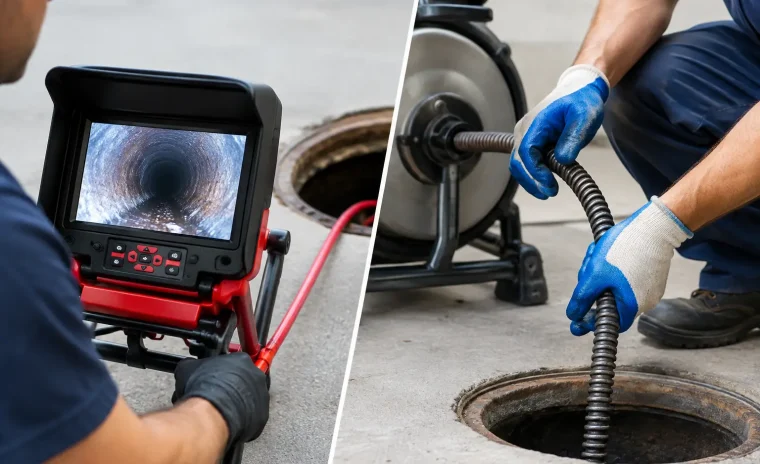
Drain snaking, also called cabling or augering, uses a flexible cable with a cutting or retrieval head to break through or pull out a blockage. It is a hands-on method for restoring flow when a drain is stopped by common obstructions such as hair, paper buildup, food debris, or a localized mass in the line.
For an isolated clog, snaking can be an effective and practical first step. A kitchen drain blocked by grease and debris, or a bathroom line restricted by hair and soap residue, may begin draining properly as soon as the cable clears the obstruction. It is generally less involved than a sewer repair and can be the appropriate solution when the pipe itself is in good condition.
The limitation is that a snake does not show what is happening inside the pipe. A cable may punch a hole through roots or buildup without removing all of it. Water starts moving again, but the remaining material can catch waste and cause another blockage soon after. Snaking also cannot confirm whether the line has cracks, a collapsed section, a low spot holding water, or a joint that has separated.
A professional technician should explain what the cable encountered. If the equipment repeatedly catches, pulls back root material, or cannot travel the full length of the line, those signs point to a larger issue that deserves a closer look.
What a Sewer Camera Inspection Reveals
A sewer camera inspection uses a waterproof camera attached to a flexible cable. The camera travels through the drain or sewer line while the technician watches a live video feed. This allows the technician to locate the trouble area and see the condition of the pipe rather than making assumptions based only on how the drain behaves.
A camera inspection can reveal problems that snaking alone cannot confirm, including:
- Tree root intrusion entering through joints or cracks
- Heavy scale, grease, or debris coating the pipe walls
- Broken, cracked, shifted, or deteriorated pipe sections
- Bellies or low areas where wastewater and solids collect
- Construction debris, foreign objects, or a line that was installed with poor slope
The camera can also help determine where the problem sits in relation to the property. That matters when a repair is needed. Instead of opening a large area to search for a damaged pipe, the plumber can identify the location and discuss clear options, such as cleaning, spot repair, trenchless lining, or replacement.
A camera is a diagnostic tool, not a drain-clearing tool. If a line is fully blocked with heavy debris, the technician may need to snake or hydro jet it first so the camera can pass through and provide a useful view. In many cases, the best service is not camera inspection or snaking. It is a properly sequenced combination of both.
Sewer Camera Inspection Versus Snaking: Which Comes First?
When there is a first-time, straightforward clog in one fixture, snaking may be the sensible starting point. For example, if one bathroom sink is slow and the rest of the home drains normally, the issue may be limited to that branch drain. Clearing the obstruction and testing the flow can resolve the problem without unnecessary work.
A camera inspection becomes more valuable when symptoms involve the main sewer line or keep coming back. Repeated backups, several slow drains at once, sewage appearing at the lowest drain in the home, foul sewer odors, or water pooling near an outdoor cleanout are not situations to treat casually. Those symptoms can indicate a restriction or defect farther down the system.
For commercial properties, a camera inspection is often especially useful because downtime affects tenants, employees, customers, and daily operations. A restaurant may have grease buildup in a line. A retail building may have an older sewer lateral with root intrusion. A camera allows the property decision-maker to see why service is recommended and plan repairs around business needs when possible.
There is also a practical timing consideration. If sewage is actively backing up, restoring drainage is the first priority to limit sanitation concerns and property damage. Once the immediate blockage is cleared, a camera inspection can determine whether the line needs additional cleaning or a lasting repair.
When Hydro Jetting May Be the Better Next Step
A drain snake cuts a path through many clogs. Hydro jetting uses controlled high-pressure water to scour buildup from the pipe walls. When a camera shows grease, sludge, scale, or widespread root remnants but the pipe remains structurally sound, hydro jetting may provide a more thorough cleaning than cabling alone.
Hydro jetting is not automatically right for every line. Older, damaged, or severely deteriorated pipes need careful evaluation before high-pressure cleaning. This is another reason diagnosis matters. The goal is not to use the most aggressive tool. It is to use the right tool for the actual condition of the plumbing system.
If the camera shows collapsed pipe, major offsets, or recurring root entry through damaged joints, cleaning can only do so much. Repairing or rehabilitating the affected section may be the more dependable investment. Trenchless sewer lining can be an option in some situations, helping restore the pipe without extensive excavation.
Cost, Convenience, and the Risk of Repeat Problems
It is understandable to focus on the immediate cost of a service call, particularly when a drain is backing up. Snaking is often the lower-cost option when the blockage is simple and isolated. A camera inspection adds diagnostic value, but it may save money when it prevents repeated service calls or helps target a repair accurately.
The most economical choice is not always the least expensive visit. If a sewer line is snaked three times in one year because roots keep entering through a cracked joint, the property owner has paid repeatedly for temporary relief. Seeing the condition of the pipe can turn an ongoing inconvenience into a planned, long-term solution.
Ask the technician to explain what was found, whether the line was fully cleared, and what the next step should be if the problem returns. You should not be pressured into major work without a reason. At the same time, a professional should be candid when the evidence shows that a quick clearing is unlikely to hold.
Signs You Should Request a Camera Inspection
A camera inspection is worth considering when you have recurring clogs, multiple fixtures draining slowly, backups after a recent snaking, visible roots pulled from the line, or a home with an older sewer system. It is also helpful before buying a property with uncertain sewer history or before making a major repair decision.
For homes in Southern Arizona, outdoor landscaping can be part of the picture. Roots seek moisture and can enter small openings in sewer pipes, then grow inside the line over time. Mineral-rich water and older pipe materials may also contribute to narrowed flow paths. These conditions do not guarantee a sewer failure, but they make accurate diagnosis more valuable.
Acclaimed Drain And Plumbing Solutions LLC approaches drain and sewer work by identifying the real cause before recommending a repair. After evaluating the line, the team can explain whether clearing, cleaning, repair, or replacement is the better path for reliable flow and fewer repeat disruptions.
If your drains are showing early warning signs, address them before a slow drain becomes a sewage backup. A timely inspection can give you clear answers, protect the property, and let you choose a repair plan before the situation becomes urgent.