Claim Your Free Estimate Today
Last Updated: October 23, 2026
Quick Summary
Trenchless sewer repair is worth it when the pipe is structurally sound enough to reline, the damage is localized, and the alternative means tearing up a driveway, mature trees, or a finished patio. The savings usually come from what you avoid, not from a cheaper invoice.
- Trenchless methods rehabilitate or replace the sewer line through small access points, keeping the yard, driveway, and sidewalk largely intact.
- A per-foot cost overview from A.P. Plumbing reports a trenchless range of roughly $60 to $250 per foot.
- Lining keeps the current diameter but slightly reduces inner diameter, while bursting can increase diameter and needs larger access pits.
- A pipe is a candidate when it is damaged but still holds its shape, has clear access points, and passes a camera inspection.
- Ask for the warranty in writing, confirm whether it covers materials, labor, or both, and check if it transfers if you sell.
Table of Contents
- The Verdict: When Trenchless Sewer Repair Pays Off
- Trenchless Sewer Repair Pros and Cons
- Trenchless Sewer Repair Cost: What Drives the Price
- Sewer Pipe Lining vs Pipe Bursting
- Trenchless Sewer Repair vs Traditional Excavation
- Is Your Pipe a Candidate? An Eligibility Checklist
- Lifespan, Warranties, and What to Ask a Contractor
- Frequently Asked Questions
The Verdict: When Trenchless Sewer Repair Pays Off
Trenchless sewer repair is worth it when the pipe is structurally sound enough to reline, the damage is localized, and the alternative means tearing up a driveway, mature trees, or a finished patio.
Here is the honest version most guides skip: trenchless work is not automatically cheaper than digging. It is cheaper when restoration costs would otherwise pile up. A collapsed pipe under a plain dirt yard may be a straightforward dig-and-replace job.
Below, we break down the pros and cons, what drives the price, how pipe lining and pipe bursting differ, and an eligibility checklist you can run before calling anyone. The EPA’s guide to pipe rehabilitation and infiltration is a useful primer on why repairing existing sewer lines instead of replacing them matters for both cost and performance.
Key Takeaway
Trenchless sewer repair pays off when the pipe can be rehabilitated and surface restoration would be expensive. If the pipe is collapsed or badly misaligned, excavation often wins.
Trenchless sewer repair pays off when the pipe can be rehabilitated and surface restoration would be expensive. If the pipe is collapsed or badly misaligned, excavation often wins.
Trenchless Sewer Repair Pros and Cons
Weighing trenchless sewer repair pros and cons comes down to one question: how much of your property would a dig destroy? Trenchless methods rehabilitate or replace the sewer line through small access points, so the yard, driveway, and sidewalk stay largely intact.
Where Trenchless Wins
- Less surface damage. No long trenches means no torn-up landscaping, patios, or walkways.
- Faster timelines. Many jobs finish in a day or two once access is established.
- Preserves mature trees and hardscape. Root systems and concrete stay put.
Where It Falls Short
- Not every pipe qualifies. Collapsed, offset, or severely root-choked lines may rule out lining.
- Requires proper access points. Cleanouts and entry pits still need to be dug.
- Upfront cost can look higher. The per-foot price may exceed a simple dig in open ground.
Watch Out
The most common mistake is approving trenchless work without a sewer camera inspection first. If the pipe is collapsed or has a major offset, a liner can fail early, and you have paid for a repair that will not hold.
The most common mistake is approving trenchless work without a sewer camera inspection first. If the pipe is collapsed or has a major offset, a liner can fail early, and you have paid for a repair that will not hold.
Trenchless Sewer Repair Cost: What Drives the Price
Trenchless sewer repair cost depends on pipe length, diameter, access difficulty, and the method chosen, so no honest contractor quotes a flat number before inspecting. For a location-specific breakdown, see this trenchless sewer repair cost in Arizona guide. A per-foot cost overview from A.P. Plumbing reports a trenchless range of roughly $60 to $250 per foot, which shows how widely the number swings based on conditions.
The Line Items Behind a Trenchless Quote
A written estimate should break down into recognizable buckets. Ask for each of these separately:
- Diagnosis and inspection. Sewer camera inspection, locating, and any flow testing. This is usually a few hundred dollars and is often credited toward the repair if you proceed.
- Access and excavation. Entry pits, cleanout installation, and any saw-cutting of concrete or asphalt needed to reach the line. Access is the single most variable line item on a trenchless job.
- Pipe preparation. High-pressure jetting, root cutting, and descaling to give the liner or bursting head a clean host pipe.
Upfront Price vs. Total Project Cost
Total project cost includes everything the repair triggers:
- The repair itself. Lining, bursting, or excavation.
- Restoration. Concrete, pavers, landscaping, fencing, and irrigation lines disturbed by access pits or trenches.
- Disruption costs. Temporary loss of driveway access, rental equipment, or short-term relocation if plumbing is out.
This is where trenchless often wins even when its invoice is higher. A dig-and-replace under a stamped concrete driveway or a mature tree can add restoration costs that rival the pipe work. On open ground, restoration is near zero and digging can be the cheaper total.
What Moves the Number Most
- Length and diameter. Cost scales roughly with both; a long, large-diameter line is a different project than a short lateral.
- Depth. Deeper lines mean deeper pits, more shoring, and more excavation time.
- Access. A cleanout in the yard is cheap access; a line under a finished basement floor or a detached structure is not.
Pro Tip
Ask for a written, itemized quote that separates diagnosis, labor, materials, permits, and restoration, and ask the contractor to state explicitly what would trigger a change order. A single lump-sum figure hides where the money goes and makes it hard to compare bids fairly.
Ask for a written, itemized quote that separates diagnosis, labor, materials, permits, and restoration, and ask the contractor to state explicitly what would trigger a change order. A single lump-sum figure hides where the money goes and makes it hard to compare bids fairly.
Watch Out
Be skeptical of any per-foot price quoted before a camera inspection. The per-foot rate is only meaningful once the pipe’s condition, depth, and access are known, otherwise it is a marketing number, not an estimate.
Be skeptical of any per-foot price quoted before a camera inspection. The per-foot rate is only meaningful once the pipe’s condition, depth, and access are known, otherwise it is a marketing number, not an estimate.
Sewer Pipe Lining vs Pipe Bursting
Sewer pipe lining vs pipe bursting is the core decision in trenchless work. Lining, often called cured-in-place pipe (CIPP), installs a resin-saturated liner inside the existing pipe and cures it in place.
| Method | How It Works | Best For | Pipe Size | Key Trade-off |
|---|---|---|---|---|
| Pipe lining (CIPP) | Resin liner cured inside existing pipe | Cracked, corroded, or root-damaged pipe that holds shape | Keeps current diameter | Slightly reduces inner diameter |
| Pipe bursting | New pipe pulled through, old pipe fractured outward | Badly damaged or undersized pipe needing replacement | Can increase diameter | Needs larger access pits |
Lining preserves the existing pipe and is less invasive. For a deeper look, read this comparison of trenchless liner versus pipe replacement.
Trenchless Sewer Repair vs Traditional Excavation
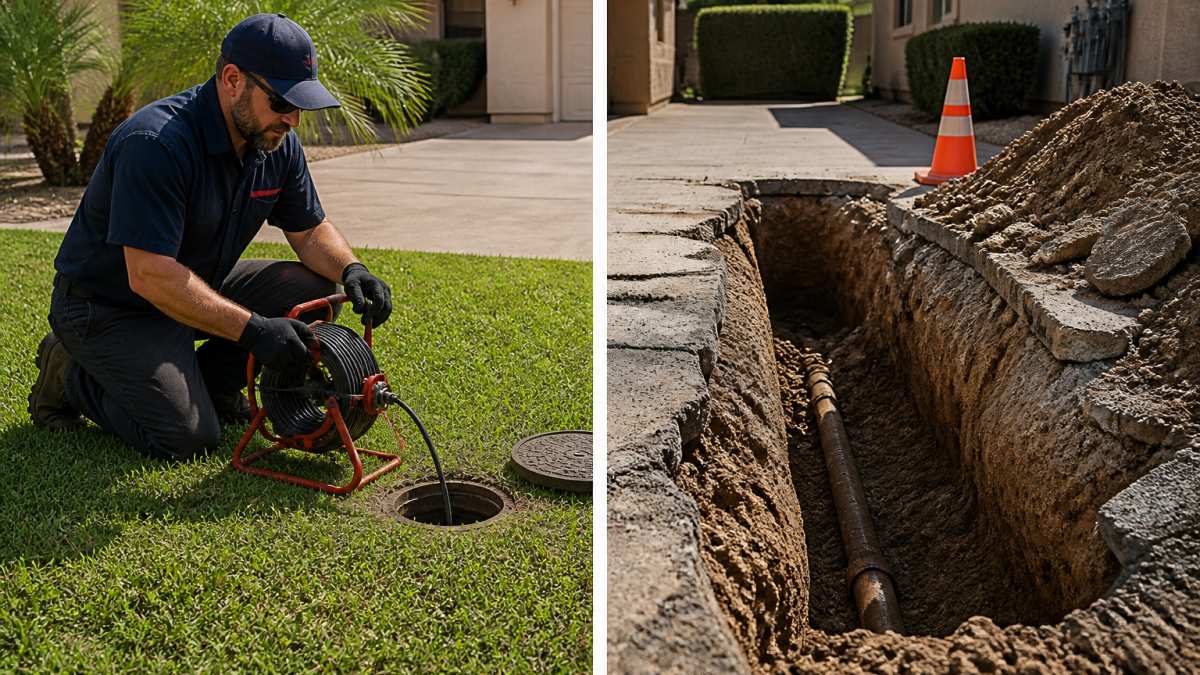
Trenchless sewer repair vs traditional excavation is where the cost conversation usually turns. Traditional dig-and-replace opens a continuous trench, meaning removing and rebuilding everything above it. This trenchless sewer repair vs traditional digging article offers a fuller side-by-side.
The difference shows up in three places:
- Disruption. Excavation tears through landscaping, driveways, and sidewalks. Trenchless leaves most of the surface untouched.
- Restoration costs. Rebuilding hardscape and replanting can rival the pipe work itself on a dig.
- Time. A trench job runs longer because of excavation and restoration phases.
Angi notes that a best-case trenchless job could save a large share compared with traditional repair, while stressing that savings depend on the situation (Angi on trenchless versus traditional repair). That caveat matters.
Claim Your Free Estimate Today →
Is Your Pipe a Candidate? An Eligibility Checklist
A pipe is a candidate for trenchless repair when it is damaged but still holds its shape, has clear access points, and passes a camera inspection. The checklist below is a starting filter, but the real decision comes from understanding why each item matters.
The Checklist
- Sewer camera inspection completed and recorded
- Pipe is cracked, corroded, or root-intruded but not collapsed
- No severe offset or misalignment at joints
If several boxes stay unchecked, excavation may be the safer path.
What Each Condition Actually Means
Damage type. Cracks, corrosion pitting, and root intrusion are lining candidates because the pipe still holds its shape.
Bends. Sharp bends and back-to-back fittings can prevent a liner from inverting or a bursting head from traveling.
Bellies and sags. A low spot that traps water and waste will still trap it after lining.
Access and diameter. The liner or bursting head has to enter and exit somewhere, cleanouts, a pulled toilet, or a small entry pit.
How a Camera Inspection Informs the Decision
The camera inspection is the deciding step, not a formality. See this sewer camera inspection cost guide for what an inspection costs and reveals. A recorded inspection lets the contractor see and measure the conditions above: cracking, offsets, bellies, collapse, and the host pipe wall. It also produces before-and-after footage that protects you if a dispute arises. Skipping it is a false economy, lining a collapsed or badly offset pipe can leave you paying twice.
Watch Out
No contractor should quote a trenchless method before reviewing camera footage. If a bid arrives without an inspection, treat the number as provisional and ask what conditions would change it.
No contractor should quote a trenchless method before reviewing camera footage. If a bid arrives without an inspection, treat the number as provisional and ask what conditions would change it.
Key Takeaway
Trenchless repair fits pipes that are damaged but still round, accessible, and free of collapse or severe offset. The camera inspection is what separates a real candidate from a hopeful one.
Trenchless repair fits pipes that are damaged but still round, accessible, and free of collapse or severe offset. The camera inspection is what separates a real candidate from a hopeful one.
Lifespan, Warranties, and What to Ask a Contractor
A trenchless repair is only worth it if it lasts, so the warranty and the contractor’s track record matter as much as the method.
Ask every contractor these questions:
- What warranty covers the liner or new pipe, and for how long?
- Is the warranty on materials, labor, or both?
- Will you provide before-and-after camera footage?
Get the warranty in writing and confirm it transfers if you sell the property. A verbal promise is not a warranty.
Pro Tip
Request the pre- and post-installation camera video. It proves the pipe was properly prepared and the liner seated correctly, and it is your best protection if a dispute arises later.
Request the pre- and post-installation camera video. It proves the pipe was properly prepared and the liner seated correctly, and it is your best protection if a dispute arises later.
Trenchless repair is not the right answer for every failing sewer line, but when the pipe qualifies and surface restoration would be costly, it usually is. If you are weighing trenchless against digging, explore our lasting sewer rehabilitation service and get a clear recommendation for your pipe.
Frequently Asked Questions
What are the disadvantages of trenchless pipe replacement?
Trenchless work is not right for every pipe. A collapsed or badly misaligned line, a pipe with too many bends, or one with large root intrusions can rule it out. The existing pipe also has to be clean and structurally sound enough to hold a liner. If the pipe fails an inspection, crews fall back to dig-and-replace. Trenchless repair also does not fix the underlying grade problem, so a line that sags will still sag after lining. Ask for a camera inspection and a written explanation of why your pipe does or does not qualify before you commit.
How much does trenchless sewer repair cost?
The cost of trenchless work depends on the method, pipe diameter, depth, and access. A short lining job on an easy run sits at the low end; a longer burst-and-replace through a deep line with tight access climbs toward the top. Those figures are starting points, not quotes. Local labor rates, permits, and site conditions move the number. Get an itemized, flat-rate estimate that separates labor, materials, permits, and any restoration so you can compare bids on equal terms.
What is the difference between pipe lining and pipe bursting?
Pipe lining, often called cured-in-place pipe or CIPP, pulls a resin-saturated liner into the existing pipe and cures it in place, leaving a new inner wall inside the old one. It slightly reduces the inside diameter. Pipe bursting pulls a bursting head through the old pipe to break it outward while dragging a new pipe behind it, so the diameter stays the same or grows. Lining suits pipes that are cracked or corroded but still hold their shape. Bursting suits pipes that are collapsed or undersized.
Does trenchless sewer repair last as long as a full replacement?
A cured-in-place liner typically carries a service life of around 50 years when it is installed correctly in a suitable pipe, which is comparable to new PVC. Pipe bursting installs brand-new pipe, so its lifespan matches a conventional replacement. The catch is installation quality and suitability: a liner put into a pipe that was not properly cleaned or that had a structural defect can fail early. Ask for the manufacturer’s warranty terms in writing and confirm whether the workmanship is covered separately from the material.
Is trenchless sewer repair less disruptive than excavation?
Usually, yes. Trenchless work needs only small access points, often through a cleanout or a single small pit, so lawns, driveways, sidewalks, and patios stay intact. That avoids restoration costs that can run into the thousands on their own. Traditional excavation opens a continuous trench along the line, which means removing and replacing whatever sits above it. The disruption is not zero, though: crews still dig access pits, and some equipment needs yard space. Ask where the access points will go before work starts.
