Claim Your Free Estimate Today
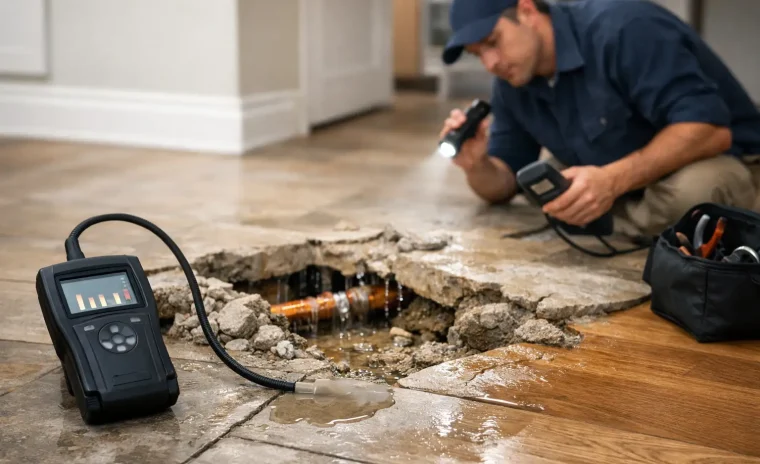
A slab leak can run for weeks beneath a home or commercial building before anyone sees a drop of water. By the time flooring lifts, a wall stains, or a water bill spikes, the leak may already be causing costly damage below the concrete. Knowing how to detect slab leaks early gives you more time to protect the structure, limit water waste, and choose a repair that addresses the real cause.
A slab leak is a leak in a water line that runs under or through a concrete foundation. It is not always an emergency in the first hour, but it should never be treated as a wait-and-see problem. Pressurized water can travel under flooring, weaken soil beneath the slab, and create moisture conditions that damage finishes or encourage mold growth.
What Makes Slab Leaks Hard to Find
Most plumbing leaks announce themselves under a sink, behind a toilet, or at a water heater. Slab leaks are different because the pipe is buried below concrete, often beneath tile, carpet, wood flooring, or equipment. The water may surface far from the actual break, so a wet spot is useful evidence but not a reliable map of where the pipe is leaking.
In Southern Arizona, hard water can play a role. Mineral buildup, pipe corrosion, aging materials, shifting soil, and pressure problems can all contribute to pipe failure over time. A leak may also develop where a pipe rubs against concrete or where a fitting has weakened after years of regular use.
The goal is not to guess where the leak is. It is to identify whether a hidden water leak exists, determine which line is affected, and locate it accurately before opening a floor or wall.
Signs That Help You Detect Slab Leaks
A single symptom does not always mean you have a slab leak. Several symptoms happening at once should move the issue higher on your priority list, especially in an older home or building with plumbing beneath the foundation.
An unexplained increase in water use
A higher water bill is often one of the earliest warning signs. Compare your current bill with the same period last year when possible. Seasonal irrigation changes, filling a pool, guests, and other water use can affect the total, so the bill alone does not prove a slab leak. But a steady increase with no clear reason deserves a closer look.
A water meter that moves when fixtures are off
Turn off faucets, appliances that use water, ice makers, irrigation, and any equipment that may cycle automatically. Then check the water meter. If the leak indicator moves or the reading changes after several minutes, water is likely moving somewhere in the system.
This test can reveal a leak, but it cannot tell you its location. It may be a running toilet, a leaking irrigation line, or a hidden pipe leak under the slab. A plumbing professional can isolate sections of the system to narrow down the source.
Warm or damp areas on the floor
A hot-water slab leak can create a warm patch on tile, concrete, vinyl, or other flooring. The warmth may be subtle, and it may be easier to notice early in the morning when the house is cooler. Damp carpet, soft flooring, cupping wood, loose tile, or discolored grout can also point to moisture migrating up from below.
Do not assume the warm or wet area is directly over the leak. Water follows the path of least resistance and can travel under a slab before it reaches the surface.
The sound of water with nothing running
In a quiet room, you may hear a faint hiss, rushing sound, or vibration when all fixtures are off. This is more common with an active pressurized leak. Noise alone is not conclusive because water softeners, recirculation systems, irrigation controls, and nearby plumbing can also make sounds. Still, it is a worthwhile clue when paired with meter movement or a rising bill.
Low water pressure or inconsistent hot water
A significant leak can reduce available pressure, particularly at fixtures farthest from the water source. You may notice weak flow at showers, faucets, or commercial restroom fixtures. If the leaking line carries hot water, the water heater may run more often as it tries to replace heat lost through water escaping below the foundation.
Low pressure can also come from clogged aerators, failing pressure regulators, mineral buildup, or a separate supply issue. Proper testing prevents a repair based on the wrong assumption.
Cracks, odors, or unexplained moisture damage
Foundation cracks can occur for many reasons, and a slab leak is not automatically the cause. However, new cracks combined with damp flooring, mildew odors, peeling paint near the base of walls, or moisture appearing along a wall should be evaluated promptly. The longer moisture remains hidden, the more extensive the restoration work can become.
How to Detect Slab Leaks Without Damaging Your Home
Homeowners can perform basic observations, but avoid breaking concrete, pulling up flooring, or attempting to repair a buried line based on a surface symptom. Those steps can create unnecessary damage and may miss the actual leak.
Start by documenting what you notice. Record meter readings, take photos of wet spots or flooring changes, and note when you hear water or feel a warm area. This information helps a technician understand the pattern and may help distinguish between a continuous leak and an intermittent one.
Next, reduce unnecessary water use until the issue is evaluated. If you suspect a major active leak, locate the main shutoff valve and be ready to turn it off. For a business, have a manager or maintenance contact identify the shutoff location before an emergency occurs. Water can cause substantial disruption when a leak continues overnight or during closed hours.
If a toilet is running or a visible fixture is leaking, address that first. A simple above-ground leak can produce many of the same warning signs as a slab leak. Separating the obvious problem from the hidden one is part of an accurate diagnosis.
Professional Leak Detection Finds the Source First
Professional slab leak detection is designed to reduce unnecessary demolition. A qualified plumbing team begins by reviewing symptoms, checking the meter, testing pressure, and isolating hot and cold water lines. From there, specialized methods can help identify the likely leak location beneath the slab.
Depending on the property and pipe layout, the process may include acoustic listening equipment, thermal imaging, electronic leak detection, or pressure testing. Each method has limits. Tile, thick concrete, noisy equipment, pipe depth, and multiple plumbing zones can affect the results. That is why experienced diagnosis matters more than relying on one tool alone.
Once the source is identified, you should receive clear options. A localized repair may make sense when the pipe condition is otherwise sound and the leak is isolated. In other cases, rerouting a line or repiping part of the system may provide better long-term value, particularly when pipes are aging or have had repeated failures. The right answer depends on the pipe material, access, prior repairs, water quality, and the condition of the overall plumbing system.
What to Do When You Suspect a Slab Leak
Treat the problem with appropriate urgency. If water is actively surfacing, flooring is rapidly becoming wet, pressure has dropped sharply, or you hear continuous water movement, call for professional help as soon as possible. Shut off the main water supply if doing so will prevent ongoing damage and you can do it safely.
For a slower suspected leak, schedule detection before the symptom grows. Avoid masking odors, placing rugs over damp areas, or repeatedly drying the same spot without finding the source. Those actions may make the space look better temporarily while moisture continues below the floor.
For Tucson-area property owners, Acclaimed Drain And Plumbing Solutions LLC provides leak detection focused on finding the underlying plumbing condition, not just treating the visible damage. You should expect a straightforward explanation of the findings, the available repair options, and the work needed to restore reliable service with clean workmanship.
A hidden leak rarely becomes less expensive by being ignored. Pay attention to the small changes in water use, floor temperature, sound, and moisture, then act before the water has more time to travel where it does not belong.