Claim Your Free Estimate Today
Last Updated: November 1, 2026
Quick Summary
A sewer camera inspection results report shows a real-time recorded video of the inside of your sewer line, along with findings like blockages, cracks, root intrusion, and pipe separation. Each finding should carry a distance from the access point, a timestamp, photos or clips, and a severity rating. Read the report in order, then ask the technician to walk you through the footage before you approve any repair.
- Reports usually run two to five pages and list the access point and direction of travel.
- Every finding should include a distance in feet and a timestamp matching the video.
- A credible report includes still photos or short clips of each defect, not just written notes.
- Ask which finding drives an urgent label, where it is, and what happens if you wait.
- Get a second inspection if a full replacement is recommended or the report lacks photos and distances.
Table of Contents
- What a Sewer Camera Inspection Actually Shows You
- Common Sewer Camera Inspection Findings and What They Mean
- How to Read a Sewer Scope Report Line by Line
- Judging Severity: Which Findings Need Immediate Repair
- Sewer Camera Inspection Limitations and False Positives
- What to Do After a Sewer Scope Inspection
- Verify the Diagnosis Before You Approve Any Repair
- Schedule Your Sewer Camera Inspection With a Free Estimate
- Frequently Asked Questions
What a Sewer Camera Inspection Actually Shows You
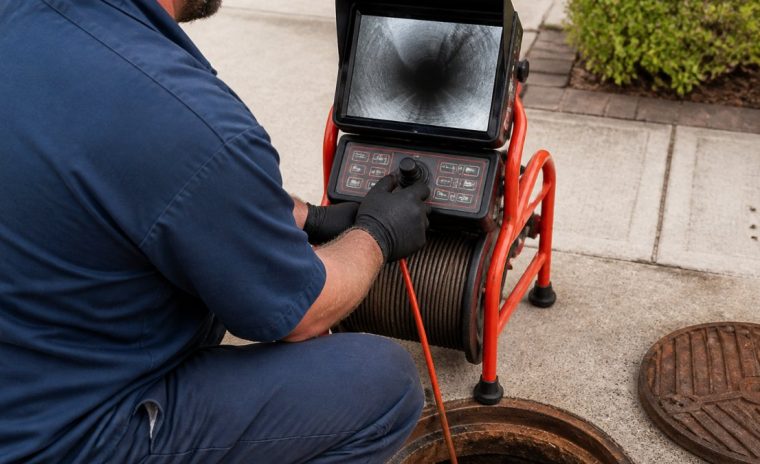
A sewer camera inspection results report shows you the inside of your sewer line in real time, a recorded look at the actual pipe under your yard, not a guess or a sales pitch.
Acclaimed Drain And Plumbing Solutions, LLC offers sewer camera inspections across Tucson and Southern Arizona, showing you what’s happening underground before anyone picks up a shovel.
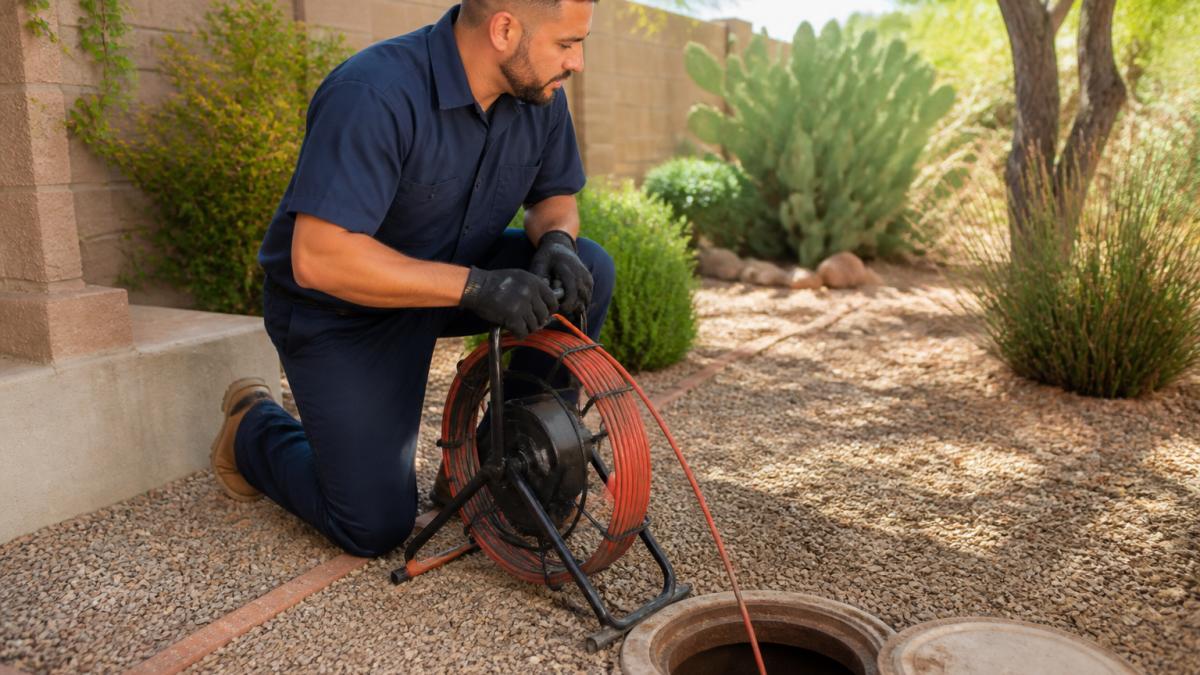
Visualizing these subterranean conditions provides the necessary clarity to determine if a comprehensive sewer scope inspection is required to address deeper structural concerns.
Real-Time Video and What the Technician Sees
A flexible camera travels through your sewer line while it records.
Here is what the feed captures:
- Pipe material and age clues, like clay, cast iron, or PVC
- Blockage and buildup blocking flow
- Cracks, leaks, and damaged joints
Common Sewer Camera Inspection Findings and What They Mean
Most sewer camera inspection findings fall into a few clear groups. Knowing the group helps you understand the repair recommendation you get.
Blockages, Grease Buildup, and Foreign Objects
Blockages and obstructions are the most common finding. Grease buildup narrows the pipe over time. Foreign objects like wipes, toys, or roots catch debris and cause slow drainage.
Many of these clear with drain clearing or hydro jetting.
Tree-Root Intrusion and Structural Damage
Tree-root intrusion is different. Roots enter through small cracks, grow, and cause recurring drain problems, and can crack the pipe outright.
Structural damage includes:
- Cracks and leaks in the pipe wall
- Damaged joints where sections meet
- Pipe separation between two sections
These findings often point to repair or replacement. Some cases suit trenchless sewer liner work.
How to Read a Sewer Scope Report Line by Line
A sewer scope report is usually two to five pages but dense. Most confusion comes from not knowing which parts are raw evidence and which are the technician’s interpretation. Read it in this order.
1. Header and access notes
The top should state the date, property address, access point used (cleanout, roof vent, or pulled toilet), and direction of travel. Direction matters: most reports run from the house toward the municipal main, so a finding at 12 feet is near the foundation and one at 60 feet is out under the yard or street.
2. Pipe material, diameter, and length
The inspector should identify the pipe material, clay tile, cast iron, galvanized steel, orangeburg, concrete, ABS, or PVC, and the nominal diameter, typically 3-inch, 4-inch, or 6-inch for a residential lateral. Material matters: a hairline crack in modern PVC usually means something different than a crack in 60-year-old cast iron, which tends to widen as the pipe graphitizes.
3. Distance markers and timestamps
Every finding should carry a distance from the access point, usually in feet, and a timestamp matching the video. The distance tells a repair crew where to dig or send a liner, and the timestamp lets you pull up the exact footage.
4. Photos and video clips
A credible report includes still photos or short clips of each defect, not just a written note. Look for a clear image of the defect and, where possible, a wider shot showing its position relative to a joint or fitting. If the report says “cracked pipe” but shows no image, ask for the clip.
5. Severity rating and defect codes
Many inspectors use a rating scale, and some use NASSCO PACP defect codes, “CR” for crack, “RT” for roots, “OB” for obstruction, each mapping to a defined defect type and severity band. You don’t need to memorize the codes, but you do need to know whether the rating is the inspector’s own scale or a standardized one.
6. Technician notes and recommendations
The notes section is where interpretation lives. Read it critically. A good note ties a recommendation to a specific finding at a specific distance, for example, “root intrusion at 34 feet, moderate, recommend cabling and re-inspection in 12 months.” A weak note jumps from a finding to a big-ticket recommendation without explaining the link.
Pro Tip
Ask the inspector to walk you through the report on the phone or in person, with the video playing. Five minutes of narration usually answers more questions than an hour of reading.
Ask the inspector to walk you through the report on the phone or in person, with the video playing. Five minutes of narration usually answers more questions than an hour of reading.
A quick annotated example
A typical entry on a well-written report reads something like this:
Distance 28.4 ft, Cast iron, 4-inch, RT (roots), moderate. Roots visible at a joint, occupying roughly 30 percent of the pipe opening. Flow not blocked. Recommend cabling the line and re-inspecting in 12 months.
Read that entry in pieces. The distance (28.4 ft) tells a crew where to work. The material and diameter (cast iron, 4-inch) tell you what repair methods are possible. The code (RT) and severity (moderate) tell you how urgent it is. The description (30 percent of the opening, flow not blocked) explains why it is moderate rather than urgent.
What to do if the report is vague
If the report uses phrases like “some deterioration” or “possible issue” without a distance, a photo, or a severity rating, ask for a written clarification before you approve any work. You are entitled to a report you can actually use.
Claim Your Free Estimate Today →
Judging Severity: Which Findings Need Immediate Repair
Not every finding is an emergency, and not every “urgent” label on a report is created equal. The most useful way to sort findings is to ask three questions about each one: **How bad is the defect itself? Knowing the signs of sewer line damage helps you interpret severe findings and decide when repair is urgent.
The three-question severity test
1. Defect severity. How much structural or flow capacity is gone?
2. Location. A defect under a driveway, sidewalk, or mature tree costs far more to reach than the same defect in open lawn.
3. Consequence of failure. A collapsed 4-inch lateral under a slab can back raw sewage into a basement.
A practical severity guide
| Finding | Typical severity | Typical action |
|---|---|---|
| Grease or soft blockage, flow still moving | Low | Clear and jet the line; add a maintenance schedule |
| Light root intrusion at a joint, under 30 percent of opening | Moderate | Cable the line, re-inspect in 12 months |
| Heavy root intrusion or roots plus a cracked joint | High | Repair the joint or line the pipe; do not just cable |
| Cracked or fractured pipe with no displacement | High | Repair or line; monitor if in open lawn and no symptoms |
| Offset joint or separated pipe with soil visible | Urgent | Repair promptly; soil entry and root intrusion will worsen |
| Collapsed pipe or pipe missing a section | Emergency | Same-day or next-day repair; sewage backup risk is high |
| Active backup with sewage in the home | Emergency | Same-day service; stop using water fixtures |
How pipe material changes the call
Material matters more than most homeowners expect. Cast iron cracks widen over time as the wall graphitizes and thins, so a minor-looking crack may be a replacement candidate within a few years. Clay tile is brittle and joint movement is common; a small offset often worsens as soil shifts. Orangeburg can deform and collapse with little warning, so any deformation is urgent. PVC and ABS are more forgiving; a crack there is usually a localized impact or settlement issue.
How location changes the call
A defect under a mature tree, a driveway, or a slab is expensive to reach, so the threshold for repairing it early is lower. A defect in open lawn with no symptoms can often be monitored. A defect within 10 feet of the foundation deserves a closer look because a failure there can affect the structure, not just the drain.
The ambiguous middle: monitor vs. repair
Most real reports land in the middle, commonly a moderate finding with no current symptoms. The right move is usually a defined monitoring plan: clear the line if needed, re-inspect in 12 to 24 months, and watch for slow drains, gurgling, or sewage odor. Put the plan in writing so you know what would trigger a repair.
Watch Out
A “high” or “urgent” label on a report is not by itself a reason to approve a full replacement. Ask which finding drives the label, where it is, and what happens if you wait. A trustworthy company will answer all three.
A “high” or “urgent” label on a report is not by itself a reason to approve a full replacement. Ask which finding drives the label, where it is, and what happens if you wait. A trustworthy company will answer all three.
When to get a second opinion
Get a second inspection if the recommendation is a full replacement, if the report lacks photos or distance markers, or if the severity label does not match the description.
Sewer Camera Inspection Limitations and False Positives
Sewer camera inspection limitations are real, and honest technicians admit them. The camera shows the inside of the pipe, not the soil around it.
Common limits include:
- Heavy grease buildup can hide defects behind it
- The camera cannot measure structural weakness in the surrounding soil
- A pipe defect deep in standing water may be missed
This is why a good report pairs visual inspection with a camera locator and clear notes. If a diagnosis seems thin, ask for the footage.
What to Do After a Sewer Scope Inspection
What to do after a sewer scope inspection depends on what the report found. Here is the order we recommend:
- Read the whole report, including severity notes
- Watch the footage and match it to the photos
- Ask questions about any finding you do not understand
- Get the repair options in writing
- Decide between clearing, repair, or lining
Minor blockage findings often mean a good cleaning and a maintenance plan. Structural findings mean planning a repair. See what trenchless sewer lining cost covers and how camera findings drive repair decisions.
Verify the Diagnosis Before You Approve Any Repair
Before you approve a big repair, verify the diagnosis. This protects you from paying for work you do not need.
Ask these questions:
- Can I see the inspection footage and inspection photos?
- Where exactly is the problem location on the report?
- Does the repair recommendation match the severity?
A trustworthy company shows you the evidence. If someone pushes a full replacement without sharing the video, slow down. Inspection findings should always back up the price.
Schedule Your Sewer Camera Inspection With a Free Estimate
A clear report turns a scary drainage issue into a plan you can act on, putting you in control of the decision.
At Acclaimed Drain And Plumbing Solutions, LLC, our technicians run the camera, explain the findings, and give you practical options. You can also review our sewer camera inspection cost guide to book with clear cost expectations.
Frequently Asked Questions
What can a sewer camera inspection reveal?
A sewer camera inspection shows the internal pipe condition in real time, including blockages, grease buildup, tree-root intrusion, cracks, leaks, damaged joints, pipe separations, and offsets. The technician also uses a camera locator to record the problem location and depth. You get inspection footage, photos, and a written report so you can see exactly what is happening inside your sewer line before approving any repair.
How serious are cracks or offsets in a sewer pipe?
It depends on the size and position. A hairline crack near a joint may only need monitoring, while a wide crack or a pipe offset that catches waste will worsen over time and can lead to backups or a collapsed line. Ask the technician to show you the footage and explain whether the defect is structural. If the pipe has lost its shape or separated, repair or replacement is usually the safer choice than repeated drain clearing.
What should I do after a sewer scope inspection?
Review the report and footage with the technician, ask which findings are urgent versus watch-and-wait, and get a written repair recommendation with options. If the line is clear, ask about preventative maintenance. If roots or damage are present, compare repair methods such as spot repair, trenchless sewer liner, or full replacement. Keep the report and photos on file so the next plumber has a baseline for the sewer line condition.
Can a sewer camera inspection show the exact location of a blockage?
Yes. A camera locator paired with the inspection equipment marks the problem location and depth above ground, so the technician knows where to dig or access the pipe. This is what makes trenchless repairs and targeted spot repairs possible instead of digging up the whole yard. Ask for the location measurement in feet from the access point so you can verify it against your property layout.
Dealing with a backup or recurring drain problems and not sure what is really wrong underground? Get the facts before you spend. Get started with Acclaimed Drain And Plumbing Solutions, LLC and book a sewer camera inspection with a free estimate, so you can see exactly what your line needs.
