Claim Your Free Estimate Today
Last Updated: October 31, 2026
Quick Summary
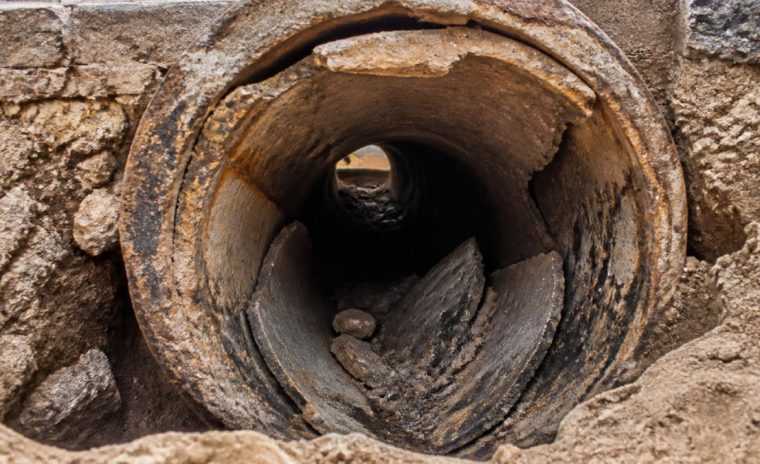
Signs of a collapsed main sewer pipe include several drains slowing or backing up at once, sewage rising in a tub or floor drain, gurgling sounds, and sewer odors inside the home. Recurring clogs in the same spot and unusually green or soggy patches in the yard also point to a damaged main line. A camera inspection confirms the collapse.
- Two or more drains slowing or backing up at once points to the main line.
- A clog that returns within weeks after clearing signals damage in the pipe.
- Gurgling after running water elsewhere often signals a main-line restriction.
- Stop using water immediately if sewage is rising in a tub, shower, or floor drain.
- A sewer line camera inspection confirms a collapse and shows where the damage sits.
Table of Contents
- Slow Drains and Recurring Clogs That Point to the Main Line
- Multiple Drains Backing Up at the Same Time
- Gurgling Sounds, Foul Odors, and Rising Toilet Water
- Yard Warning Signs: Soggy, Sunken, or Unusually Green Patches
- How a Sewer Line Camera Inspection Confirms a Collapse
- Broken Sewer Pipe Repair Options and What Drives the Decision
- Booking Your Sewer Inspection in Tucson
- Frequently Asked Questions
A homeowner who notices slow drains often wonders if the whole sewer line is failing.
Many homeowners assume a single clogged sink is the cause. Sometimes it is. But a collapsed main line often shows up as a pattern, not a single problem.
Here is what a collapsed main sewer pipe usually does:
- Blocks wastewater from leaving the house
- Causes backups that affect more than one fixture
- Lets sewage seep into the soil around the pipe
Watch out: Do not run water through the house while you suspect a main line failure. Every flush or shower adds to the backup.
Slow Drains and Recurring Clogs That Point to the Main Line
A single slow drain usually means a local clog in a sink, tub, or shower trap. A clog that keeps coming back, even after you clear it, can point deeper.
The hard part is telling those two situations apart before you spend money on the wrong fix. Most top-ranking symptom lists stop at “multiple drains slow down.” A fixture-by-fixture check gives you a clearer answer.
The fixture-by-fixture check
Work through the house in this order and write down what you see. The pattern matters more than any single result.
- One sink only. Fill the sink, pull the stopper, and time how long the water takes to clear. If only that sink is slow and every other fixture drains normally, the clog is almost certainly in that sink’s trap or branch line, not the main.
- One bathroom group. Run the sink, tub, and toilet in the same bathroom. If all three are slow but the kitchen and the other bathroom are fine, the clog is likely in that bathroom’s branch line where it meets the main.
- Lowest fixtures first. Check the lowest drain in the house, usually a basement floor drain, a laundry sink, or a first-floor tub. Sewage that appears here first, before upstairs fixtures show any problem, is a classic main-line signal because the lowest point sits closest to the main.
- Two or more rooms at once. Run water in the kitchen, then a bathroom on the opposite side of the house. If both slow down or back up, the shared main line is the common path and the likely culprit.
- The flush test. Flush a toilet and watch a nearby tub or floor drain. If water gurgles or rises in the tub when the toilet flushes, the two fixtures share a blocked line and the main is suspect.
Reading the pattern
- One fixture slow, others fine: local clog. A drain snake or a hand auger usually clears it.
- One room slow, rest of the house fine: branch-line clog between that room and the main. Still local, but deeper than a trap.
- Two or more rooms slow or backing up: main-line problem. Stop using water and call for a camera inspection.
Why recurring clogs are a red flag
A clog that comes back within weeks after a professional clearing is not bad luck. Something in the pipe is giving debris a place to catch. Common causes include:
- Root intrusion at a joint or crack, where fine roots enter and grow into a mat that catches paper and grease.
- A sagging section where water pools and solids settle instead of flowing.
- An offset joint where two pipe sections no longer line up, creating a ledge that snags waste.
Each of these can progress to a full collapse. A recurring clog is your early warning that the pipe is already damaged, even if it has not failed yet.
Pro Tip
Before you call anyone, note which fixtures are affected and whether the problem started after heavy rain, a root-heavy season, or a recent repair. That pattern helps a plumber decide whether to snake first or go straight to a camera inspection.
Before you call anyone, note which fixtures are affected and whether the problem started after heavy rain, a root-heavy season, or a recent repair. That pattern helps a plumber decide whether to snake first or go straight to a camera inspection.
If the pattern points to the main line, the next section covers the backup signs that confirm it.
Multiple Drains Backing Up at the Same Time
Backups that touch several fixtures are one of the clearest signs of a main line problem. Sewage may rise in a floor drain, a tub, or the lowest toilet first, because those points sit closest to the main line.
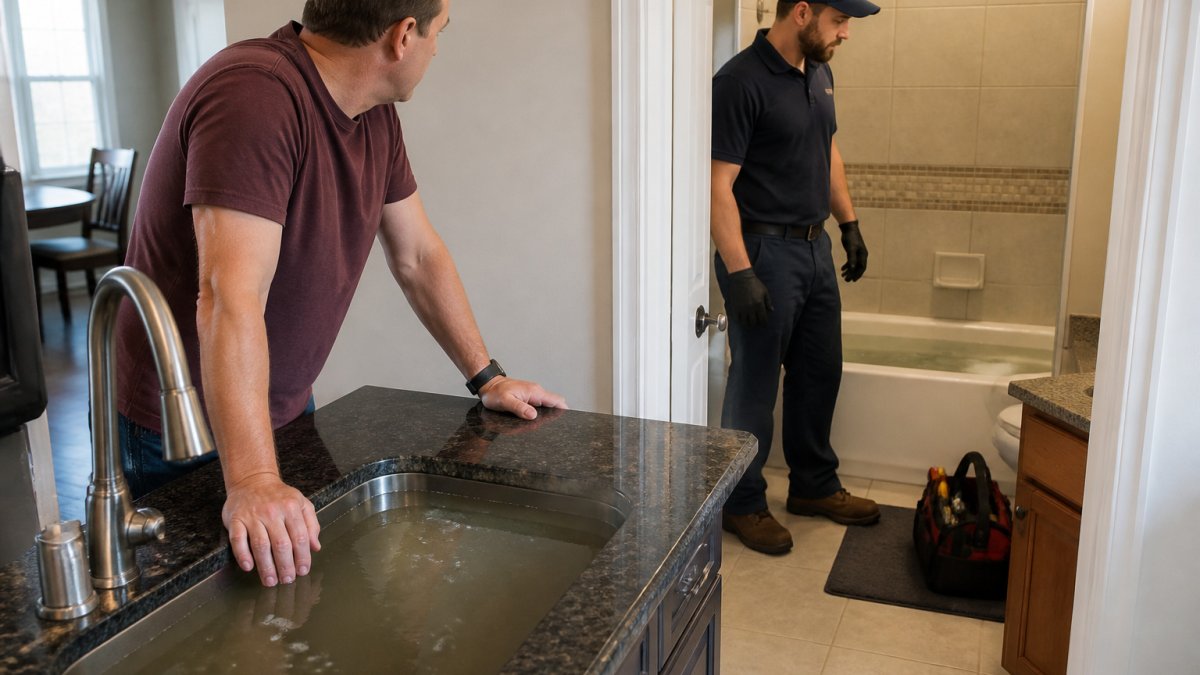
Common multi-fixture signs include:
- Water rising in a tub when you flush a toilet
- A floor drain bubbling or backing up
- Sewage in the shower or bathtub
A single-fixture clog often clears with a drain snake, while a multi-fixture backup points to the main line. Clearing one drain will not fix the rest.
Gurgling Sounds, Foul Odors, and Rising Toilet Water
Gurgling and bubbling sounds are another common warning. When air gets trapped in the pipe because water cannot flow freely, it pushes back up through the drains.
Foul sewer odors inside the home point the same way. Gases from a broken or blocked line can escape through drains and fixtures.
Toilet water that rises and falls on its own is a sign to act quickly.
What each symptom is telling you
- Gurgling after you use a different fixture: air is being pulled through a trap because water cannot move freely downstream. This is often the earliest audible sign of a main-line restriction.
- Persistent sewer smell indoors: gas is escaping through a drain trap that has been pushed dry or through a loose fixture connection. A smell that stays after you run water in every drain points to a line problem, not a dry trap.
- Sewer smell outdoors near the cleanout: gas is venting from the cleanout or from soil over a damaged section.
Severity guide: when to act now vs. when to call today
Not every symptom carries the same urgency. Use this guide to decide how fast to move.
Claim Your Free Estimate Today →
| What you see | Urgency | What to do |
|---|---|---|
| Gurgling only, no backup | Schedule within a few days | Note the pattern and book a camera inspection |
| Sewer odor indoors, no backup | Call today | Ventilate, avoid the area, book service |
| Toilet water rising and falling | Stop using water now | Call for emergency service |
| Sewage in a tub, shower, or floor drain | Emergency | Stop water use, keep people away, call now |
| Sewage in a living space | Emergency | Evacuate the affected area, call now |
Safe immediate actions during a sewage backup
If sewage is already coming up, the first minutes matter. These steps protect your household and limit damage.
- Stop using water. Do not flush, shower, run the dishwasher, or do laundry. Every gallon you send down the line adds to the backup.
- Shut off the water supply if you can. If the backup is tied to a running fixture, close the supply valve to that fixture.
- Keep people and pets out of the affected area. Sewage carries bacteria, viruses, and parasites (Biological Hazards in Sewage and Wastewater Treatment Plants). Do not walk through it, and do not let children or pets near it.
- Avoid contact with sewage. If you must move something out of the way, wear waterproof gloves and boots, and wash thoroughly afterward. Do not eat or drink in the affected area.
- Ventilate. Open windows and run fans to clear sewer gas, which can cause headaches and nausea at high concentrations.
- Do not use chemical drain cleaners. They will not clear a main-line collapse and can injure anyone who later works on the pipe.
- Document the damage. Photograph the backup and any damaged belongings before cleanup for insurance purposes.
- Call a licensed plumber. A backup that reaches living space is an emergency, not a weekend project.
Watch Out
Sewage exposure can cause gastrointestinal illness, skin infections, and respiratory problems (the CDC). People with weakened immune systems, young children, and pregnant individuals face higher risk. If anyone in the home develops fever, vomiting, or diarrhea after exposure, contact a healthcare provider.
Sewage exposure can cause gastrointestinal illness, skin infections, and respiratory problems (the CDC). People with weakened immune systems, young children, and pregnant individuals face higher risk. If anyone in the home develops fever, vomiting, or diarrhea after exposure, contact a healthcare provider.
Why this matters beyond the smell
A backup is not just unpleasant. Standing sewage and the moisture it leaves behind can:
- Soak into flooring and drywall, creating conditions for mold growth within days.
- Weaken structural materials under cabinets, flooring, and baseboards.
- Contaminate soil around the foundation, which is why outdoor odors and indoor backups often appear together.
A backup that reaches a living space is also a sign the line may already be collapsed, not just blocked. That is why the next step after the backup is contained is a camera inspection, not another round of snaking.
Key Takeaway
Gurgling, odor, and rising toilet water are early warnings. Sewage in a living space is an emergency. Either way, the fix starts with stopping water use and getting the line inspected.
Gurgling, odor, and rising toilet water are early warnings. Sewage in a living space is an emergency. Either way, the fix starts with stopping water use and getting the line inspected.
Yard Warning Signs: Soggy, Sunken, or Unusually Green Patches
The yard can show signs of a collapsed line too. Leaking sewage acts like fertilizer, so grass over the broken pipe may look unusually lush and green, even during dry weather. These localized depressions often serve as early collapsed drain pipe signs that warrant a thorough inspection before the structural integrity of the surrounding ground fails completely.
Look for:
- Green or lush grass in a straight line across the yard
- Soft, soggy, or sunken soil
- Standing water that does not drain away
These signs often show up alongside indoor symptoms. Together they make a stronger case for inspection.
How a Sewer Line Camera Inspection Confirms a Collapse
Guessing from symptoms alone is not enough. A sewer line camera inspection is how a plumber confirms a collapse.
The camera can show cracks, root intrusion, offset joints, sagging sections, and full collapses. Many technicians also record video and photos so you can see exactly what they found.
A camera inspection is usually a quick way to separate a main line problem from a local clog.
Broken Sewer Pipe Repair Options and What Drives the Decision
Repair options depend on where the damage is, how severe it is, and what the yard and property look like. Two broad paths exist:
- Traditional excavation: The crew digs up the yard, removes the damaged section, and installs new pipe.
- Trenchless repair: The crew repairs or replaces the pipe with little or no digging, often through the cleanout.
Several factors shape the choice:
- How deep and how long the damaged section is
- What is above the pipe, such as landscaping, driveways, or patios
- The pipe material and its age
Acclaimed Drain And Plumbing Solutions, LLC offers trenchless sewer liner technology and sewer and drain repair and replacement. Readers who want a better sense of overall costs can review our main sewer line repair cost guide.
Readers who want a better sense of overall costs can review our [page:1] guide, or see what affects trenchless lining in our [page:2] article.
Booking Your Sewer Inspection in Tucson
If you see several of these signs together, do not wait for the backup to get worse. A camera inspection gives you a clear answer about what is happening underground.
Acclaimed Drain And Plumbing Solutions, LLC provides sewer camera inspections and emergency plumbing service for Tucson and Southern Arizona homes. We offer free estimates.
Ready to find out what is happening in your line? Claim Your Free Estimate Today.
Frequently Asked Questions
How do I tell if my sewer line is broken?
The clearest sign is several fixtures slowing or backing up at once, such as a toilet, tub and floor drain all draining poorly together. A single clogged sink usually points to a local blockage, but repeated backups across the house suggest the main line is the problem. Gurgling toilets, sewage odors and soggy or unusually green patches in the yard add weight to that conclusion. A licensed plumber can confirm the problem with a sewer camera inspection, which shows the exact location and condition of the pipe. Acting early limits water damage and cleanup costs. Contact Acclaimed Drain & Plumbing Solutions for current pricing or a free estimate.
Can a clogged drain mean the main sewer line has collapsed?
Yes, a clog can be a symptom of a collapsed main sewer pipe, especially when it returns soon after clearing or affects several drains. A partial collapse can trap solids and paper, forming a blockage that a drain snake only temporarily removes. If the clog keeps coming back, or other fixtures react at the same time, the cause is likely in the main line rather than the individual drain. A sewer camera inspection is the reliable way to tell a local clog from structural damage in the line.
Why are multiple drains backing up at once?
Multiple drains backing up at once usually indicates a blockage or failure in the shared main sewer line, which every fixture in the home drains into. When that line is partially collapsed, broken or filled with debris or root intrusion, wastewater has nowhere to go and rises into the lowest fixtures first, such as floor drains and tubs. Because the problem sits upstream of the individual drains, clearing one sink will not fix the others. Prompt evaluation is important because sewage backing up into a home presents health and property risks.
What should I do if sewage is backing up into my home?
Stop using water fixtures, including toilets, showers and washing machines, to prevent more wastewater from entering the house. Keep people and pets away from affected areas, and avoid direct contact with the sewage, which can carry pathogens. Ventilate the space if possible, and call a 24/7 emergency plumber to diagnose the blockage or line failure. Document the damage with photos for insurance purposes. Acclaimed Drain & Plumbing Solutions offers 24/7 emergency service with live dispatchers; request a free estimate for repair options once the cause is confirmed.
