Claim Your Free Estimate Today
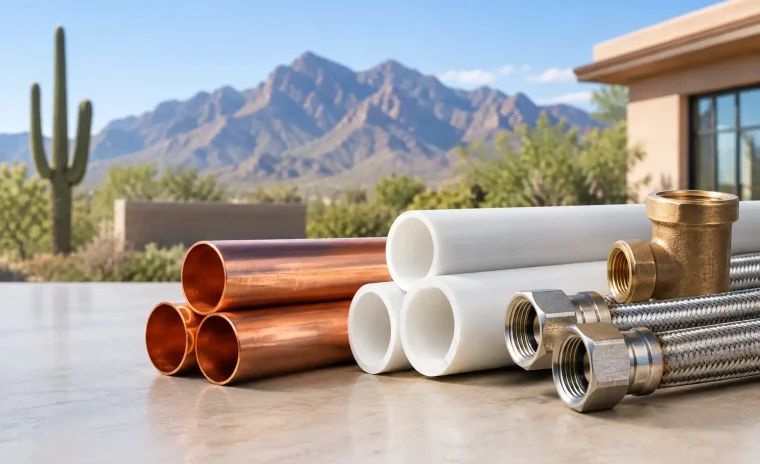
Hard water does not usually cause a pipe failure overnight. It works more slowly, leaving mineral scale inside water lines, around shutoff valves, in water heaters, and on fixtures. For Southern Arizona property owners, choosing the best pipes for hard water is about more than avoiding stains on a faucet. It is about protecting water flow, reducing leak risk, and avoiding a costly repipe sooner than necessary.
For most homes, PEX is the strongest all-around choice for new water supply lines in a hard-water area. That does not mean it is the automatic answer for every building. Pipe material, fitting type, water temperature, existing plumbing, local code requirements, and the condition of the water itself all matter. A proper evaluation should identify the real cause of low pressure, recurring leaks, or discolored water before anyone recommends a replacement.
What Hard Water Does to Plumbing Pipes
Hard water contains dissolved minerals, primarily calcium and magnesium. As water heats up or sits in the plumbing system, those minerals can separate from the water and form scale. You may see the evidence as white buildup on showerheads and glassware, but much of the problem develops where it is harder to see.
Inside supply lines, scale can gradually reduce the open space available for water to move. This is especially noticeable in older homes with galvanized steel pipes, where mineral buildup and internal corrosion often occur together. A homeowner may assume a failing fixture is causing weak pressure, when the actual restriction is farther back in the piping system.
Hard water also puts extra stress on components around the pipes. Water heaters lose efficiency as sediment accumulates. Cartridge valves, angle stops, appliance hoses, and faucet aerators may clog or wear sooner. The right pipe helps, but a long-term plan should consider the complete water system.
Best Pipes for Hard Water: PEX Is Often the Practical Choice
PEX, or cross-linked polyethylene, is widely used for residential repiping because its smooth interior surface does not corrode or develop mineral scale the way metal pipe can. It is flexible, which can reduce the number of connections needed behind walls and under floors. Fewer hidden joints can mean fewer potential leak points when the system is installed correctly.
PEX also handles typical residential hot and cold water applications well and is generally less expensive to install than copper. Its flexibility can make it a practical option for repiping occupied homes, where the goal is to restore reliable water service while limiting wall openings and disruption.
There are trade-offs. PEX must be protected from direct sunlight, cannot be used in every exposed location, and must be installed with approved fittings and support. The fittings matter in hard-water areas. Mineral deposits can affect valves and small internal passages, so a qualified plumber should select compatible materials and build the system with accessible shutoffs where service may eventually be needed.
PEX is not a cure for heavy scale at fixtures or inside a water heater. If the incoming water is very hard, pairing a repipe with the right water-treatment approach can protect the new plumbing and the equipment connected to it.
Copper Can Last, but It Has a Different Set of Trade-Offs
Copper remains a proven plumbing material and can be an excellent choice in the right home or commercial building. It is durable, handles heat well, and has a long track record in water supply systems. Type L copper is commonly selected for interior water lines where copper is appropriate.
However, copper is not immune to hard-water concerns. Mineral scale can still form inside the pipe, particularly where water is hot or flow is low. Water chemistry also matters. Water that is overly acidic, highly mineralized, or otherwise aggressive can contribute to pinhole leaks over time. Installation quality is equally important, including proper sizing, secure supports, and correctly made connections.
Copper usually costs more than PEX, both for material and labor. It is also more rigid, which may require more fittings and more invasive access during a whole-home repipe. For a property owner who values a traditional metal piping system and has water chemistry that supports it, copper may be worth the investment. For many Tucson homes, though, PEX offers a better balance of scale resistance, cost, and installation flexibility.
What About CPVC and PVC?
CPVC can be used for hot and cold potable water in locations where it is permitted by code. It resists corrosion and does not rust, which makes it better than galvanized steel in hard-water conditions. Still, CPVC can become brittle with age or exposure to heat and sunlight, and it is more vulnerable to damage from impact than PEX. It is often a workable material, but not usually the first choice for a major repipe when PEX is available.
PVC is commonly used for drain, waste, vent, and certain cold-water applications, not for interior hot-water supply lines. It should not be treated as an interchangeable substitute for PEX, CPVC, or copper in a whole-home potable water repipe. The right material depends on whether the pipe carries hot water, cold water, pressurized water, or wastewater.
Pipes to Replace When Hard Water Has Taken Hold
Galvanized steel is the pipe material most likely to create trouble in an older hard-water home. These pipes can rust internally while scale builds along the pipe walls. The result is often uneven pressure, brown or yellow water, frequent leaks, and restricted flow at multiple fixtures.
A single clogged faucet or showerhead does not automatically mean the whole home needs repiping. But if low pressure affects several rooms, leaks keep appearing, or you have old galvanized lines, a camera inspection, leak evaluation, and pressure assessment can reveal whether the issue is isolated or system-wide.
Old polybutylene piping also deserves professional attention. Its failure pattern is not caused by hard water alone, but aging pipes and fittings can create a significant leak risk. When a property has aging materials, repeated repairs may cost more over time than a planned replacement with dependable modern piping.
Do Not Overlook Fittings, Valves, and the Water Heater
The pipe itself is only part of the system. A repipe using excellent pipe material can still underperform if undersized lines, worn shutoff valves, poorly selected fittings, or a heavily scaled water heater remain in place.
This is why a root-cause assessment matters. A plumber should consider the water pressure entering the property, fixture demand, pipe sizing, hot-water performance, visible scale, prior leak history, and the age of the existing system. In commercial properties, the evaluation may also include peak usage periods, recirculation lines, backflow equipment, and the need to keep operations running during repairs.
For hard water, water treatment can be part of the solution. A properly sized water softener reduces the minerals that create scale. In some situations, filtration or conditioning equipment may also be appropriate. The right recommendation depends on water test results and the property owner’s goals, not a one-size-fits-all sales pitch.
When a Repipe Makes More Sense Than Another Repair
Repair is often the right choice when a leak is isolated and the rest of the system is in sound condition. Repiping becomes more practical when leaks recur in different areas, pressure keeps falling, water lines are badly corroded, or the home has outdated pipe materials with a known failure history.
A planned repipe gives you clear options. You can address aging lines, improve pipe routing, add accessible shutoffs, evaluate the water heater, and choose a material designed for long-term service. It also helps avoid the disruption of repeated emergency leaks and patchwork repairs.
At Acclaimed Drain And Plumbing Solutions LLC, the goal is to explain what is happening inside the system, provide straightforward repair or replacement options, and complete clean workmanship built to last. If hard water is affecting your pipes, do not wait for weak pressure or a hidden leak to become a larger problem. A professional evaluation can help you protect your property with the right pipe, the right fittings, and a water-quality plan that fits how your home or business actually operates.