Claim Your Free Estimate Today
Last Updated: October 29, 2026
Quick Summary
Your home likely needs main sewer line cleaning when two or more drains slow down at once, toilets gurgle, sewer odors appear, or wastewater backs up inside or in the yard. These combined signs point to a shared blockage in the main line rather than a single fixture clog.
- A single slow sink is usually a local clog, while slow drains across the house point to the main line.
- A bubbling toilet when other fixtures run suggests a partial clog downstream of that toilet.
- Stop all water use immediately if sewage is entering your home or more than one drain overflows.
- Never pour chemical drain cleaners into a backed-up main line, as they can damage pipes.
- A clog that returns in the same spot within weeks points to roots, a belly, or a crack.
Table of Contents
- Why Multiple Slow Drains Point to a Main Sewer Line Problem
- Clogged Main Sewer Line Symptoms Every Homeowner Should Recognize
- When a Main Sewer Line Backup Turns Into an Emergency
- Foul Sewer Odors and What They Reveal About Your Pipes
- How a Sewer Camera Inspection Confirms the Diagnosis
- What Professional Sewer Line Cleaning Involves
- Causes, Prevention, and When to Call a Plumber
- Claim Your Free Estimate Before Small Warning Signs Grow
- Frequently Asked Questions
Why Multiple Slow Drains Point to a Main Sewer Line Problem
If two or more drains in your home are draining slowly at the same time, the clog is probably in your main sewer line, not in the individual fixtures.
Your plumbing fixtures all connect to one shared pipe that carries wastewater to the city sewer or your septic system. When that shared pipe narrows or clogs, every fixture upstream feels it.
Single Fixture Clog vs. Main Line Blockage
The difference matters because the fix is different. A single-fixture clog lives in the trap or branch line behind that drain. A main line blockage sits in the big pipe under your yard or slab and affects everything connected to it.
Use this quick test to tell them apart:
- One fixture slow, others fine: likely a local clog in that drain’s trap or branch line.
- Two or more fixtures slow at once: likely a main line blockage.
- Water backs up in one fixture when you use another: a strong sign of a shared blockage.
If you’re seeing the second or third pattern, stop snaking individual drains, since that treats symptoms rather than the cause.
Clogged Main Sewer Line Symptoms Every Homeowner Should Recognize
The classic signs of a clogged main sewer line are slow drains in multiple fixtures, gurgling toilets, foul odors, water backing up into tubs or showers, and wastewater surfacing in the yard. Two or more together often indicate that the main line needs professional cleaning.
Here’s a full checklist of warning signs:
- Multiple drains backing up or clogging at once. Sinks, tubs, and showers all draining slowly is the top warning sign.
- Slow drainage across several fixtures. Water pools in the shower or sink and takes minutes to clear.
- Water backing up into other fixtures. Flushing the toilet makes the tub gurgle or fill.
Gurgling Toilets and Bubbling Sounds
A bubbling toilet is one of the most reliable early warnings you’ll get.
If your toilet bubbles when other fixtures run, the blockage is likely downstream of that toilet. A bubbling toilet usually points to a partial clog in the main line, and it’s worth acting on before it becomes a full backup.
Here are the warning signs to check for, and what each one usually means.
| Warning sign | What it suggests |
|---|---|
| Multiple drains backing up or clogging at once | Top warning sign of a main line problem |
| Slow drainage across several fixtures | Water pools and takes minutes to clear |
| Water backing up into other fixtures | Flushing the toilet makes the tub gurgle or fill |
| Sewage or wastewater backing up inside the home | An emergency, not a wait-and-see problem |
| Water or sewage surfacing outside near the sewer line | Pipe is blocked or broken |
| Bubbling toilet when other fixtures run | Blockage likely downstream of that toilet |
When a Main Sewer Line Backup Turns Into an Emergency
A main sewer line backup becomes an emergency when sewage is entering your home, when water is rising fast, or when more than one drain is overflowing at once. In those cases, stop using water immediately and call a plumber.
Not every backup is the same level of urgent. Use this triage to decide how fast you need to act:
- Emergency, act now. Raw sewage is coming up through a floor drain, tub, or toilet; water is rising visibly; or more than one fixture is overflowing at the same time. Stop water use and call a plumber right away.
- Urgent, same day. One fixture backs up when another is used, a toilet gurgles and drains slowly, or there is a strong sewer smell indoors. Stop heavy water use and schedule service today.
- Watch, schedule soon. Drains are slow across several fixtures but nothing has overflowed, and there is no odor or visible wastewater. Book an inspection before it escalates.
Immediate Safety Steps
Sewage backup water is not clean water. It can carry bacteria, viruses, and parasites, and standing wastewater can damage flooring, drywall, and cabinets within hours.
Do these things right away:
- Stop all water use. No flushing, no showers, no dishwasher, no laundry. Even running a sink adds volume to a blocked line.
- Keep people and pets out of the affected area. Block off the room and do not walk through standing wastewater.
- Protect yourself if you must be near it. Wear rubber gloves and boots, and wash hands thoroughly after any contact.
Watch Out
Do not pour chemical drain cleaners into a backed-up main line. They rarely clear a main-line blockage, can damage pipes, and can create a hazardous splash risk when the line is already full.
Do not pour chemical drain cleaners into a backed-up main line. They rarely clear a main-line blockage, can damage pipes, and can create a hazardous splash risk when the line is already full.
What to Do While You Wait
While you wait for the plumber, keep the line as empty as possible. Do not run water to “test” whether the clog has cleared. If the backup is in a basement or lowest level, move stored items off the floor.
If you’re facing an active backup and need help fast, contact a licensed plumber promptly. Waiting can turn a manageable clog into a contaminated mess.
Foul Sewer Odors and What They Reveal About Your Pipes
A sewer odor inside the home usually means gas is escaping from a dry trap, a loose fitting, or a cracked pipe in the drain system.
Odors are easy to dismiss as “just the drain.” Don’t.
Watch for these related signals:
Claim Your Free Estimate Today →
- Sewer flies around drains or in the yard, which breed in standing waste.
- Soggy patches or unusually green grass over the sewer line.
- A smell that’s worse after using water, suggesting a venting or drainage problem.
A cracked pipe or corrosion in older lines can let odor out long before a full backup happens. That’s why we treat smell as a diagnostic clue, not a nuisance.
How a Sewer Camera Inspection Confirms the Diagnosis
A sewer camera inspection is a reliable way to see what’s wrong inside the main line. A flexible camera travels through the pipe and sends live video back to the technician, who can spot tree roots, cracked pipe, corrosion, bellies, and blockages.
This is where a lot of homeowners get stuck. See Sewer Camera Inspection Versus Snaking for a direct comparison of the two methods.
The right method depends on what’s actually in the pipe.
What Professional Sewer Line Cleaning Involves
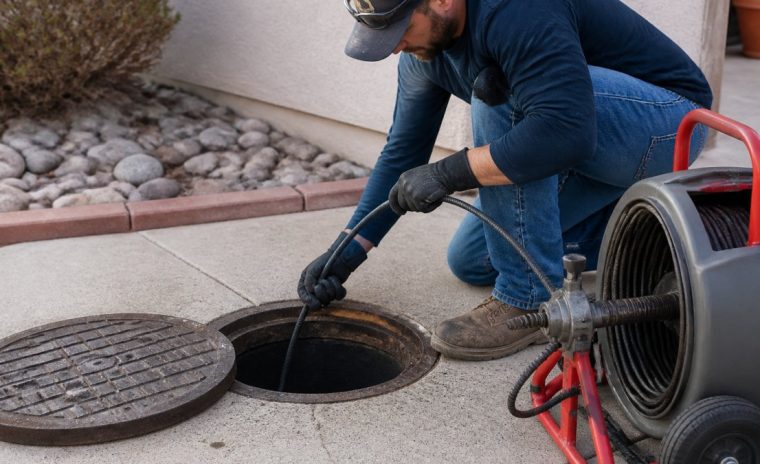
Professional sewer line cleaning uses high-pressure water or mechanical tools to clear the full diameter of the main line, not just poke a hole through the clog. For a fuller walkthrough of the service, see A Homeowner’s Guide to Main Line Cleaning.
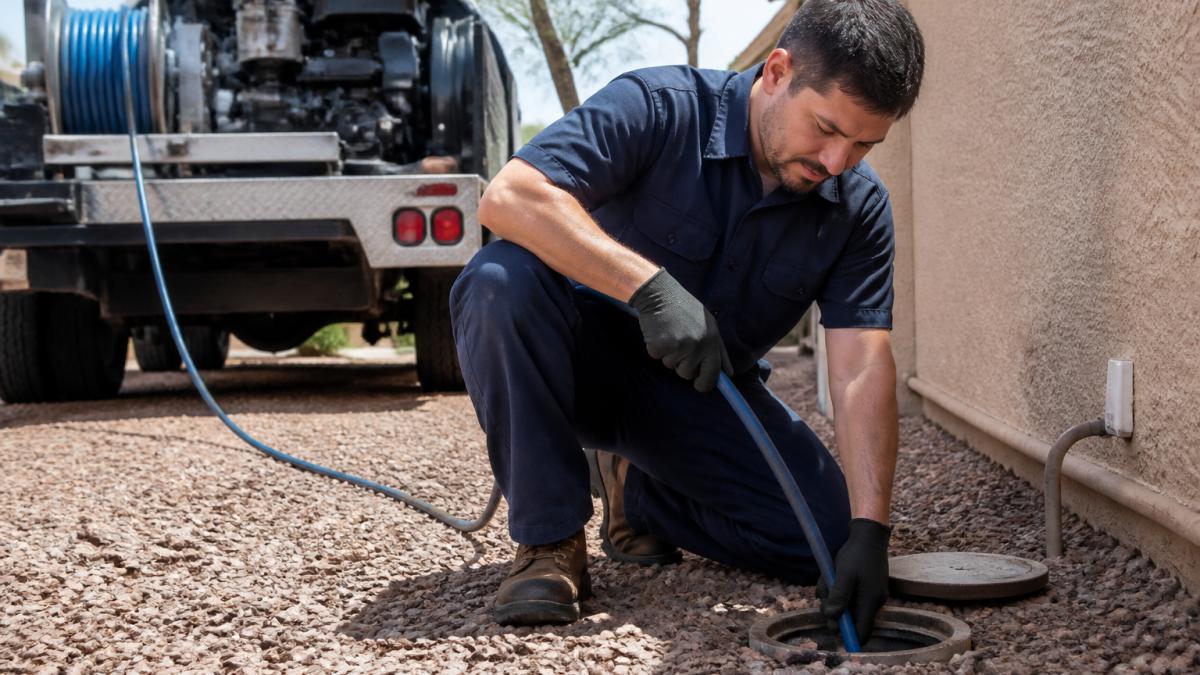
Hydro jetting is the workhorse for main line cleaning, scouring grease, scale, roots, and debris off the pipe walls. Mechanical augers handle tough root masses.
Our team can walk you through the process when you schedule service.
Cleaning vs. Repair or Replacement
Cleaning restores flow. Repair fixes damage. Replacement is for pipes that are too far gone.
- Cleaning: the pipe is intact but clogged with grease, roots, or debris.
- Repair: the camera shows a crack, break, or collapsed section that needs a spot fix.
- Replacement or trenchless lining: the pipe is badly corroded, root-invaded, or failing along a long run.
Trenchless sewer liner technology is available for eligible projects, and can renew a failing line with less digging than traditional replacement. A camera inspection helps determine which path is right.
Causes, Prevention, and When to Call a Plumber
Main line blockages have a short list of usual suspects: tree roots, grease buildup, flushing wipes or paper products, aging and corroded pipes, and settled or bellied lines. In older homes, original pipes are often the root cause of frequent clogs.
How Each Common Cause Behaves
- Grease and fat. Grease pours down warm and liquid, then cools and sticks to the pipe wall. Over time it layers, narrows the pipe, and catches other debris. Grease clogs tend to build slowly and recur in the same spot.
- Tree roots. Roots seek moisture at pipe joints and hairline cracks. They enter as fine hairs, then grow into a mat that catches paper and waste. Root problems rarely go away with one cleaning because the root source remains outside the pipe.
- Wipes and paper products. Even products labeled “flushable” do not break down like toilet paper. They snag on rough pipe walls and roots and form a plug that grows with each flush.
Cleaning Versus Repair: Reading the Pattern
A single clog that clears and stays clear usually points to a removable blockage. A clog that returns in the same place within weeks or months points to an underlying condition, roots, a belly, a crack, or heavy scale, that cleaning alone will not solve.
Cleaning restores flow in a pipe that is structurally sound; repair fixes a pipe that is broken, cracked, collapsed, or badly root-invaded. If the same symptom keeps coming back, the line needs more than a cleaning.
Prevention That Actually Helps
Prevention is mostly habit, but the habits should match the cause:
- Keep grease out of the drain. Pour it into a container and trash it. Wipe greasy pans before washing.
- Flush only toilet paper and waste. No wipes, even “flushable” ones, and no paper towels.
- Schedule periodic inspections if you have mature trees or an older home. A camera inspection can catch root intrusion and corrosion before a backup.
A few practical steps can help prevent sewer backups at your property. Call a plumber when you see multiple slow drains, a bubbling toilet, sewer odor, or any wastewater backing up. Those are signs the main line may need attention.
Claim Your Free Estimate Before Small Warning Signs Grow
Small warning signs are often easier to address than full backups. Catching a gurgle early can help you avoid a sewage backup later.
At Acclaimed Drain And Plumbing Solutions, LLC, we diagnose the real cause instead of patching the symptom. Our team uses sewer camera inspections with photo and video documentation, offers upfront flat-rate pricing, and provides free estimates. We also offer financing options for eligible projects and a maintenance membership program to keep your line clear year-round.
Frequently Asked Questions
How can I tell if a clog is in the main sewer line or just a single drain?
Test one fixture at a time. If a single sink or tub drains slowly but everything else runs fine, the clog is likely local to that fixture’s trap or branch line. If multiple drains across different rooms slow down at once, or a toilet bubbles when you run the sink, the blockage is probably in the main sewer line. A sewer camera inspection gives a definitive answer by showing exactly where the obstruction sits.
How often should a main sewer line be cleaned?
Most homes do not need a set schedule. Clean when warning signs appear: recurring slow drains, gurgling, or odors. Homes with mature trees near the line, older cast-iron or clay pipes, or a history of root intrusion often benefit from cleaning every 18 to 24 months. A maintenance membership program is one option to help monitor your system over time.
Can a clogged sewer line cause toilets to gurgle?
Yes. Gurgling is trapped air escaping through the water in the bowl because wastewater cannot move freely down the line. When you flush or run a fixture, air gets pushed back up through the toilet. A single gurgle after heavy rain is normal, but repeated bubbling every time another fixture drains is one of the clearest clogged main sewer line symptoms and warrants a professional look.
Can I clear a main sewer line myself?
A plunger or hand auger can handle a single-fixture clog, but a main line blockage needs professional equipment. Store-bought chemicals can damage pipes and rarely clear roots or heavy grease. A licensed plumber can use a sewer camera inspection to locate the problem and then clear it with appropriate equipment. DIY attempts on a main line often push the clog deeper or crack aging pipe, turning a cleaning job into a repair.
