Claim Your Free Estimate Today
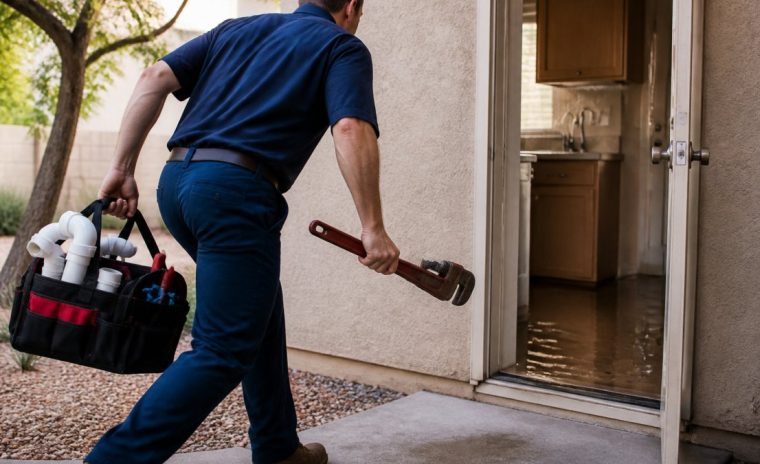
Table of Contents
- Emergency Plumber Response Time: What to Expect
- When to Call an Emergency Plumber
- What to Do While Waiting for a Plumber
- Emergency Plumber Cost: What Drives the Bill
- Your Plumbing Emergency Checklist
- How to Verify the Arrival Estimate and Choose a Reliable Emergency Plumber
- Frequently Asked Questions
Last Updated: October 21, 2026
Emergency Plumber Response Time: What to Expect
Most people picture a plumber showing up within minutes of a frantic call. The reality is more like 30 to 90 minutes for a true emergency, and longer during peak demand. Emergency plumber response time depends on your location, the time of day, and how many other calls are already in the queue.
At Acclaimed Drain And Plumbing Solutions, LLC, we run live dispatchers around the clock, which means you get a real arrival window instead of a vague “someone will be there soon.” That distinction matters when water is spreading across your floor.
Below, we break down what actually drives arrival times, when a problem truly qualifies as an emergency, and exactly what to do while you wait.
Key Takeaway
Emergency plumber response time is not a single number. It is a range shaped by dispatch load, travel distance, and the type of emergency. Ask for a specific window, not an estimate.
Emergency plumber response time is not a single number. It is a range shaped by dispatch load, travel distance, and the type of emergency. Ask for a specific window, not an estimate.
Typical Arrival Windows
Emergency plumber response time typically falls into three tiers. Understanding these tiers helps you set realistic expectations before you dial.
- Rapid response (30-60 minutes): Active flooding, burst pipes, sewage backup. Dispatchers prioritize these because water damage compounds by the minute.
- Standard emergency (60-120 minutes): Failed water heaters, major drain blockages, no hot water in a commercial kitchen.
- After-hours and weekend service (90 minutes to several hours): Fewer technicians are on shift overnight and during holidays, so arrival windows stretch.
A common mistake is assuming every call gets the fastest tier. A dripping faucet at 2 a.m. is not the same priority as a pipe spraying water into a wall. Honest dispatch teams triage by hazard, not by who called first.
What Affects How Fast a Plumber Arrives
Several factors move your arrival window in either direction. Here is what to expect.
- Your distance from the nearest on-call technician. Local service areas with dense coverage see faster dispatch times.
- Time of day. Weekend service and holiday service run on leaner crews.
- Emergency type. Uncontrolled flooding jumps the line. A slow drain does not.
Pro Tip
When you call, describe the symptom and the location in one sentence: “Water is pooling under my kitchen sink and the cabinet is soaked.” That single sentence helps dispatch assign priority and the correct technician faster than a long story.
When you call, describe the symptom and the location in one sentence: “Water is pooling under my kitchen sink and the cabinet is soaked.” That single sentence helps dispatch assign priority and the correct technician faster than a long story.
When to Call an Emergency Plumber
Call an emergency plumber when water is actively escaping, sewage is backing up, or you have no water at all. Those three situations cause property damage or health hazards fast.
The tricky part is that plumbing problems rarely announce their severity. A running toilet looks minor until the supply line fails. A slow drain feels harmless until it becomes a sewage backup.
Signs You Have a True Plumbing Emergency
Use this list to decide whether to call now or book a routine appointment.
- Water you cannot stop. A burst pipe or failed supply line that keeps flowing after you close the fixture valve.
- Sewage backup. Wastewater rising into tubs, showers, or floor drains. This is a health hazard.
- No water anywhere in the building. Could signal a main water supply failure or a broken service line.
If your issue is a dripping faucet, a slow drain in one sink, or a toilet that runs occasionally, you have time. Book a standard service call and save the emergency dispatch for the real thing.
What to Do While Waiting for a Plumber
The most important step while waiting is shutting off the water. Everything else follows from that. A closed valve turns a spreading flood into a contained mess.
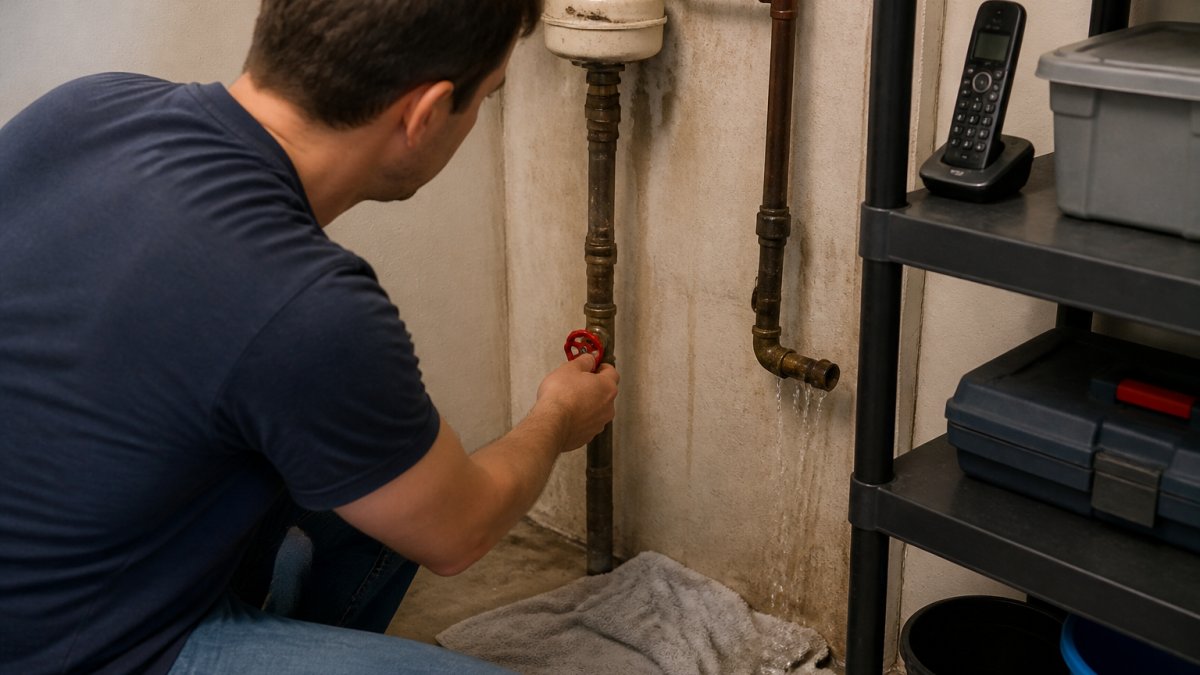
Here is the chronological order that limits damage:
- Shut off the main water supply. Find your water shutoff valve and turn it clockwise until it stops. If you cannot find it, call your dispatcher and ask them to walk you through it.
- Kill the power to wet areas. If water is near outlets or appliances, flip the breaker for that zone.
- Contain the water. Towels, buckets, and a wet/dry vacuum slow the spread across floors.
- Move valuables. Lift furniture, rugs, and electronics off wet surfaces.
- Document everything. Photos and video help with insurance claims later.
- Clear a path. Move cars from the driveway and unlock the gate so the technician can reach the problem fast.
Watch Out
Never pour chemical drain cleaner into a fully blocked drain. If the blockage does not clear, the caustic liquid sits in the pipe and can damage it, and it becomes a hazard for the technician who opens the line later.
Never pour chemical drain cleaner into a fully blocked drain. If the blockage does not clear, the caustic liquid sits in the pipe and can damage it, and it becomes a hazard for the technician who opens the line later.
Emergency Plumber Cost: What Drives the Bill
Emergency plumber cost is not a fixed number, and the response-time question is inseparable from the pricing question: the faster and more after-hours the dispatch, the more the visit typically costs. Most companies structure the bill around three separate charges, and knowing which is which prevents surprise invoices.
The three charges you should expect to see
- Dispatch or trip fee. A flat charge for sending a technician to your address, usually quoted when you book. It may or may not be credited toward the repair.
- Diagnostic or service fee. Covers the technician’s time to identify the problem. Many companies waive or credit this if you approve the repair on the same visit.
- Repair cost. Parts plus labor, ideally quoted as a flat rate before work begins.
A common pattern is for the dispatch fee to be separate from the diagnostic fee, so ask specifically: “Is the trip fee credited toward the repair, and is the diagnostic fee separate?” Get the answer before you hang up.
Claim Your Free Estimate Today →
What moves the number up or down
- Time of day. Nights, weekends, and holidays carry an after-hours premium because crews are on standby rather than on shift. A weekday-morning call is almost always the cheapest window.
- Access difficulty. A burst pipe behind drywall or under a slab costs more to reach than one under a sink. Ask whether the estimate includes drywall or cabinet access.
- Severity and equipment. A sewage backup that needs a camera inspection and hydro jetting runs higher than a simple clog cleared with a snake.
Authorization before work begins
The single most important protection is a written estimate you approve before the technician starts. A reliable company will:
- Diagnose the problem and explain what failed.
- Present options in writing, including the flat-rate price for each.
- Get your authorization before any repair work begins.
- Confirm whether the diagnostic fee is credited if you approve the repair.
Pro Tip
Ask two questions on the phone before you book: “What is the total charge to come out, and is any of it credited toward the repair?” and “Will I approve a written price before work starts?” The answers tell you more about the company than any review.
Ask two questions on the phone before you book: “What is the total charge to come out, and is any of it credited toward the repair?” and “Will I approve a written price before work starts?” The answers tell you more about the company than any review.
Watch Out
Be cautious of any company that quotes a repair price over the phone before seeing the problem, or that pressures you to authorize work before you have a written estimate. A firm arrival window and a written price are reasonable requests; resistance to either is a red flag.
Be cautious of any company that quotes a repair price over the phone before seeing the problem, or that pressures you to authorize work before you have a written estimate. A firm arrival window and a written price are reasonable requests; resistance to either is a red flag.
How cost ties back to response time
Faster response usually means a higher dispatch premium, but the trade-off is real: a 30-minute arrival during active flooding can prevent thousands in water damage, while a cheaper two-hour window may cost more in remediation. When you call, ask for the arrival window and the total dispatch charge together so you can weigh speed against price with actual numbers in front of you.
Your Plumbing Emergency Checklist
Print this and keep it near your water heater. It takes two minutes to read and can save thousands in water damage.
- Locate your main water shutoff valve and test that it turns
- Save your plumber’s emergency number in your phone
- Know which breaker controls the water heater and laundry area
How to Verify the Arrival Estimate and Choose a Reliable Emergency Plumber
An arrival estimate is not a guarantee, and the difference matters when water is spreading. A trustworthy company gives you a specific window, tells you what could change it, and updates you if it slips. Here is how to verify what you are being told and how to vet the company behind the estimate.
What to ask dispatch when you call
Ask these questions in order. The answers tell you whether the window is real or a sales script.
- “What is my arrival window, in minutes or a time range?” A specific range (for example, 45 to 75 minutes) is a real estimate. “Soon” or “as fast as possible” is not.
- “Is this a guaranteed service window or an estimate?” Most companies quote an estimate, not a guarantee. Knowing which you have prevents a dispute later.
- “Will I get a call or text when the technician is en route?” Live dispatch should offer a heads-up call.
- “What could push the window back?” Honest answers include traffic, weather, and a higher-priority call ahead of yours.
- “What is the total dispatch charge, and is it credited toward the repair?” Tie the price question to the time question.
How updates should work
A reliable dispatcher does three things: confirms the window when you book, calls or texts when the technician is en route, and calls again if the window slips. If the estimate keeps moving with no explanation, that is a signal about how the company operates. Ask for a callback number for the dispatcher, not just the technician.
Key Takeaway
A real arrival estimate comes with a time range, a named trigger for delays, and a commitment to update you if the window changes. If you cannot get all three, keep calling.
A real arrival estimate comes with a time range, a named trigger for delays, and a commitment to update you if the window changes. If you cannot get all three, keep calling.
How to vet the company behind the estimate
- Live dispatchers. You reach a person, not a voicemail box, at any hour. Test this by calling at an odd hour before you have an emergency.
- Licensing and insurance. Ask for the license number and verify it with your state’s licensing board. Confirm the company carries liability insurance and workers’ compensation.
- Written estimates. Flat-rate pricing quoted and approved before work starts.
Response time by emergency type and location
Arrival windows are not uniform. A dispatcher triages by hazard, so the same company may reach an active flood faster than a contained leak.
Acclaimed Drain And Plumbing Solutions, LLC provides 24/7 emergency plumbing with live dispatchers, upfront flat-rate pricing, and free estimates. Our technicians evaluate the full system, explain what they find, and give you options before any work begins.
Best For
Homeowners and property managers who want a firm arrival window, a written price, and a technician who explains the diagnosis instead of just handing over a bill.
Homeowners and property managers who want a firm arrival window, a written price, and a technician who explains the diagnosis instead of just handing over a bill.
Frequently Asked Questions
How quickly should an emergency plumber respond?
Most emergency plumbing services aim to have a technician on-site within 1 to 3 hours, though actual emergency plumber response time depends on your location, the time of day, and how many other calls are ahead of yours. When you call, ask for a realistic arrival window and confirm whether the dispatcher is quoting dispatch time or on-site arrival. A reliable company will give you a clear estimate and update you if conditions change.
What should I ask when calling an emergency plumber?
Ask four things: the estimated arrival window, whether the after-hours fee applies, what information they need from you to prepare, and whether they can walk you through shutting off water or gas while you wait. Also confirm the technician’s license and insurance. Write down the name of the person you speak with and the estimate they give. These details help you verify the plumbing emergency checklist and avoid surprise charges.
Can an emergency plumber give an estimated arrival time?
Yes, a professional dispatcher should provide an estimated arrival window, not just a dispatch time. Ask them to clarify whether the window accounts for travel time and current traffic. If the estimate changes, the company should call you. You can verify the estimate by asking for the technician’s name and a callback number, and by checking that the arrival window is realistic for your area rather than an overly optimistic promise.
How much do plumbers charge for emergency service?
Emergency plumber cost varies with the time of day, the type of repair, and your location. After-hours, weekend, and holiday calls typically carry a higher service fee than standard appointments. Ask for the after-hours fee and the diagnostic charge before you agree to the visit. A transparent company will explain these fees upfront and provide a written estimate before starting work, so you can plan for the expense.
Plumbing emergencies are stressful enough without wondering whether anyone is actually coming. The right company gives you a real window, a clear price, and a plan. If you are dealing with an active leak, backup, or failed water heater, claim your free estimate with Acclaimed Drain And Plumbing Solutions, LLC today. Our team offers 24/7 emergency service, upfront flat-rate pricing, and a maintenance membership program to keep small problems from becoming emergencies.