Claim Your Free Estimate Today
Table of Contents
- What Is a Plumbing Maintenance Membership?
- Key Benefits of Subscription Plans
- Plumbing Maintenance Checklist for Homeowners
- How Often Should You Have Your Plumbing Inspected?
- Cost-Benefit Analysis: Membership vs. Pay-Per-Service
- Is a Home Warranty the Same as a Plumbing Membership?
- Red Flags: Contract Lock-In and Hidden Fees
- Who Should (and Shouldn’t) Get a Plumbing Maintenance Membership
- Frequently Asked Questions
Last Updated: September 3, 2026
What Is a Plumbing Maintenance Membership?
Aplumbing maintenance membership is a subscription-based service agreement that provides homeowners with regular plumbing inspections, preventative maintenance, and discounted repair rates in exchange for a recurring monthly or annual fee. This model shifts plumbing care from reactive emergency responses to proactive system management.
You pay a predictable membership fee and receive scheduled inspections, priority scheduling, and discounts on service calls. Instead of waiting for a pipe to burst or a water heater to fail, you catch problems early. Many membership programs include annual plumbing system evaluations, water heater maintenance, leak detection, and drain cleaning.
At Acclaimed Drain And Plumbing Solutions, LLC, we believe that the real value isn’t just in the services included, it’s in the peace of mind that comes from knowing your plumbing infrastructure is being monitored by licensed professionals. A maintenance membership transforms your plumbing system from a source of anxiety into a managed asset with predictable maintenance windows.
The key distinction is that these memberships operate differently from home warranties. A membership is a proactive service agreement you purchase directly from a plumbing company, while a warranty is typically bundled with home insurance or sold separately and covers failures after they occur. Memberships emphasize prevention; warranties emphasize repair coverage after breakdown.
Key Benefits of Subscription Plans
The most immediate benefit of a plumbing maintenance membership is eliminating service call fees. Many homeowners avoid calling a plumber for minor issues specifically because they dread the $75-$150 service call charge before any work even begins (angi.com). A membership removes this barrier, encouraging you to address small problems before they escalate.
Priority scheduling is another significant advantage. When a pipe starts leaking at 2 a.m. on a Sunday, members get priority dispatch over non-members. This can mean the difference between a quick fix and days of water damage while you wait for availability.
Preventative maintenance saves money over time by catching issues early. Water heaters fail suddenly without warning unless someone flushes the tank annually to remove sediment buildup. Sewer lines develop root intrusion gradually unless inspected with camera equipment. Small leaks behind walls go unnoticed until they’ve caused structural damage. Regular inspections catch these problems at the inexpensive stage, not after they’ve become catastrophic.
Discounted repair rates are built into most membership programs. Beyond included services, members typically receive 10-15% discounts on additional repairs and replacements. Over the course of a year with multiple service calls, these discounts can easily offset the membership cost.
The psychological benefit matters too. Homeowners with memberships report lower stress about plumbing emergencies because they know a trusted professional is monitoring their system.
Plumbing Maintenance Checklist for Homeowners
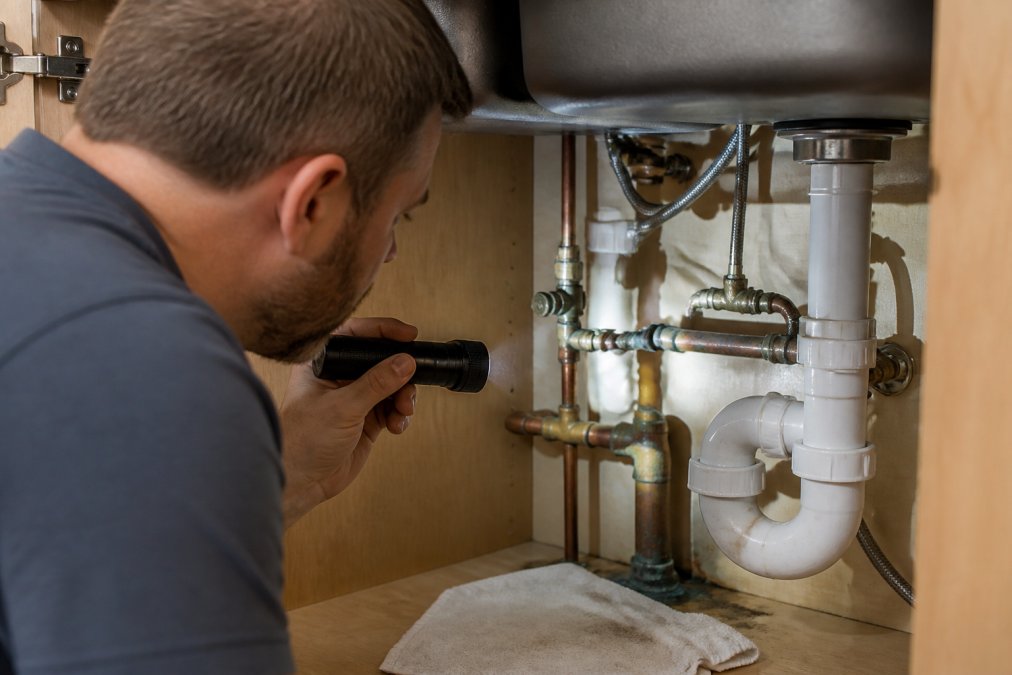
A solid plumbing maintenance checklist should cover the critical components of your system that fail most frequently.
Annual inspection items:
- Water heater condition, temperature setting, and sediment buildup
- Visible pipe corrosion, particularly on copper and galvanized steel
- Under-sink leaks and water stains in cabinets
- Toilet tank and bowl integrity, including fill valve operation
- Faucet aerators and showerhead flow rates
- Sump pump operation (if applicable)
- Drain line slope and visible blockages
- Water pressure at multiple fixtures
Seasonal checks:
- Exterior faucet winterization before cold months
- Sump pump testing after heavy rain
- Gutter and downspout drainage away from foundation
- Hose bib inspection for cracks and leaks
Monthly observation items:
- Water meter for unexplained movement when no water is running
- Under-sink areas for moisture or mold
- Toilet running sounds or weak flushes
- Unusual water odors or discoloration
Homeowners who perform monthly visual checks catch 70% of problems before they become emergencies (peer-reviewed research). You don’t need to be a plumber to notice water stains, hear running toilets, or spot corrosion. A professional membership program adds professional-grade diagnostics, sewer camera inspections, pressure testing, and leak detection equipment that homeowners cannot perform themselves.
Acclaimed Drain And Plumbing Solutions, LLC includes comprehensive plumbing inspections as part of preventative maintenance services, using professional diagnostic equipment to identify issues invisible to the naked eye. The combination of your monthly visual checks and professional annual inspections creates a layered defense against system failure.
How Often Should You Have Your Plumbing Inspected?
Professional plumbing inspections should occur at minimum annually for most homes, with more frequent inspections for older properties or those with a history of problems.
Homes built before 1980 should ideally be inspected twice yearly because older plumbing infrastructure, galvanized steel pipes, cast iron drains, and original fixtures, degrades predictably. A pipe that’s been in service for 50 years is statistically more likely to fail than one that’s 10 years old (the EPA). Twice-yearly inspections catch deterioration early.
Homes with recurring problems, frequent clogs, slow drains, or previous pipe failures benefit from inspections every six months. If your system has already demonstrated a weakness, monitoring it more closely prevents repeat disasters.
New construction and homes under 10 years old can typically operate on annual inspections. After any major plumbing work, schedule an inspection within 30 days to verify the work was completed properly.
Schedule inspections before seasons when problems are most likely. Fall inspections catch issues before winter freezes. Spring inspections identify damage from winter cold. Summer inspections prevent emergency failures during peak water usage.
Cost-Benefit Analysis: Membership vs. Pay-Per-Service
The financial calculation depends on your home’s age, the condition of your plumbing system, and your local service rates.
Membership cost scenarios:
- Budget membership plans range from approximately $80-$150 annually
- Mid-tier plans typically run $200-$350 annually
- Premium plans with advanced diagnostics and extended warranties cost $300-$500+ annually
Pay-per-service costs:
- Service call fees alone (before any work) typically run $75-$150
- Annual inspection costs $150-$300 depending on home size and system complexity
- Water heater flush costs $150-$250
- Drain cleaning costs $200-$400
- Sewer camera inspection costs $300-$500
A homeowner who calls a plumber just twice per year for inspections and routine maintenance is already spending $300-$600 in service fees alone, before any actual repairs. Add one unexpected problem, a clogged sewer line or failed water heater, and you’re looking at $1,000-$3,000 in emergency service costs.
Claim Your Free Estimate Today →
The membership value becomes obvious if you’re the type of homeowner who calls professionals regularly. Older homes with known issues almost always benefit from membership. The combination of regular monitoring, priority emergency access, and discounted rates typically saves money within the first year. Newer homes in good condition may not reach financial breakeven for several years.
One overlooked factor: membership programs create accountability. You’re more likely to address small issues immediately when you have a membership because the service calls are already paid for. Without a membership, the $150 service fee discourages you from calling about a slow drain, so it gets worse until it becomes a $500 emergency.
Is a Home Warranty the Same as a Plumbing Membership?
No. These are fundamentally different products with opposite timing and coverage models.
A home warranty is insurance-like coverage that pays for repairs after systems fail. You pay an annual premium (typically $400-$600), and when your water heater dies, the warranty company dispatches a contractor and covers the repair cost (minus a service fee, usually $75-$150). Home warranties are reactive.
A plumbing maintenance membership is proactive service that prevents failures before they happen. You pay a membership fee and receive regular inspections, preventative maintenance, and priority access to emergency service. The membership includes the service provider themselves, not an insurance intermediary.
Key differences:
Home Warranty:
- Covers repair costs after failure
- Requires deductible per service call
- May have coverage limits or exclusions
- Covers multiple home systems (HVAC, electrical, plumbing, appliances)
- Claims process involves the warranty company as middleman
Plumbing Membership:
- Covers preventative maintenance and inspections
- Eliminates service call fees for included services
- Provides discounted rates on additional repairs
- Covers plumbing system only
- Direct relationship with your plumbing company
A home warranty might cover your water heater replacement after it fails. A plumbing membership prevents the failure through annual flushing and inspection. Many homeowners have both, a home warranty for major appliances and systems, and a plumbing membership for proactive maintenance and priority emergency access.
Red Flags: Contract Lock-In and Hidden Fees
Before signing any plumbing maintenance membership agreement, examine the contract carefully for terms that could lock you in or create unexpected costs.
Contract lock-in clauses require you to maintain the membership for a minimum period, often 12 months, with penalties for early cancellation. Some contracts automatically renew and require explicit cancellation before the renewal date or you’re charged another full year. A 12-month commitment is reasonable; a 36-month lock-in with early termination fees is aggressive.
Hidden fees appear in several forms: Service call fees still apply for problems outside the membership scope. Travel fees or mileage charges may apply if your home is far from the company’s service area. Diagnostic fees sometimes aren’t included. Material markups can be steep. Financing fees apply if you use the company’s financing option for major repairs.
Questions to ask before enrolling:
- What happens if I need to cancel mid-year?
- Are there travel fees or mileage charges?
- What exactly is included in the “annual inspection”?
- Are sewer camera inspections included or extra?
- What’s the markup on parts and materials?
- Are emergency service calls really priority, or just priority within normal business hours?
- If I move, can I transfer the membership or do I lose what I’ve paid?
The best memberships have transparent pricing, no early termination penalties, and clear definitions of what’s included versus what costs extra.
Who Should (and Shouldn’t) Get a Plumbing Maintenance Membership
A plumbing maintenance membership makes strong financial and practical sense for specific homeowner profiles.
Get a membership if:
- Your home was built before 1980 and has original or aging plumbing
- You’ve experienced recurring plumbing problems, frequent clogs, slow drains, or previous failures
- You value priority emergency access and can’t afford to wait days for service
- You’re planning to stay in your home for at least 3-5 more years
- You prefer predictable monthly expenses over surprise emergency bills
- You have a history of ignoring small problems until they become expensive emergencies
- Your home has a sewer line or main water line you want monitored proactively
Skip the membership if:
- Your home is less than 15 years old with no history of problems
- You’re planning to move within the next 1-2 years
- You rarely call plumbers and handle most issues yourself
- You have sufficient emergency savings to cover unexpected plumbing costs
- You already have comprehensive home warranty coverage
- You’re in a rental property with landlord responsibility for repairs
Membership programs are most valuable for older homes and homeowners who want to avoid emergency situations. If you own a 1970s house with original pipes, a membership is insurance against catastrophic failure. If you own a 2015 home with no problems, the membership is paying for peace of mind rather than tangible protection.
Acclaimed Drain And Plumbing Solutions, LLC offers a maintenance membership program specifically designed for homeowners who want to shift from reactive emergency repairs to proactive system management. Our team monitors your system using professional diagnostic equipment, identifies problems early, and provides priority emergency access when issues do occur. For homeowners with aging plumbing infrastructure or a history of problems, this approach can help prevent costly emergency repair situations.
The question of whether a plumbing maintenance membership is worth it ultimately depends on your home’s age, your financial comfort with emergency expenses, and your preference for predictability over surprise costs. Older homes almost always benefit; newer homes rarely do. The membership’s real value lies in catching problems early and providing priority access during emergencies. Get a free estimate from a licensed plumbing company to understand your system’s current condition and maintenance needs. A professional assessment will clarify whether preventative membership is the right choice for your specific situation. Claim Your Free Estimate Today with Acclaimed Drain And Plumbing Solutions, LLC
Frequently Asked Questions
What are the typical benefits included in a plumbing maintenance plan?
Most plumbing maintenance memberships include annual plumbing inspections, water heater flushing, drain checks, priority scheduling for service calls, and discounts on repairs. Many plans waive service call fees, offer extended warranties on replacement parts, and provide access to emergency services. Coverage varies by membership tier and provider, so review the specific service agreement to confirm what’s included before signing up.
How often should you have your plumbing inspected as part of preventative maintenance?
Annual plumbing inspections are standard for preventative maintenance. Homes built before 1980 or those with recurring drainage problems may benefit from inspections every six months. A professional technician evaluates pipe integrity, checks for leaks, inspects water heaters, and assesses the overall plumbing system. Regular inspections catch small issues before they become expensive emergencies and extend the longevity of your plumbing infrastructure.
Is a home warranty the same as a plumbing maintenance membership?
No. A plumbing maintenance membership focuses on preventative maintenance, inspections, and discounted repairs through an ongoing service agreement. A home warranty is insurance that covers repair or replacement costs when systems fail unexpectedly. Home warranties typically have deductibles and exclusions, while maintenance memberships provide scheduled service and priority access. Some homeowners use both: a membership for routine care and a warranty for catastrophic failures.
Does a plumbing maintenance plan cover emergency repair labor costs?
Most plumbing maintenance memberships waive service call fees and dispatch charges, but major repair labor costs typically aren’t fully covered. Plans usually offer 10-15% discounts on parts and labor for emergency repairs. Membership benefits apply to the service call itself; you still pay for the actual repair work, though at a reduced rate. Always review your service agreement to understand what emergency costs are covered and what you’ll pay out-of-pocket.