
Claim Your Free Estimate Today
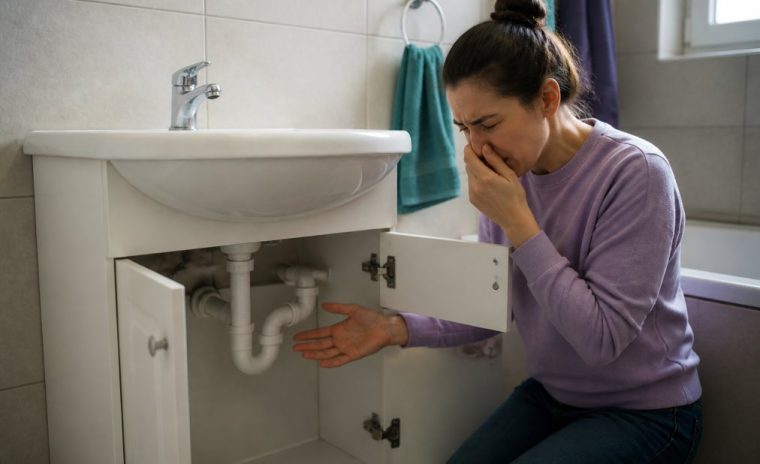
Table of Contents
- What Causes Sewer Smell in Your House
- Step 1: Identify Where the Sewer Smell Is Coming From
- Step 2: Check and Refill Dry P-Traps
- Step 3: Clean Drains with Baking Soda and Vinegar
- Signs of a Broken Sewer Line You Should Know
- How to Clear Main Sewer Line Blockages
- Sewer Camera Inspection Cost and What to Expect
- When to Call a Professional Plumber
Last Updated: August 19, 2026
What Causes Sewer Smell in Your House
A sewer smell in your house typically originates from one of three sources: dry P-traps that have lost their water seal, blockages in your plumbing vent stack, or structural issues in your sewer line itself. The smell you’re detecting is hydrogen sulfide gas, which naturally occurs in sewage and normally vents safely out through your roof vent stack. When something blocks that vent or when a drain trap dries out, the gas backs up into your home instead.
Most sewer smell problems are preventable and fixable without expensive excavation. However, ignoring warning signs allows minor issues to become major ones. A dry trap stays dry, a clogged vent stays clogged, and a small sewer line crack can become a full backup that costs thousands to repair.
Step 1: Identify Where the Sewer Smell Is Coming From
The location of the odor tells you almost everything about what’s wrong. Is the smell strongest near a specific drain (bathroom sink, shower, toilet, or kitchen sink)? If so, the issue is localized to that fixture’s trap or vent. Walk through your entire house and note which rooms smell worst. Smell strongest in the basement or crawl space? That suggests either a dry floor drain or a sewer line issue below grade.
Next, determine if the smell is constant or intermittent. Intermittent sewer smell often points to a vent blockage that becomes apparent only under water load. Constant odor suggests a persistent dry trap or a structural problem.
Check the obvious culprits first. Look under sinks for standing water or signs of recent leaks. Inspect your basement for damp spots or soft soil near the foundation. If you have a clean-out access point for your main sewer line (usually a covered pipe in your yard), note whether the cap is tight or loose, a loose cap allows sewer gas to escape directly into your yard and potentially into your home.
Pro Tip
Use a flashlight and a mirror to inspect under sinks without getting your face too close. Many homeowners miss early [signs of a](/signs-of-sewer-line-damage/) dry trap because they don’t look carefully at the curved pipe section.
Use a flashlight and a mirror to inspect under sinks without getting your face too close. Many homeowners miss early [signs of a](/signs-of-sewer-line-damage/) dry trap because they don’t look carefully at the curved pipe section.
Step 2: Check and Refill Dry P-Traps
A P-trap is the U-shaped section of pipe under every sink, toilet, and floor drain. It holds a small amount of standing water that acts as a seal, preventing sewer gas from rising back up through the drain. When that water evaporates, which happens in rarely-used drains, guest bathrooms, or drains in unheated spaces, the seal breaks and gas flows freely into your home.
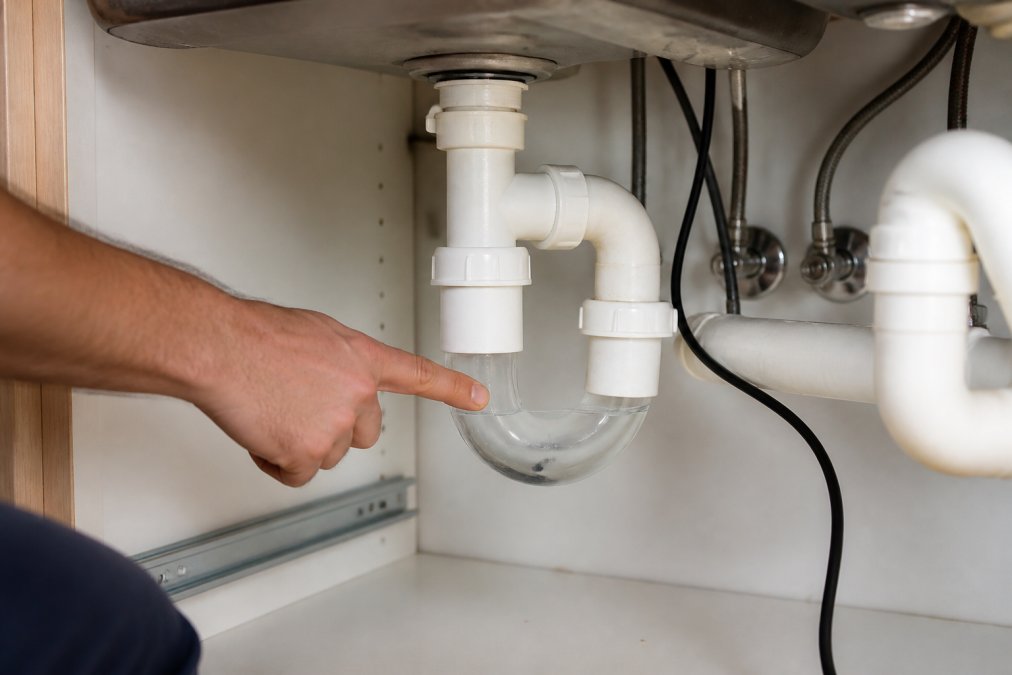
Refilling a dry trap is the easiest fix you can do yourself. Pour a cup of water slowly down the affected drain. The water settles into the trap and restores the seal. For drains you rarely use, pour water down them monthly to prevent the trap from drying out again.
If the sewer smell returns within days of refilling the trap, the drain may have a leak, or the vent stack serving that drain may be blocked. Check all drains in your home systematically, starting with the ones you use least frequently: bathroom guest drains, basement floor drains, and rarely-used kitchen sinks.
Watch Out
Never ignore a floor drain that smells like sewage. A dry floor drain is a direct pathway for sewer gas and potentially harmful bacteria to enter your home. Refill it weekly if the drain isn’t actively used.
Never ignore a floor drain that smells like sewage. A dry floor drain is a direct pathway for sewer gas and potentially harmful bacteria to enter your home. Refill it weekly if the drain isn’t actively used.
Step 3: Clean Drains with Baking Soda and Vinegar
When sewer smell persists even after refilling dry traps, the issue often lies in a partially clogged drain. A simple baking soda and vinegar treatment can clear minor blockages and neutralize odors.
Pour half a cup of baking soda directly into the affected drain. Follow it immediately with one cup of white vinegar. The chemical reaction creates fizzing action that helps dislodge debris stuck to the pipe walls. Cover the drain opening with a plug or wet cloth to keep the reaction contained inside the pipe.
Let the mixture sit for 30 minutes to an hour. Then flush the drain with hot water. Repeat this treatment monthly on all drains in your home. For drains that continue to smell bad after treatment, you likely have a more serious blockage or a vent stack issue that requires professional attention.
Signs of a Broken Sewer Line You Should Know
A broken or cracked sewer line is the most serious cause of sewer smell in your house, and it’s also the most expensive to repair. The most telling sign is persistent sewer smell that originates in your basement, crawl space, or foundation area, not from a specific drain.
Look for soggy patches in your yard, especially in areas directly above your sewer line’s path. Soil that stays damp even days after rain suggests sewage is leaking into the ground. Listen for unusual sounds: a gurgling noise when you flush the toilet or run water down a drain can indicate a partially blocked sewer line. Slow drains throughout your entire home, not just one fixture, often signal a blockage or collapse in the main line.
A broken sewer line cannot be fixed with baking soda, vinegar, or any DIY method. It requires professional diagnosis and repair. Modern trenchless sewer repair technology, like the sewer liner technology Acclaimed Drain And Plumbing Solutions, LLC specializes in, can often repair a damaged line without excavating your entire yard.
Key Takeaway
A persistent sewer smell that comes from your basement or foundation, not from a specific drain, is a red flag for a structural sewer line problem. This is the one scenario where calling a professional immediately is not optional, it’s necessary.
A persistent sewer smell that comes from your basement or foundation, not from a specific drain, is a red flag for a structural sewer line problem. This is the one scenario where calling a professional immediately is not optional, it’s necessary.
How to Clear Main Sewer Line Blockages
A main sewer line blockage prevents water from draining properly throughout your entire home. You’ll notice slow drains in the bathroom and kitchen at the same time, or backing up sewage in the lowest fixtures (usually the basement toilet or shower).
Claim Your Free Estimate Today →
The most common cause is tree root intrusion. Roots are attracted to the moisture and nutrients in sewage and penetrate small cracks or loose joints in the sewer pipe, eventually blocking the line completely. Grease buildup is another frequent culprit, especially in homes where cooking grease is poured down the drain.
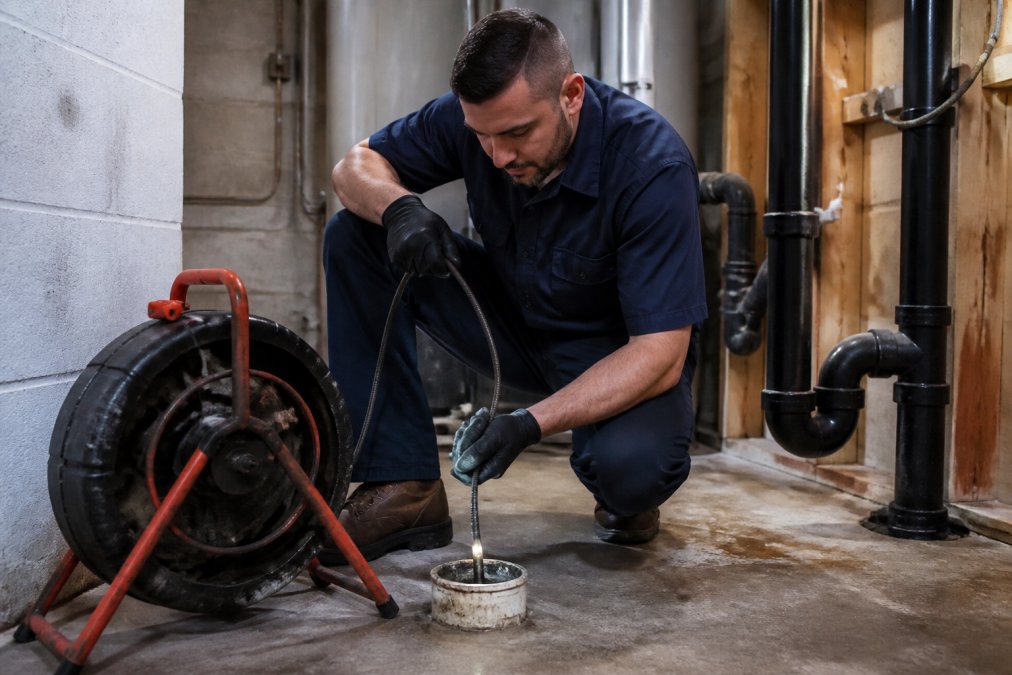
A professional plumber clears a blocked main sewer line using either a motorized drain snake (called a rooter or auger) or hydro jetting. A drain snake uses a rotating cable with cutting blades to break through roots and debris. Hydro jetting uses a high-pressure stream of water to blast away blockages and clean the pipe walls.
Before clearing the blockage, a professional should perform a sewer camera inspection to identify what’s actually blocking the line. This information determines which clearing method will work best and whether clearing the blockage is sufficient or if the pipe itself needs repair. Attempting to clear a main sewer line yourself with a consumer-grade drain snake is rarely successful and can damage the pipe.
Sewer Camera Inspection Cost and What to Expect
A sewer camera inspection is the most accurate way to diagnose what’s actually wrong with your sewer line. A small, waterproof camera attached to a flexible cable is inserted into your sewer line through a clean-out access point. The camera sends video back to a monitor, allowing the plumber to see the interior of the pipe and identify cracks, blockages, root intrusion, or collapsed sections.
The inspection takes 30 minutes to an hour for a typical residential sewer line. The plumber will navigate the camera through the entire line from the clean-out to the municipal connection, documenting any problems found. A sewer camera inspection is not expensive compared to the cost of guessing wrong about your sewer problem. The information it provides prevents you from paying for unnecessary repairs or missing a serious problem.
The inspection will reveal the exact location and severity of any damage, which determines your repair options. A small crack might be repairable with a trenchless sewer liner. A severely collapsed section might require excavation and pipe replacement. A partial blockage from roots might be cleared and managed with regular maintenance.
Pro Tip
Ask your plumber for a copy of the camera inspection video. This documentation is valuable if you ever sell your home, and it helps you understand exactly what repairs were necessary and why.
Ask your plumber for a copy of the camera inspection video. This documentation is valuable if you ever sell your home, and it helps you understand exactly what repairs were necessary and why.
When to Call a Professional Plumber
You should call a professional plumber immediately if you experience sewage backing up into your home, persistent sewer smell that doesn’t improve after refilling dry traps, multiple drains throughout your home draining slowly at the same time, or soggy patches in your yard with a sewage odor.
Don’t wait for the problem to get worse. A slow drain that you ignore today becomes a backed-up toilet tomorrow. A small sewer line crack that you overlook becomes a collapsed pipe next year.
Acclaimed Drain And Plumbing Solutions, LLC provides 24/7 emergency plumbing service because sewer problems don’t respect business hours. Our team can respond quickly with professional diagnostic equipment, sewer cameras, and the expertise to identify the actual source of your problem. We explain our findings clearly and provide practical repair options so you can make an informed decision about how to proceed. A professional inspection costs far less than emergency repairs or property damage from a backed-up sewer.
Sewer smell in your house is always a warning sign, but it’s not always a disaster. The key is identifying the source quickly and addressing it before it becomes a larger problem. Start with the simplest fixes: refill dry traps, clean drains with baking soda and vinegar, and check your plumbing vent stack for blockages. If the smell persists, a sewer camera inspection will show you exactly what’s wrong. Acclaimed Drain And Plumbing Solutions, LLC can help you diagnose the problem and provide reliable solutions, from clearing blockages to repairing damaged sewer lines. Claim your free estimate today and get your home smelling normal again.
Frequently Asked Questions
What kills sewer smell in a house?
The most effective solution depends on the source. For dry P-traps, running water through the drain restores the water seal that blocks sewer gas. For minor drain odors, baking soda followed by vinegar can help neutralize smells. For persistent sewer smell from clogged drains, professional drain clearing or hydro jetting removes buildup. If the smell comes from a broken sewer line or failed wax ring on a toilet, professional repair is necessary. A sewer gas detector can help pinpoint whether the odor is coming from your plumbing vent, drain trap, or sewer line itself.
Can I fix a sewage smell myself?
You can address some causes yourself. Refilling dry floor drains and P-traps takes minutes. Cleaning drains with baking soda and vinegar works for minor clogs. However, if the smell persists after these steps, or if you suspect a broken sewer line, cracked sewer pipe, or sewer backup, professional diagnosis is necessary. A plumbing inspection using a sewer camera can identify whether the issue is a simple clog or a structural problem requiring repair.
Is sewer gas in a house dangerous?
Yes, sewer gas poses health and safety risks. It contains methane and hydrogen sulfide, which can cause headaches, nausea, and respiratory irritation with prolonged exposure. In high concentrations, methane is explosive. If you notice sewer gas smell combined with gurgling sounds from drains or sewage backing up into your home, ventilate immediately and contact a professional plumber. Proper plumbing vents, functioning wax rings, and sealed drain traps protect your home from dangerous sewer gas accumulation.
How do I know if my P-trap is dry?
A dry P-trap is the most common cause of sewer smell in houses. The P-trap is the U-shaped pipe under sinks, showers, and floor drains that holds water to block sewer gas. If you smell sewer odor near a specific fixture, especially one that hasn't been used recently, the trap may be dry. Run water down that drain for 30 seconds to refill it. The smell should disappear within minutes. Dry traps often occur in guest bathrooms, basement floor drains, or homes with low water usage.
