Claim Your Free Estimate Today

Last Updated: November 5, 2026
Quick Summary
To shut off water in an emergency, close the main water valve on the incoming line just after the water meter: turn a gate valve wheel clockwise until it stops, or turn a ball valve lever 90 degrees so it sits perpendicular to the pipe. If you cannot find or close it, call a licensed plumber or the water utility.
- The main valve usually sits near the front foundation wall, water heater, or at the water meter.
- Never force a stuck handle with a wrench; a broken stem turns a small leak into a flood.
- After closing the main valve, open a low faucet to drain residual pressure.
- Do not touch a wet or submerged electrical panel; call 911 and treat the area as energized.
- Curb stops are the water utility’s valves, and many utilities restrict homeowner use of them.
Table of Contents
- Where Is the Main Water Shut Off Valve in My House?
- How to Turn Off Water to the Whole House
- How to Turn Off Water to a House Without a Tool
- What to Do When a Pipe Bursts: Safety and Damage Control
- Curb Stops and Utility Control: When the House Valve Isn’t Enough
- Who to Call for Emergency Water Shut Off
- Get a Licensed Plumber to Your Door
- Frequently Asked Questions
Where Is the Main Water Shut Off Valve in My House?
If a pipe bursts, you have minutes before water soaks drywall and flooring. Knowing how to shut off water in an emergency is the single most useful skill a homeowner can have.
The main water shut-off valve controls every drop of water entering your home. It sits on the incoming water line, usually just after the water meter. Find it now, before you need it.
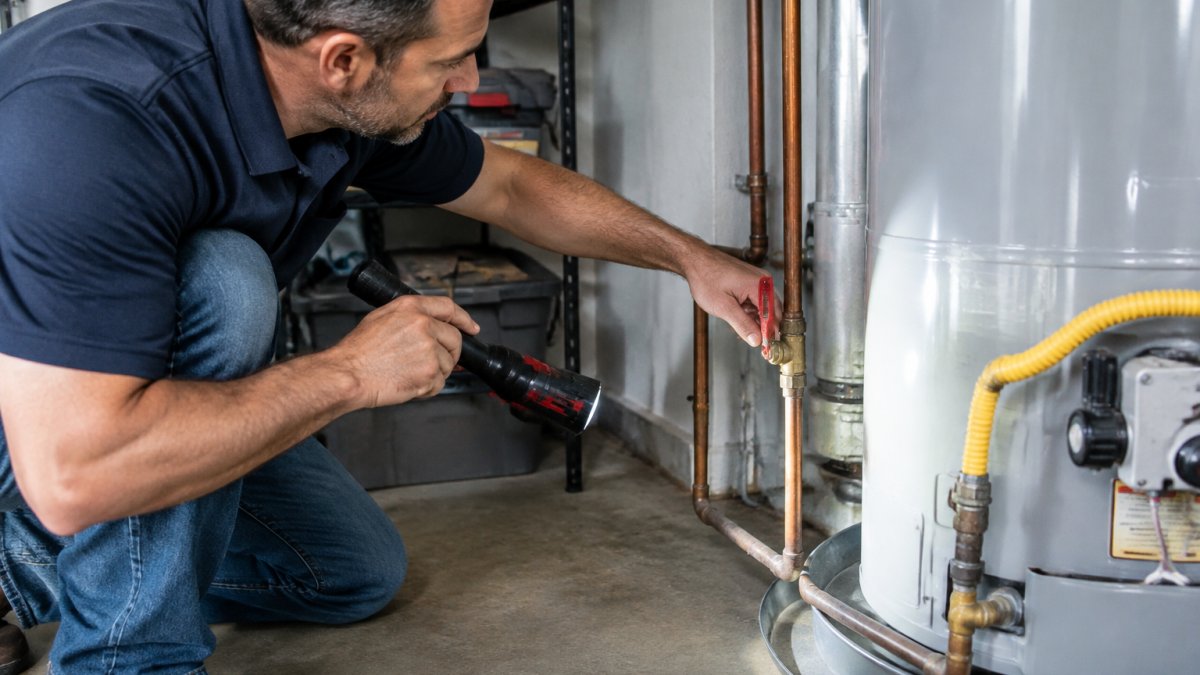
Common Locations for the Main Shut-Off Valve
Where the valve lives depends on your home’s age and layout. Check these spots first:
- Basement or crawlspace: near the front foundation wall, close to where the water line enters
- Utility room or garage: beside the water heater or furnace
- Closet near the water heater: common in slab-foundation homes
- Outside at the water meter: in warmer climates, often in a ground-level box near the curb
In many homes, the water meter sits in a concrete or plastic shut-off box near the street or side yard. The main water valve is often right where the water line enters the foundation.
Apartment, Condo, and Shared-Building Shut-Offs
Renters and condo owners often have no private main water valve inside the unit. Instead, each unit may have a small private water shut-off behind an access panel, usually in a bathroom or utility closet.
If you cannot find one, call your building manager or HOA before a water emergency hits. Shared buildings often have a single house shut-off for multiple units, and only building staff can operate it.
How to Turn Off Water to the Whole House
Turning off the water supply takes seconds once you know your valve type. The direction depends on the valve handle design.
Gate Valves, Ball Valves, and Stuck Handles
Gate valves have a round wheel. Turn the wheel clockwise (to the right) until it stops. Old gate valves can take many turns and may feel snug at the end.
Ball valves have a lever handle. Turn the lever 90 degrees so it sits perpendicular to the pipe. That is the fastest way to close the valve and stop the water.
A stuck handle is common in older home plumbing. Do not force it with a wrench. A broken stem turns a small leak into a flood. Call a plumber instead.
The direction and motion depend on which valve type you have.
| Valve type | Handle | How to close | Note |
|---|---|---|---|
| Gate valve | Round wheel | Turn clockwise until it stops | Can take many turns, may feel snug |
| Ball valve | Lever handle | Turn 90 degrees perpendicular to the pipe | Fastest way to stop the water |
| Stuck handle | Any | Do not force with a wrench | Broken stem turns a small leak into a flood |
How to Turn Off Water to a House Without a Tool
Most main shut-off valves need no tools at all. A ball valve lever moves by hand, and a gate valve wheel turns by grip.
If the handle is missing or too stiff, look for a fixture-level shut-off under the nearest sink or toilet. These small oval handles stop water to one fixture and buy you time.
For a stubborn house shut-off, a pair of pliers can help, but go slow. If it will not budge, stop. A seized valve often needs replacement, and forcing it risks a burst pipe at the worst moment.
What to Do When a Pipe Bursts: Safety and Damage Control
A broken pipe can release several gallons per minute, and a supply line at full pressure can soak drywall, insulation, and flooring in the time it takes to find the valve. Safety comes before cleanup, and the order of steps matters.
Claim Your Free Estimate Today →
- Shut off the water first. Close the main water valve or the nearest fixture-level shut-off. If water is spraying near an electrical panel, outlet, or appliance, do not walk through standing water to reach the breaker. Shut the water off from a dry location if you can, then leave the flooded area.
- Cut power only from dry ground. If the breaker box is reachable without stepping in water and without touching wet surfaces, switch off the circuits serving the flooded rooms. If the panel itself is wet, sparking, or submerged, do not touch it. Call 911 and treat the area as energized until utility crews say otherwise.
- Open a low faucet to drain pressure. After the main valve is closed, open a laundry sink or hose bib at the lowest point in the home. This relieves residual pressure in the water line and reduces spray from the break while you work.
- Contain and protect. Move furniture, rugs, and electronics away from the water damage zone. Use towels, buckets, or a wet/dry vacuum rated for water. Do not use a standard shop vacuum or household vacuum near water.
- Document before you clean. Take photos and video of the break, the water line, damaged belongings, and the valve position for your insurance claim. Most policies expect prompt documentation, and a dated record helps the adjuster.
- Call for help. A licensed plumber can confirm the valve is fully closed, repair the broken pipe, and check water pressure before restoring service.
Watch out: never stand in standing water near outlets, appliances, a wet electrical panel, or downed power lines. Water and electricity together can be deadly, and a shock hazard may exist even after the water is shut off.
If the leak is active and you need backup, our guide on what to do first with an emergency plumber covers shutoffs and when to call. For older homes where failures are common, this step-by-step guide to fixing burst pipes goes deeper.
Curb Stops and Utility Control: When the House Valve Isn’t Enough
Sometimes the house shut-off fails, will not close fully, or cannot be found. That is when the curb stop matters. The curb stop is the water utility’s valve at the water meter, usually inside a ground-level box near the street or side yard. It controls the water supply between the utility main and your home.
Curb stops come in a few designs. A ball-style curb stop uses a quarter-turn lever or a rectangular nut that turns 90 degrees. An older gate-style curb stop may take many turns and can feel snug at the end. Some municipalities use a curb-stop key or water meter key, a long T-handle tool that reaches down into the box, and many utilities restrict homeowner use of that tool. Some require a special key, and some fine residents who tamper with the curb stop or the meter. Call the water utility first. They can shut off water supply at the utility control point or send a technician.
If you are allowed to operate the curb stop yourself, follow the same rules as an indoor valve: turn a round wheel clockwise until it stops, and turn a lever 90 degrees so it sits perpendicular to the pipe. Do not force a stuck handle with a wrench. A broken stem at the curb stop can send water up out of the box and may require utility crews to dig and repair.
Watch out: if the curb stop is stuck, the box is full of debris, or the valve sits below standing water, do not dig it out or reach into it yourself. Utility crews handle that safely, and a damaged curb stop can affect service to neighboring properties.
For renters and shared buildings, the house shut-off may be in a locked utility room or a common area. Call the building manager or HOA before an emergency, and ask where the private water shut-off for your unit is and who can operate the shared house shut-off.
Who to Call for Emergency Water Shut Off
Call a licensed plumber when the valve will not close, a water leak keeps running, or you cannot find the main shut-off valve at all. A plumbing emergency gets worse by the minute.
At Acclaimed Drain And Plumbing Solutions, LLC, we provide 24/7 emergency plumbing service with live dispatchers and fast response. We handle leaking pipes, water line problems, water heater failures, and sewer backups. Our technicians evaluate the system, identify the source, explain their findings, and provide practical options.
If you are dealing with an active leak right now, our 24/7 emergency plumbing team is ready to help.
Get a Licensed Plumber to Your Door
Once the water is off, the next step is a proper repair. A plumber confirms the water pressure is stable, checks the valve itself, and fixes the broken pipe so it does not fail again.
We offer upfront flat-rate pricing, free estimates, and financing options for eligible projects. Our team protects your property and keeps the work area clean. Before you call, it helps to know what to expect for emergency response times and how to book emergency repair service fast.
Frequently Asked Questions
Which way do I turn the main water shut-off valve to close it?
For a round wheel or gate valve, turn clockwise, meaning to the right, until it stops. A lever or ball valve closes when the handle sits perpendicular to the pipe, at 90 degrees. Never force a handle that will not budge; forcing it can snap the stem and leave you with an open valve and no way to stop the water. If it feels stuck, call a licensed plumber rather than risk breaking it.
Do I leave faucets open after shutting off the water?
Open the lowest faucet in the house, such as a basement sink or outdoor spigot, and one faucet upstairs. This drains remaining water from the lines and relieves water pressure, which reduces the chance of more leaks while you wait for repairs. Once the plumber finishes, close all faucets before you restore water so trapped air does not hammer the pipes.
Can I shut off the water at the street myself?
The curb stop at the street usually sits in a ground-level box near the property line and often needs a special water key to reach. Many water utilities require a permit or restrict homeowner access to that valve, and turning it the wrong way can damage it. Use your private water shut-off first. Only touch the curb stop if your home valve fails, and call the water utility if you are unsure of the rules.
Who should I call for an emergency water shut-off?
Call a licensed emergency plumber if the main valve is stuck, broken, or will not fully close. In Tucson and Southern Arizona, Acclaimed Drain And Plumbing Solutions offers 24/7 emergency service with live dispatchers. If water is pouring out and you cannot stop it at the house valve, call the water utility to request the curb stop closed, then call the plumber to repair the broken pipe or valve.
A burst pipe or failed valve will not wait. Shut the water off, stay safe around electricity, and call for licensed help. Acclaimed Drain And Plumbing Solutions, LLC offers 24/7 emergency service, upfront flat-rate pricing, and free estimates so you know the plan before work starts. Get started with Acclaimed Drain And Plumbing Solutions, LLC and stop the leak before it spreads.
