Claim Your Free Estimate Today
Last Updated: November 2, 2026
Quick Summary
Drain clearing removes a blockage so water flows again, while drain cleaning removes the buildup that caused the blockage in the first place. That distinction between purpose and prevention decides how long your fix lasts, since a cleared drain keeps its narrow, coated interior and can clog again in a few months.
- Clearing targets one obstruction; cleaning strips grease, sludge, soap scum, mineral scale and hair from the pipe wall.
- A drain snake breaks up or pulls out a clog, while hydro jetting scours the full pipe circumference.
- Jetting needs a clear access point such as a floor drain, cleanout or roof vent stack.
- Multiple slow drains, gurgling toilets or sewage smells point to a main sewer line clog.
- A camera inspection before jetting is not optional on older lines with cracks or root intrusion.
Table of Contents
- Drain Clearing vs Drain Cleaning: The Core Difference
- What Is Drain Clearing and When Do You Need It?
- What Drain Cleaning Does That Clearing Cannot
- Tools Compared: Drain Snake for Clogged Drain vs Hydro Jetting for Drains
- Hydro Jetting for Drains: Scoping the Full Pipe Interior
- Main Sewer Line Clog Symptoms and Step-by-Step Diagnosis
- DIY Limits, Pipe Materials, and What a Service Visit Looks Like
- Book a Drain Inspection and Get a Flat-Rate Quote
- Frequently Asked Questions
Drain Clearing vs Drain Cleaning: The Core Difference
Drain clearing removes a blockage so water flows again. Drain cleaning removes the buildup that caused the blockage in the first place. That single distinction, purpose versus prevention, is the difference between drain cleaning and clearing, and it decides how long your fix actually lasts.
Picture a kitchen sink that drains slowly for a week, then stops completely. Clearing gets the water moving today. Cleaning addresses the grease and sludge lining the pipe wall, which is why the problem returns in a few months if nobody cleans it.
At Acclaimed Drain And Plumbing Solutions, LLC, we run into this confusion daily. A homeowner calls about a “clogged drain,” and the real question is whether they need a quick clog removal or a maintenance-focused service that resets the pipe’s interior. Below, we break down both services, the tools behind each, and how to tell which one your drain is asking for.
| Question | Drain Clearing | Drain Cleaning |
|---|---|---|
| Goal | Remove the obstruction now | Remove buildup along the pipe |
| Scope | One spot in the drain line | Full-pipe cleaning of a section |
| Typical tools | Plunger, drain snake, auger | Hydro jetting, professional cabling, camera |
| Best for | Sudden backup, slow drain | Recurring clogs, grease and scale |
| Result | Immediate relief | Preventive maintenance and better flow |
What Is Drain Clearing and When Do You Need It?
Drain clearing is the process of removing a blockage from a drain line so water can pass through again. It targets the obstruction itself: hair, food waste, a soap scum plug, or a wad of debris caught in the trap or branch line.
You need clearing when the problem is sudden and specific. One fixture backs up, water stands in the sink, or the toilet gurgles and drains slowly. The rest of the house behaves normally. That pattern points to a local clog, not a system-wide buildup problem.
A common mistake is treating every backup as a one-off. If the same drain clogs twice in a season, clearing alone is a bandage. The pipe interior is telling you something.
What Drain Cleaning Does That Clearing Cannot
Drain cleaning goes after the layer of material clinging to the pipe wall: grease, sludge, soap scum, mineral scale, and hair that snags on all of it. Clearing punches a hole through the middle of that layer. Cleaning strips it off the sides.
That is why a cleaned drain holds its flow longer. A cleared drain has the same narrow, coated interior it had before, just with a channel through the middle. Debris catches on those rough edges again fast.
For a closer look at what professional cleaning adds beyond a simple clog removal, see our guide to the benefits of hydro jetting for drains. It walks through how full-pipe cleaning protects long-term plumbing health.
Tools Compared: Drain Snake for Clogged Drain vs Hydro Jetting for Drains
A drain snake for a clogged drain and hydro jetting for drains solve different problems. A snake is a mechanical tool that breaks up or pulls out a blockage. Hydro jetting uses high-pressure water to scour the entire pipe interior.
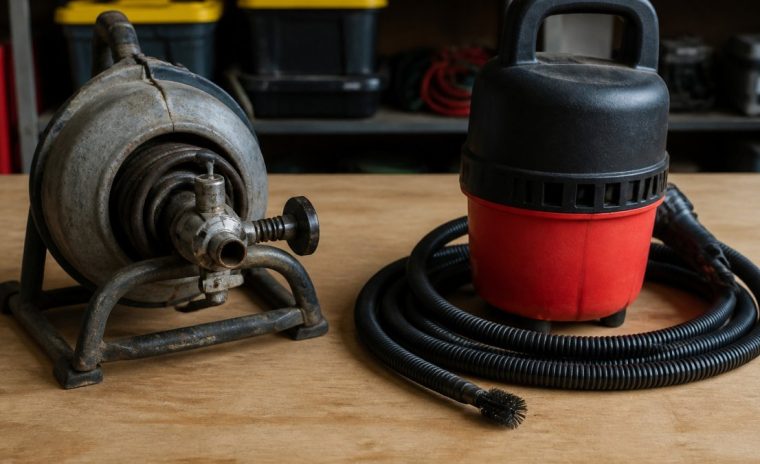
A hand snake or auger works well on a single, reachable clog: hair in a bathroom drain, paper in a toilet trapway. A motorized drum auger handles longer runs and tougher obstructions.
Hydro jetting sends a directed stream of water down the line at pressure high enough to cut through buildup and push debris toward the main. It cleans the full circumference of the pipe, not just the center.
If you want to try the DIY route first, our step-by-step guide to using a drain snake covers technique and safety. For a direct comparison of the two methods, read hydro jetting versus drain snaking explained.
Watch out: forcing a hand snake past a tough blockage can kink the cable or scratch older pipe, and jetted water at the wrong pressure can damage fragile lines. Match the tool to the pipe.
Hydro Jetting for Drains: Scoping the Full Pipe Interior
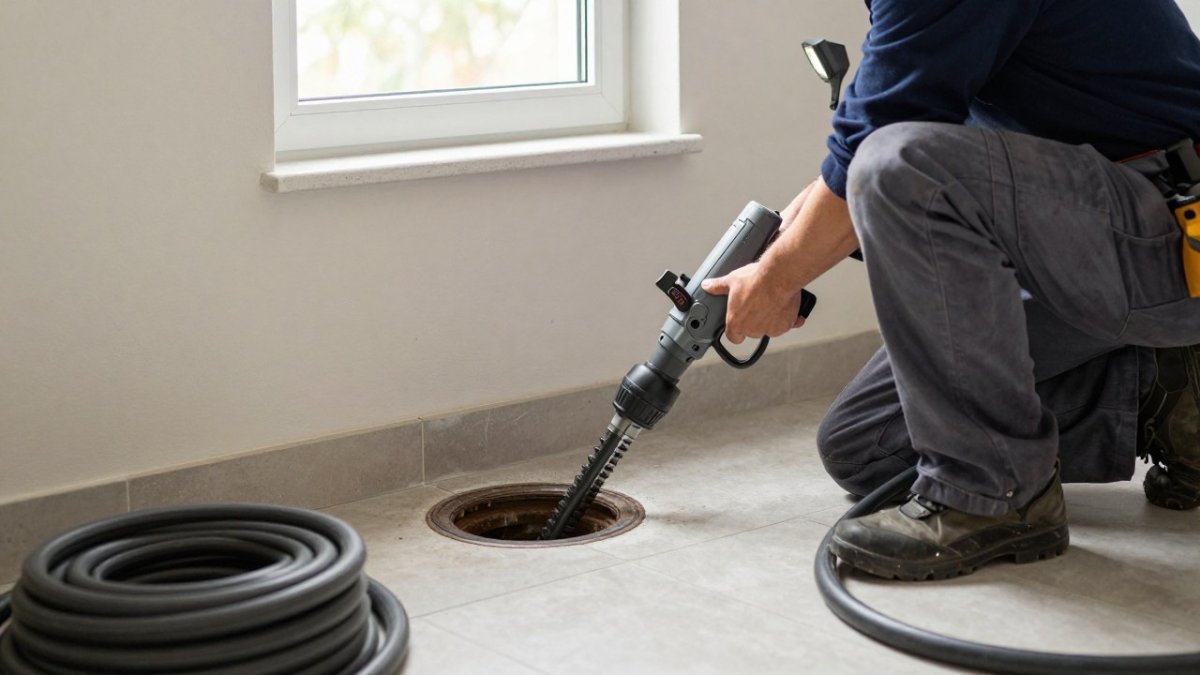
Hydro jetting works by inserting a specialized hose with a forward-facing nozzle and one or more rear-facing jets into the drain line.
Nozzle choice matters as much as pressure. A penetrating nozzle with a tight forward stream is used to punch through a hard blockage first.
Access is the other variable homeowners rarely think about. Jetting needs a clear entry point: a floor drain, a cleanout, or a roof vent stack.
Claim Your Free Estimate Today →
The step most homeowners never hear about is inspection. A proper cleaning starts with a camera run to see what is actually inside the pipe: grease, roots, scale, or a cracked section that jetting could make worse.
After jetting, a second camera pass confirms the buildup is gone and the pipe is intact. That before-and-after record is the difference between “it drains better” and knowing why.
If you want to try the DIY route first, our step-by-step guide to using a drain snake covers technique and safety. For a direct comparison of the two methods, read hydro jetting versus drain snaking explained.
Main Sewer Line Clog Symptoms and Step-by-Step Diagnosis
Main sewer line clog symptoms look different from a single fixture clog. Multiple drains slow down at once, water backs up in the lowest fixtures first, toilets gurgle when you run the sink, or you smell sewage near a floor drain. Those signals mean the problem sits in the main line, not a branch.
Here is how we walk a homeowner through diagnosis:
- Test each fixture separately. If one drain is slow, the clog is local. If several are slow, suspect the main line.
- Check the lowest drain in the house. Basement or ground-floor fixtures back up first when the main is restricted.
- Listen for gurgling. A toilet that gurgles when another fixture drains points to a vent or main line issue.
- Note the pattern. Recurring clogs in the same spot suggest buildup, not a one-time obstruction.
- Look for backup outside. Sewage surfacing near a cleanout or floor drain is a main line emergency.
- Call for a camera inspection. A sewer camera shows the blockage, its location, and the pipe’s condition before anyone starts work.
For a fuller symptom checklist, see how to spot the signs your home needs main sewer line cleaning. Catching a main line clog early usually means cleaning instead of repair.
DIY Limits, Pipe Materials, and What a Service Visit Looks Like
DIY drain clearing has a real ceiling, and knowing where that ceiling sits saves money and pipes. A cup plunger and a hand snake handle simple clogs in accessible traps: hair in a bathroom sink, a soap scum plug in a tub drain, food waste in a kitchen P-trap.
Chemical drain cleaners deserve their own warning. If a chemical cleaner has already been poured and the drain is still backed up, tell the technician before the visit so the line can be handled safely.
Pipe material matters more than most people realize. Cast iron corrodes and roughens inside, which catches debris and makes snaking less effective over time. Clay sewer lines crack and invite roots, and a cable or jetter can widen an existing crack. Older pipe materials such as Orangeburg can be damaged by a motorized auger, so the technician checks pipe material before choosing a method.
A service visit follows a predictable path, and knowing it helps you judge whether the quote makes sense:
- Intake. The technician asks what backed up, when it started, whether it has happened before, and what has already been tried, including chemical cleaners.
- Fixture inspection. Each drain is tested separately to separate a local clog from a main line problem.
- Camera inspection. If the pattern points to the main line or the pipe is older, a sewer camera locates the blockage and shows the pipe’s condition before any tool goes in.
- Method selection. The technician chooses snaking, jetting, or a combination based on the blockage type and pipe material, not on a default tool.
- Clearing or cleaning. The chosen method is run, with pressure or cable speed adjusted to the pipe.
- Verification. Flow is tested at the fixtures, and a second camera pass confirms the buildup is gone and the pipe is intact.
- Documentation and pricing. Findings and before-and-after footage are shared, and the flat-rate price is confirmed before work is authorized.
Watch out: chemical drain cleaners can generate heat and damage older pipes, and they rarely clear a full blockage, so skip them on recurring clogs and tell the technician if you have already used one.
Book a Drain Inspection and Get a Flat-Rate Quote
The fastest way to know whether you need clearing or cleaning is a professional look at the pipe itself. Acclaimed Drain And Plumbing Solutions, LLC offers free estimates, 24/7 emergency service with live dispatchers, and flat-rate pricing so you know the cost before work starts. Our team uses sewer cameras and photo documentation to show you exactly what is happening inside the line, then explains your options in plain terms. We also offer financing for eligible projects and a maintenance membership program for homeowners who want to stay ahead of recurring clogs. If you are dealing with a slow drain, a backup, or a main line that keeps clogging, book professional drain cleaning and get a clear answer on what your drain actually needs.
Frequently Asked Questions
What is the difference between drain cleaning and drain clearing?
Drain clearing removes a single blockage so water flows again. Drain cleaning scours the pipe interior to strip grease, soap scum, mineral scale, and sludge from the walls, which lowers the chance of a repeat clog. Clearing is problem-focused and immediate; cleaning is maintenance-focused and preventive. A slow drain that keeps coming back usually needs cleaning, not another round of clearing.
When should I choose drain cleaning instead of drain clearing?
Choose drain cleaning when the same drain clogs repeatedly, when multiple fixtures drain slowly at once, or when the home has older cast iron or galvanized pipe with years of buildup. If a single sink or tub is fully blocked and water will not move at all, clearing restores flow fastest. Many plumbers clear first, then recommend cleaning once the line is open.
Why do plumbers say not to use store-bought drain cleaners?
Chemical drain cleaners rely on caustic or acidic compounds that generate heat as they work. That heat can soften PVC joints and accelerate corrosion in older metal pipe, and the chemicals sit against the pipe wall after the clog breaks. They also rarely clear the full blockage. A drain snake for a clogged drain or professional hydro jetting removes the obstruction mechanically instead.
How can I tell whether the clog is in a branch line or the main sewer line?
Watch which fixtures are affected. One sink, tub, or toilet backing up points to a branch line. Main sewer line clog symptoms include several fixtures draining slowly at once, sewage backing up in a floor drain or tub, gurgling from other drains when you run water, and repeated backups after plunging. Multiple affected fixtures call for a camera inspection before anyone snakes the line.
Can vinegar clear or clean a clogged drain?
Vinegar and baking soda can loosen light soap film and freshen a drain, but they will not clear a real blockage or remove hardened grease and scale. Once a clog forms, the material has to be pulled out or jetted away. Vinegar is a mild maintenance habit at best, not a substitute for mechanical clearing or full-pipe cleaning.
A backed-up drain never improves on its own, and guessing between clearing and cleaning usually costs more in the long run. Acclaimed Drain And Plumbing Solutions, LLC provides camera inspections, hydro jetting, and flat-rate pricing so you can decide with facts instead of guesswork. Get started with Acclaimed Drain And Plumbing Solutions, LLC and restore steady flow across your fixtures and main line.
