Claim Your Free Estimate Today
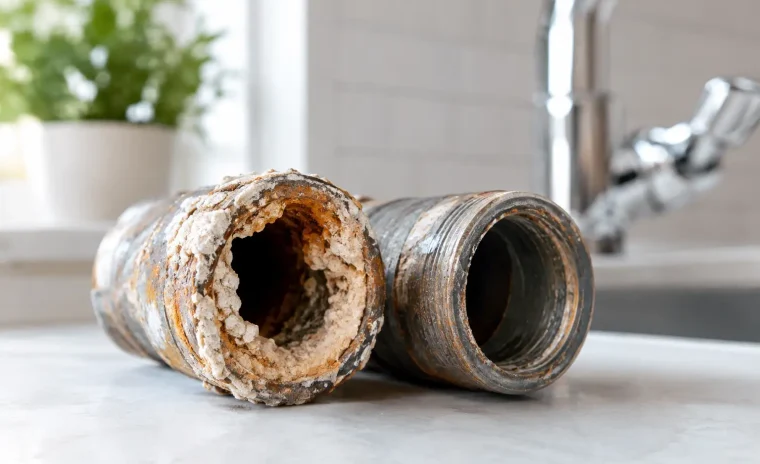
That white, chalky ring around a faucet is more than a cleaning nuisance. In Southern Arizona, it can be a visible clue that minerals are collecting inside fixtures, appliances, and water lines. So, can hard water damage pipes? Yes. It can shorten the useful life of plumbing components, restrict water flow, and contribute to costly repairs when buildup is left unchecked.
Hard water does not usually create an overnight pipe emergency. The damage is gradual, which is why it is easy to overlook until low water pressure, a failing water heater, recurring leaks, or appliance problems force the issue. A clear diagnosis helps separate normal mineral staining from a plumbing system that needs attention.
What hard water does inside plumbing pipes
Hard water contains elevated levels of dissolved minerals, most commonly calcium and magnesium. Tucson and much of Southern Arizona rely on groundwater supplies that naturally pick up minerals as water moves through rock and soil. When that water is heated, evaporates, or repeatedly moves through the same plumbing components, those minerals can separate from the water and attach to surfaces.
The resulting deposit is called scale. You may see it on shower doors, faucets, and dishes, but the more consequential buildup can occur where you cannot see it: inside supply lines, shutoff valves, toilet fill valves, water heater tanks, tankless heat exchangers, and appliance connections.
A small amount of scale is not automatically a crisis. The concern is cumulative buildup over years of use. Narrow passages become narrower, valves stop operating smoothly, and water-dependent equipment has to work harder to do its job.
Can hard water damage pipes or just leave residue?
Hard water can do both. Surface residue is the obvious effect, but the plumbing impact can extend beyond appearance. Scale adheres to pipe walls and components, reducing the open space available for water to travel. In a heavily affected system, that restriction can resemble a pressure problem, even when the incoming water supply is adequate.
The extent of damage depends on several factors: the mineral content of the water, the age and material of the pipes, household water use, water temperature, and whether the property has existing corrosion or flow issues. Older galvanized steel piping is often more vulnerable because mineral deposits can combine with internal corrosion. Copper, PEX, and CPVC do not respond in exactly the same way, but fixtures, valves, and water-heating equipment can still accumulate scale.
Hard water alone does not always cause a pipe to burst. However, it can create the conditions that make a system less efficient, less reliable, and more difficult to repair. A pipe with restricted flow or deteriorating fittings may reveal itself through uneven water pressure, pinhole leaks, or repeated fixture failures.
Restricted flow and low water pressure
As scale builds in smaller lines and fixture components, it reduces the pathway water needs to move through. Homeowners may first notice a weak shower, slow-filling tub, or a faucet that has lost pressure while other fixtures seem normal. In commercial restrooms, mineral buildup can cause flush valves and faucets to perform inconsistently.
Low pressure is not always caused by hard water. A hidden leak, failing pressure regulator, partially closed valve, corroded piping, or municipal supply issue can produce similar symptoms. That is why replacing a showerhead without identifying the cause may only offer a temporary improvement.
Water heater wear and higher operating costs
Water heaters are often where hard water becomes most expensive. Heating mineral-rich water encourages scale to form more quickly. In a tank-style unit, sediment can settle at the bottom and create a barrier between the burner or heating element and the water. The system then needs more energy and more time to produce hot water.
For tankless water heaters, scale can collect in the heat exchanger and restrict performance. Hot water may become inconsistent, error codes may appear, and the unit may shut down to protect itself. Regular flushing can help, but a heater already affected by severe scale may need more thorough service or repair.
Listen for popping, rumbling, or crackling sounds from a tank water heater. Those sounds can occur when water becomes trapped beneath sediment and escapes as the unit heats. They are worth scheduling, especially if they appear alongside rising utility costs or reduced hot-water capacity.
Damaged valves, fixtures, and appliances
Many hard-water failures occur at the small but essential parts of a plumbing system. Faucet cartridges, aerators, shower valves, ice maker lines, dishwasher connections, and toilet components can clog or wear prematurely when minerals collect inside them. A dripping faucet may be a worn cartridge, but scale can be part of why that cartridge failed sooner than expected.
This matters because repeated minor repairs add up. Replacing a faucet part once is routine. Replacing cartridges, fill valves, appliance hoses, and water-heater components again and again points to a water-quality issue that deserves a broader solution.
Signs hard water may be affecting your pipes
White or tan crust around fixtures is a common clue, but it should not be the only one you watch. Hard water may be affecting the plumbing system when you notice several symptoms together, such as:
- Water pressure that has gradually weakened at multiple fixtures
- Showerheads or faucet aerators that clog soon after cleaning
- A water heater that runs noisily, recovers slowly, or delivers less hot water
- Frequent failures of faucet cartridges, toilet fill valves, or appliance connections
- Dry-looking spots on glassware and persistent mineral stains in sinks or toilets
A single symptom may have another explanation. For example, low pressure at one faucet could simply be a blocked aerator. Pressure loss throughout a home, especially in an older property, calls for a more complete plumbing assessment.
The right response depends on the condition of the system
The best solution is not always the same. If scale is mostly affecting fixtures and the water heater, maintenance and water treatment may protect the system and restore performance. If pipes are severely corroded, leaking, or heavily restricted, treatment alone will not reverse the existing damage. In that case, repair or repiping may be the more dependable long-term option.
A practical evaluation begins with the symptoms. A plumbing professional can check water pressure, inspect exposed piping and valves, evaluate the water heater, look for active leaks, and determine whether the issue is mineral scale, corrosion, or a combination of both. For properties with persistent flow problems, diagnostic work is more useful than guessing at a single fix.
Water softeners and other water-treatment options can reduce the minerals that cause scale. The right equipment depends on water conditions, household size, water use, maintenance preferences, and whether the property has special requirements. Some owners prefer a traditional softening system; others want a different treatment approach. Clear options matter because there is no benefit in installing equipment that does not fit the property or the actual water-quality concern.
Protecting pipes before scale becomes a repair project
The most effective approach is consistent maintenance rather than waiting for a major failure. Keep an eye on changes in water pressure and hot-water performance. Clean accessible aerators and showerheads when buildup appears, but do not force damaged parts apart or use aggressive methods that can harm finishes and threads.
Water-heater maintenance is especially valuable in hard-water areas. The appropriate service schedule depends on the unit, water conditions, and manufacturer requirements. A professional can advise whether flushing, descaling, anode-rod inspection, or other service is appropriate for your equipment.
If your home has older piping, recurring leaks, or inconsistent pressure, do not assume hard water is the only cause. A root-cause inspection can identify whether scale is contributing to the problem or masking a more serious pipe condition. Acclaimed Drain And Plumbing Solutions LLC provides clear explanations and dependable workmanship so property owners can make informed decisions before small plumbing issues turn into disruptive repairs.
A little mineral buildup on a faucet may be manageable. Repeated symptoms throughout the system are your cue to act early, protect the pipes you have, and choose a repair or water-treatment plan built for lasting performance.