Claim Your Free Estimate Today
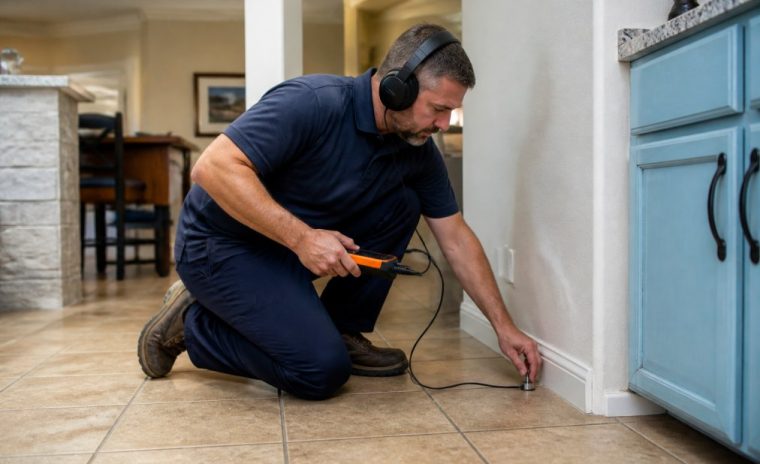
Table of Contents
- What Is a Slab Leak?
- Signs of a Slab Leak You Can Spot
- How to Check for Water Leaks Under Concrete
- Slab Leak Repair Options and Next Steps
- Does Homeowners Insurance Cover Slab Leaks?
- Common Mistakes to Avoid When Identifying Slab Leaks
- When to Call a Professional for Slab Leak Diagnosis
- Frequently Asked Questions
Last Updated: August 30, 2026
What Is a Slab Leak?
A slab leak is a water line break that occurs beneath the concrete foundation of your home. These leaks develop in the copper or plastic pipes that run under the foundation slab, carrying water to and from your house. When these underground pipes crack, corrode, or fail due to age, ground movement, or water chemistry issues, water escapes directly into the soil beneath your foundation.
What makes slab leaks particularly serious is their hidden nature. Unlike leaks you can see under a sink or in your attic, a slab leak operates silently beneath your feet. Water pools under the concrete, creating hydrostatic pressure that can damage the structural integrity of your foundation (usgs.gov). The longer a slab leak goes undetected, the more costly the repair becomes. Many homeowners don’t realize they have a slab leak until they notice unexplained water bills, soft spots in their flooring, or cracks in their walls.
At Acclaimed Drain & Plumbing Solutions, LLC, we understand the challenges of slab leaks. The key to minimizing damage is catching these leaks early through proper detection methods. Understanding what a slab leak is and how to identify one can save you thousands in foundation repair costs.
Signs of a Slab Leak You Can Spot
The challenge with slab leaks is that they don’t announce themselves loudly. But if you know what to look for, you can catch them before they cause serious structural damage.
Visual and Physical Indicators
Start by examining your floors and foundation areas. Soft spots or areas of unusual dampness in your carpet, tile, or hardwood flooring are red flags. These develop when water from the leak rises through the concrete and saturates the flooring materials above. If you notice that one section of your floor feels spongy or warped, especially near exterior walls where main water lines typically run, investigate further.
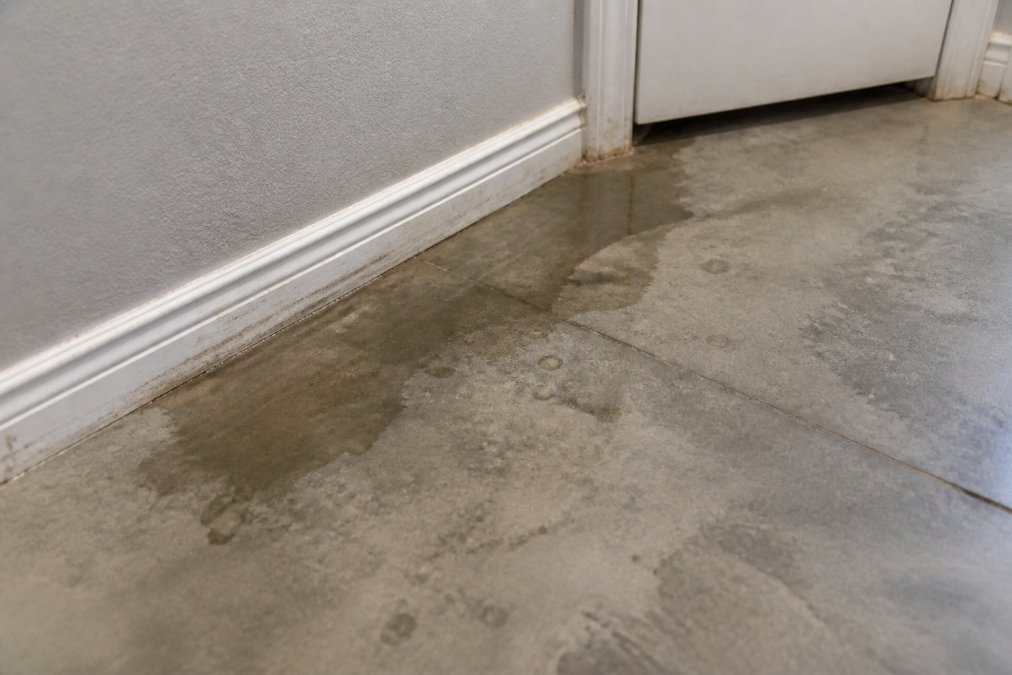
Water stains on concrete or the appearance of mold and mildew growth on flooring or baseboards also indicate moisture problems. Mold thrives in the damp environment created by slab leaks (the CDC). If you’re seeing dark patches on baseboards or smelling musty odors in specific rooms, moisture is present beneath the surface.
Foundation cracks are another warning sign. Slab leaks create hydrostatic pressure as water accumulates under the foundation. This pressure pushes upward against the concrete, causing cracks to develop or expand. Small hairline cracks can widen rapidly once a slab leak is active. Look for new cracks in your foundation walls, or monitor existing cracks to see if they’re growing.
Watch Out
Foundation cracks from slab leaks can compromise structural integrity over time. Ignoring them risks costly foundation repair or replacement, which can exceed tens of thousands of dollars.
Foundation cracks from slab leaks can compromise structural integrity over time. Ignoring them risks costly foundation repair or replacement, which can exceed tens of thousands of dollars.
Utility Bill and Water Pressure Changes
An unexplained spike in your water bill is often the first sign homeowners notice. If your water usage hasn’t changed but your bill suddenly increases, water is escaping somewhere. A slab leak under your foundation is a prime culprit. Check your water meter when no water is running in your home. If the meter continues to move, you have an active leak.
Water pressure changes also indicate slab leaks. You might notice that your shower pressure drops suddenly, or that water flow to certain fixtures becomes inconsistent. This happens because water is escaping through the break in the underground pipe, reducing the pressure available to your fixtures. If multiple fixtures throughout your home experience reduced pressure simultaneously, the problem likely isn’t isolated to one fixture, it’s a system-wide issue like a slab leak.
Pay attention to the sound of running water when no water is being used. If you hear water flowing through pipes when all fixtures are off, a leak is active. This is particularly noticeable at night when the house is quiet. The sound of running water from underground pipes is a classic indicator of a slab leak.
Pro Tip
Turn off all water-using appliances and listen carefully near your foundation. If you hear running water sounds from under the slab, document this and contact a professional immediately. The leak is actively damaging your foundation.
Turn off all water-using appliances and listen carefully near your foundation. If you hear running water sounds from under the slab, document this and contact a professional immediately. The leak is actively damaging your foundation.
How to Check for Water Leaks Under Concrete
Identifying a slab leak requires a combination of observation and testing. Some methods you can perform yourself; others require professional equipment and expertise.
DIY Detection Methods
The water meter test is the simplest DIY method. Locate your water meter, usually found near the street or on an exterior wall. Write down the current reading. Wait one hour without using any water in your home, no showers, laundry, dishwashing, or toilet flushing. Check the meter again. If it has advanced, water is leaking somewhere in your plumbing system. This test doesn’t pinpoint the location, but it confirms a leak exists.
You can also perform a visual inspection of your property. Walk around the foundation perimeter looking for areas of unusually green grass, soft soil, or pooling water. Slab leaks cause the soil around the foundation to become saturated, which often results in patches of lush vegetation or wet spots that persist even when the ground is otherwise dry. These wet areas directly above the leak site are clues to the leak’s location.
Check your home’s interior systematically. Walk slowly across floors, paying attention to temperature changes. A slab leak creates a cold spot above the break in a cold water line, or a warm spot above a hot water line break. You might feel these temperature variations with your bare feet. Note any locations where the floor feels noticeably different from surrounding areas.
Key Takeaway
DIY detection can confirm a leak exists and provide clues about location, but professional tools are required for accurate diagnosis and pinpointing the exact break point.
DIY detection can confirm a leak exists and provide clues about location, but professional tools are required for accurate diagnosis and pinpointing the exact break point.
Professional Detection Tools
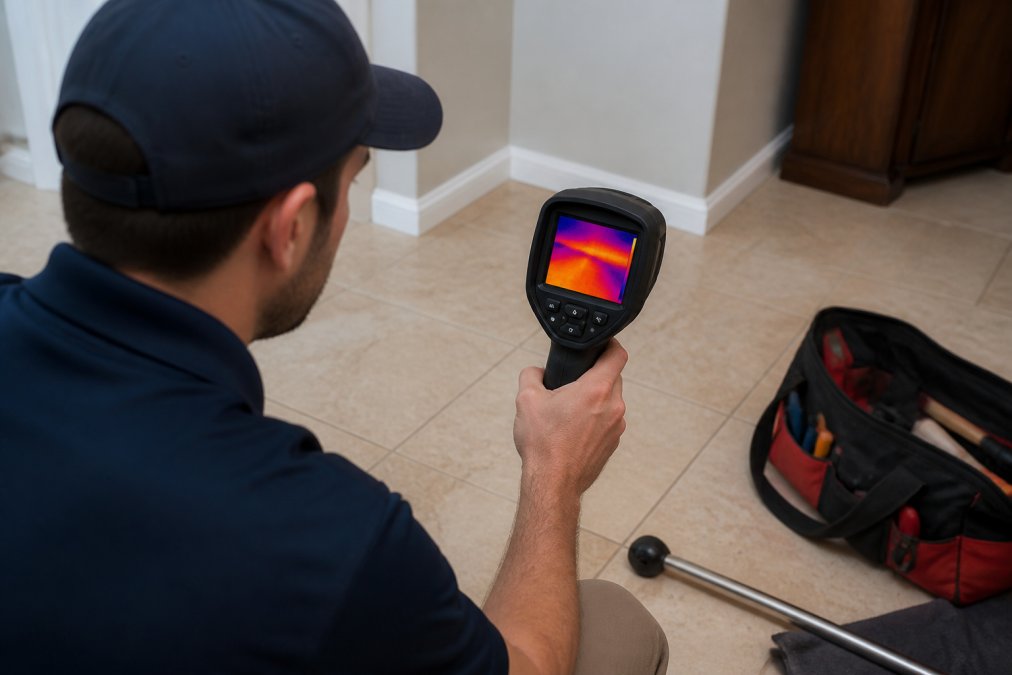
Professional plumbers use specialized equipment that homeowners don’t have access to. Thermal imaging cameras detect temperature variations in your flooring and foundation with precision. These cameras show areas of abnormal heat or cold, revealing where water is actively escaping from hot or cold water lines. A thermal image provides visual evidence of the leak’s location and extent.
Acoustic leak detection equipment listens for the sound of water escaping under pressure. As water shoots through a break in a pipe, it creates a distinctive sound. Sensitive microphones can detect this sound through concrete and soil. A trained technician moves the microphone across your foundation, listening for the acoustic signature of the leak. This method pinpoints the leak location with remarkable accuracy.
Moisture meters measure the water content in concrete and flooring materials. A professional can map areas of elevated moisture, creating a picture of where water is accumulating. This helps confirm the leak’s location and extent before any invasive diagnostics are needed.
Some plumbers use sewer cameras to inspect water lines directly. If the leak is accessible, a small camera can be inserted into the pipe to visually confirm the break. This provides definitive evidence of the problem and its severity.
Professional leak detection typically costs less than the damage caused by an undetected slab leak. Acclaimed Drain & Plumbing Solutions, LLC uses professional diagnostic equipment, testing, and sewer cameras to identify slab leaks quickly and accurately, helping you avoid costly foundation repairs down the road.
Slab Leak Repair Options and Next Steps
Once a slab leak is confirmed, you have repair options. One common approach is trenchless sewer liner technology, which can be used for certain types of pipe rehabilitation. This method avoids the mess and expense of digging up your yard and foundation.
In trenchless repair, a new water line can be routed through your attic, walls, or crawl space, bypassing the damaged underground pipe entirely. The old pipe remains in place but is no longer used. This approach minimizes disruption to your property and can be a less invasive option than traditional excavation methods.
Claim Your Free Estimate Today →
If trenchless repair isn’t feasible due to your home’s structure, traditional excavation may be necessary. This involves digging down to the damaged pipe, removing it, and installing a new one. It’s more invasive and costly, but sometimes it’s the only option. Your plumber will assess your specific situation and recommend the best approach.
The first step after confirming a slab leak is to contact a licensed plumbing professional. They’ll evaluate your home’s plumbing layout, assess the damage, and provide repair options with pricing. Don’t delay, the longer a slab leak remains unrepaired, the more damage accumulates to your foundation and surrounding soil.
Does Homeowners Insurance Cover Slab Leaks?
This is a question many homeowners ask, and unfortunately, the answer is usually no. Most standard homeowners insurance policies do NOT cover slab leaks (iii.org). Insurance typically covers sudden, accidental damage, like a pipe that bursts from freezing. A slab leak, which develops gradually over time due to corrosion or deterioration, is considered a maintenance issue rather than an accident.
However, some policies may cover damage CAUSED by a slab leak if that damage is sudden and accidental. For example, if a slab leak causes your foundation to crack or your flooring to buckle suddenly, your insurer might cover the resulting damage repair, but not the slab leak itself.
Review your homeowners insurance policy carefully. Contact your insurance agent and ask specifically about coverage for water damage from slab leaks. Some insurers offer optional water damage coverage that may include slab leaks, but this varies. If you’re in an older home with aging plumbing, discussing this with your agent before a problem develops is wise.
Regardless of insurance coverage, the cost of delaying repair far exceeds the cost of prompt detection and repair. A small leak caught early costs far less to fix than a major foundation problem caught late.
Common Mistakes to Avoid When Identifying Slab Leaks
One major mistake homeowners make is ignoring the early signs. A small increase in your water bill or a slightly soft spot in your carpet might seem minor, but these are your early warning signals. Dismissing them as coincidence gives the leak months to cause more damage.
Another common error is assuming all water pressure loss is a fixture problem. If your shower pressure drops, you might replace the showerhead or clean the aerator. But if multiple fixtures lose pressure simultaneously, the problem is upstream in your main line, possibly a slab leak. Don’t waste time troubleshooting individual fixtures when the issue is systemic.
Some homeowners attempt to locate slab leaks using only visual inspection. While soft spots and water stains are helpful clues, they don’t pinpoint the leak’s exact location. Guessing at the location and digging in the wrong spot wastes money and creates unnecessary property damage. Professional detection equipment eliminates guesswork.
Waiting for the problem to resolve itself is futile. A slab leak won’t stop on its own. The longer you wait, the worse the damage becomes. Foundation damage compounds over time, and what starts as a repairable leak can become a structural emergency.
Watch Out
Delaying slab leak repair is one of the costliest mistakes homeowners make. Every week of delay allows more water to accumulate under your foundation, increasing structural damage and repair costs exponentially.
Delaying slab leak repair is one of the costliest mistakes homeowners make. Every week of delay allows more water to accumulate under your foundation, increasing structural damage and repair costs exponentially.
When to Call a Professional for Slab Leak Diagnosis
Call a professional plumber immediately if you notice any of the signs discussed in this guide. Don’t wait for multiple warning signs to appear. A single indicator, unexplained water bill increase, soft flooring, water stains, or the sound of running water, warrants professional evaluation.
If your water meter test confirms a leak but you can’t identify its source, professional diagnosis is essential. A plumber with thermal imaging and acoustic detection equipment can pinpoint the leak quickly and accurately.
If your home is older than 40 years, consider a preventative slab leak inspection even if you haven’t noticed problems. Older homes with original copper or galvanized steel piping are at higher risk. Catching a developing leak before it causes major damage is far more economical than dealing with the aftermath.
Acclaimed Drain & Plumbing Solutions, LLC provides 24/7 emergency plumbing service, including slab leak detection and diagnosis. Our technicians use professional diagnostic equipment, testing, and sewer cameras to identify leaks accurately and explain your repair options clearly. We believe in thorough evaluation and honest communication, no upselling, just practical solutions tailored to your situation.
When you call a plumber, ask about their diagnostic methods. Professional-grade thermal imaging and acoustic detection are effective for slab leak identification. If a plumber can’t explain their detection methodology or won’t use modern equipment, consider getting a second opinion.
A slab leak is a serious problem that demands prompt attention. The good news is that modern detection methods make identifying slab leaks easier and more accurate than ever. By recognizing the early signs, unusual water bills, soft flooring, water stains, and pressure changes, you can catch leaks before they cause major foundation damage.
If you suspect a slab leak in your home, don’t guess or delay. Professional diagnosis is affordable and essential. Acclaimed Drain & Plumbing Solutions, LLC can evaluate your plumbing system, pinpoint any leaks with precision equipment, and explain your repair options in clear terms. Contact us for a free estimate and take the first step toward protecting your foundation and your home’s value.
Frequently Asked Questions
Q: Can you have a slab leak and not know it?
A: Yes. Small slab leaks can remain undetected for months or years, especially if the water drains away from the foundation or seeps slowly. Signs may appear gradually, a slightly elevated water bill, soft spots in flooring, or faint sounds of running water, that homeowners often dismiss as minor issues. Regular plumbing inspections and attention to utility bill changes help catch leaks early before they cause structural damage or mold growth.
Q: What are the first signs of a slab leak?
A: Early indicators include a spike in your water bill without increased usage, the sound of running water when all fixtures are off, warm spots on flooring (from hot water line leaks), or slight dampness along baseboards. You might also notice soft or spongy areas in flooring or a faint musty odor. These signs often appear before visible water pooling or structural damage, making early detection critical for limiting water damage and foundation issues.
Q: How long can a slab leak go undetected?
A: Slab leaks can go undetected for months to years depending on the leak’s size and location. A slow leak under a concrete foundation may not show obvious signs initially, allowing water to damage pipes, erode soil, and compromise structural integrity over time. This is why monitoring your water meter, watching for gradual bill increases, and scheduling periodic plumbing inspections are important. The longer a leak persists, the greater the risk of costly foundation damage and mold.
Q: Will homeowners insurance pay for a slab leak?
A: Most standard homeowners insurance policies do not cover slab leaks because they are typically classified as maintenance issues or wear-and-tear on the plumbing system. However, if the leak results from a sudden, accidental event (like a burst pipe from freezing), some policies may provide limited coverage. Review your specific policy or contact your insurance agent to understand what is covered. Prompt repair and regular maintenance help prevent disputes and potential claim denials.