
Claim Your Free Estimate Today

Table of Contents
- Understanding Water Softener Installation Cost in Tucson
- Factors Influencing Installation Price
- Types of Water Softening Systems and Their Costs
- DIY vs Professional Water Softener Installation
- Water Softener Sizing Guide for Homes
- Water Softener System Maintenance Tips and Ongoing Costs
- Hard Water Issues in Arizona and Why Installation Matters
- Local Permitting and Code Requirements
- Frequently Asked Questions
Last Updated: August 14, 2026
Understanding Water Softener Installation Cost in Tucson
Hard water is one of the most common plumbing challenges homeowners face in Arizona. Water softener installation cost varies significantly based on system type, home size, and installation complexity. At Acclaimed Drain And Plumbing Solutions, LLC, we work with homeowners throughout Tucson dealing with mineral-rich water, spotting on dishes, scale buildup on fixtures, and reduced appliance longevity.
Installing a water softening system is an investment in your plumbing infrastructure, appliance lifespan, and daily comfort. Water softeners remove calcium and magnesium minerals through ion exchange or other conditioning methods. Total installation cost depends on which system you choose, your home size, permitting needs, and whether you hire a professional. Most homeowners should budget for both equipment and professional installation labor.
Pro Tip
Many homeowners overlook the long-term ROI of water softening. Softened water extends appliance life, reduces plumbing repairs, and lowers energy costs, benefits that often justify the upfront investment within 5-7 years.
Many homeowners overlook the long-term ROI of water softening. Softened water extends appliance life, reduces plumbing repairs, and lowers energy costs, benefits that often justify the upfront investment within 5-7 years.
Factors Influencing Installation Price
Several variables directly affect your water softener installation cost.
System capacity and flow rate are primary cost drivers. A whole-house softener sized for a family of four requires different specifications than one for a larger household. The system must handle your home’s peak water usage without losing efficiency.
Water hardness level in your area determines how aggressively the system needs to work. Tucson’s water supply contains significant mineral content. Testing your water hardness (measured in grains per gallon) is essential for proper sizing.
Installation labor varies based on your home’s plumbing layout. Easily accessible main water lines and nearby drain lines mean straightforward installation. Complex plumbing configurations, tight spaces, or distant drain lines require more labor and may need additional bypass valves or drain line extensions.
Local permitting and code requirements add to timeline and cost. Some jurisdictions require licensed plumber installation, inspection, and specific backflow prevention devices. Acclaimed Drain And Plumbing Solutions, LLC handles all permitting and compliance work.
Removal of existing systems adds labor if you’re replacing older equipment. Draining, disconnecting, and proper disposal require professional handling.
| Factor | Impact on Cost |
|---|---|
| System capacity | Larger systems cost more |
| Water hardness | Higher hardness requires larger resin |
| Installation complexity | Simple vs. complex plumbing |
| Permitting | Local code compliance |
| Existing system removal | Disconnection and disposal |
Types of Water Softening Systems and Their Costs
Different water softening technologies serve different needs and budgets.
Salt-Based Ion Exchange Systems
Salt-based ion exchange systems are the most common and effective choice for removing hard water minerals. These systems use resin beads charged with sodium to swap calcium and magnesium ions, producing soft water throughout your home. The resin regenerates using a brine solution (salt and water).
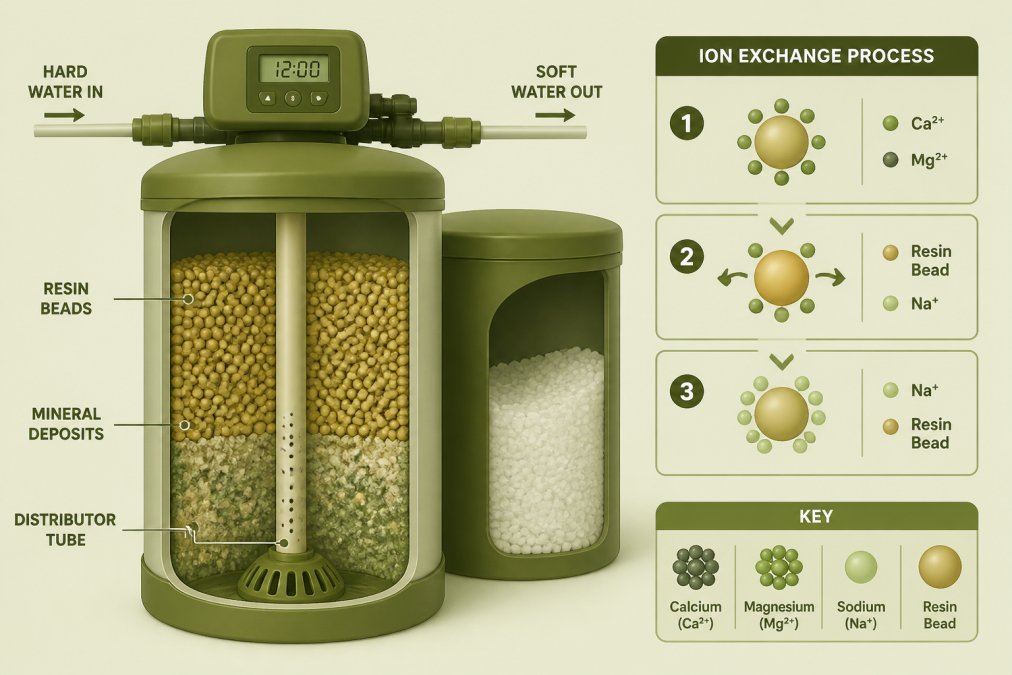
Ion exchange systems deliver the most dramatic improvement in water quality. Dishes come out spotless, soap lathers better, and your skin feels cleaner. These systems handle high water hardness levels effectively and work well for larger households. Equipment typically lasts 10-15 years with proper maintenance.
The tradeoff is ongoing maintenance. You’ll need to add salt regularly, typically every 4-8 weeks depending on usage and hardness level. Periodic brine tank and resin bed cleaning is also required.
Salt-Free Conditioners and Descalers
Salt-free systems condition water without removing minerals; they prevent scale buildup instead. These systems use template-assisted crystallization (TAC), electromagnetic fields, or catalytic converters to change mineral crystal structure so water doesn’t deposit scale on fixtures and appliances.
Salt-free systems require no salt purchases and minimal maintenance. They’re environmentally friendly since they don’t discharge brine into the sewer system. For homes concerned about sodium intake or those in water-restricted areas, these systems offer an appealing alternative.
The limitation is effectiveness. Salt-free systems don’t soften water the way ion exchange does. You’ll still experience some spotting on dishes and reduced soap effectiveness. They work best for moderately hard water (15-20 GPG) rather than severe hardness.
Reverse Osmosis Systems
Reverse osmosis (RO) systems use membrane filtration to remove minerals, producing very soft water at the point of use. These are typically installed under the kitchen sink to treat drinking and cooking water specifically, rather than conditioning the entire home’s water supply.
RO systems produce excellent water quality and require minimal maintenance. They’re compact and affordable compared to whole-house systems. However, they only treat a small portion of your household water; your shower, laundry, and other fixtures still use hard water.
DIY vs Professional Water Softener Installation
The decision between handling installation yourself or hiring a professional depends on your plumbing experience, local code requirements, and system complexity.
DIY installation is feasible for straightforward setups with accessible main water lines, nearby drain access, and no permitting requirements. You might save on labor costs. However, DIY installation carries real risks. Improper connections cause leaks that damage your home and waste water. Incorrect system sizing means equipment that won’t meet your needs. Missed backflow prevention requirements can contaminate your municipal water supply, a serious code violation. Most jurisdictions require licensed plumber installation for compliance.
Professional installation through Acclaimed Drain And Plumbing Solutions, LLC ensures your system is properly sized, correctly connected, and fully compliant with local codes. Our technicians assess your water hardness, evaluate your plumbing layout, handle all permitting, and test the system before completion. You avoid costly mistakes and have expert support if issues arise.
Watch Out
Improper water softener installation can lead to low water pressure throughout your home, incomplete softening, or code violations that prevent home sale. These mistakes cost far more to fix than hiring a professional initially.
Improper water softener installation can lead to low water pressure throughout your home, incomplete softening, or code violations that prevent home sale. These mistakes cost far more to fix than hiring a professional initially.
Water Softener Sizing Guide for Homes
Correct system sizing is critical for effective softening and cost efficiency. An undersized system regenerates constantly, wasting salt and water. An oversized system is unnecessary expense.
Determine your water hardness level by testing. Hardness is measured in grains per gallon (GPG). Water below 3 GPG is considered soft; 3-7 GPG is slightly hard; 7-10 GPG is moderately hard; above 10 GPG is very hard. Tucson’s municipal water typically ranges from 8-12 GPG depending on your location.
Calculate daily water usage for your household. Average usage is roughly 75-100 gallons per person per day. A family of four uses approximately 300-400 gallons daily.
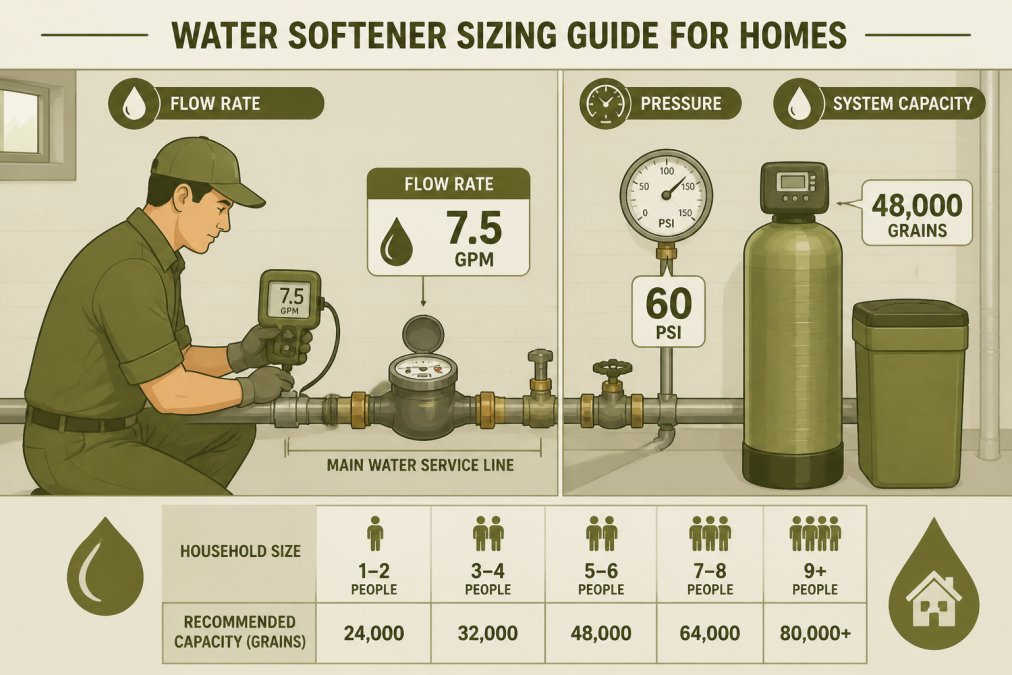
System capacity is expressed in grains of hardness removed before regeneration. To calculate required capacity: multiply daily water usage by water hardness level, then multiply by 1.2 (safety margin). A family of four using 350 gallons daily in 10 GPG water needs a system rated for at least 4,200 grains capacity (350 × 10 × 1.2). Most residential systems range from 24,000 to 64,000 grains capacity. For most Tucson homes, a 32,000 to 48,000 grain system provides good balance.
Flow rate matters for simultaneous water demands. Systems should deliver at least 12-15 gallons per minute at peak usage.
Water Softener System Maintenance Tips and Ongoing Costs
Proper maintenance extends system life and ensures consistent performance.
Claim Your Free Estimate Today →
Salt replenishment is your primary ongoing expense. Depending on water hardness and household size, you’ll add salt every 4-8 weeks. Most homeowners budget for this as a routine household expense.
Brine tank cleaning prevents bridging (salt crusting over) and maintains efficiency. Check yearly for salt accumulation and clean if needed.
Resin bed maintenance keeps ion exchange beads functioning. Resin typically lasts 10-15 years before needing replacement. Professional replacement is recommended.
Annual professional inspection catches problems early. Acclaimed Drain And Plumbing Solutions, LLC offers maintenance membership programs that include system checks, salt delivery, and priority service.
Key Takeaway
Salt-based systems require active maintenance but deliver superior water softening. Salt-free systems need less attention but don’t remove hardness. Your choice depends on whether you prioritize convenience or effectiveness.
Salt-based systems require active maintenance but deliver superior water softening. Salt-free systems need less attention but don’t remove hardness. Your choice depends on whether you prioritize convenience or effectiveness.
Hard Water Issues in Arizona and Why Installation Matters
Arizona’s mineral-rich water creates challenges throughout your home.
Scale buildup is the most visible problem. Calcium and magnesium minerals precipitate on fixtures, showerheads, faucets, and inside pipes. Over time, scale restricts water flow and clogs aerators.
Appliance damage accelerates in hard water. Water heaters develop scale inside the tank, reducing efficiency and lifespan. Dishwashers and washing machines experience shortened service life. Hard water contributes to premature failures and increased repair costs.
Plumbing system stress develops gradually. Scale inside pipes reduces water pressure and flow rate. Over decades, hard water contributes to plumbing failures requiring expensive repairs or repiping.
Skin and hair effects are personal but significant. Hard water prevents soap from lathering effectively, leaving residue that dries skin and makes hair dull.
Cleaning efficiency suffers. Hard water reduces detergent effectiveness in laundry and dishwashing. Clothes fade faster and feel stiff. Dishes spot despite proper rinsing.
Installing a water softener eliminates these issues. Soft water extends appliance life, reduces cleaning time, improves personal comfort, and prevents plumbing damage. These benefits often justify the installation cost through reduced maintenance and repair expenses.
Local Permitting and Code Requirements
Tucson and Arizona have specific plumbing codes that govern water softener installation.
Licensed plumber requirement applies to most residential installations. Arizona state plumbing code requires licensed contractors for water softener installation. This protects homeowners by ensuring proper installation, appropriate backflow prevention, and code compliance. Acclaimed Drain And Plumbing Solutions, LLC maintains all required licenses and stays current with code changes.
Backflow prevention devices are mandatory in most jurisdictions. These devices prevent softened water from flowing back into the municipal water supply. Your system must include appropriate backflow prevention, typically a check valve or reduced pressure principle device.
Drain line requirements specify how the system’s regeneration discharge connects to your sewer or septic system. Proper drain installation prevents system backups and maintains code compliance.
Water quality testing may be required before and after installation in some areas. Testing documents that your water quality improvement meets local standards.
Inspection requirements vary by jurisdiction. Some areas require inspection before operation; others require post-installation verification. Acclaimed Drain And Plumbing Solutions, LLC handles all permitting and inspection coordination.
Hard water is unavoidable in Tucson, but its effects don’t have to be permanent. A properly installed water softening system restores water quality, protects your plumbing infrastructure, and improves daily life. The investment pays dividends through reduced appliance repairs, lower energy costs, and consistent water quality throughout your home.
Acclaimed Drain And Plumbing Solutions, LLC provides free estimates for water softener installation, sizing consultation, and system recommendations tailored to your home’s specific needs. Our licensed technicians handle complete installation, permitting, and ongoing maintenance support. Contact our team for a professional assessment of your water quality and installation options. We’re committed to delivering quality workmanship and dependable service on every project.
Frequently Asked Questions
How much does water softener installation cost in Tucson?
Water softener installation costs vary based on system type, capacity, and your home’s plumbing infrastructure. Salt-based ion exchange systems typically range from mid-range to higher investment, while salt-free conditioners cost less upfront. Professional installation labor, permits, and any necessary plumbing modifications add to the total. Contact Acclaimed Drain & Plumbing Solutions for a free estimate tailored to your specific needs and water hardness level.
What factors influence the total cost of water softener installation?
Key cost drivers include system type and capacity (measured in grains per gallon), your home’s water usage, existing plumbing layout, whether bypass valves or drain lines need installation, local permitting requirements, and labor complexity. Homes with mineral-heavy water supplies or aging plumbing infrastructure may require additional work. Professional assessment of your water quality and flow rate helps determine the right system size and accurate pricing.
Is a water softener worth the investment for my home?
Water softeners provide significant long-term value in areas with hard water. Benefits include reduced scale buildup on plumbing fixtures and appliances, improved water pressure, extended appliance longevity, softer skin and hair, and spotting-free dishes. In Arizona’s high-hardness water environment, these savings often offset installation costs within 5-10 years through reduced maintenance, fewer plumbing repairs, and lower water heater energy use. A professional evaluation can help you determine ROI for your specific situation.
Do I need a professional plumber to install a water softener?
Professional installation is strongly recommended. Proper installation requires understanding your water hardness level, sizing the system correctly, integrating bypass valves, connecting drain lines, ensuring code compliance, and testing water pressure. Mistakes can damage your plumbing infrastructure, void warranties, or fail to address your hard water problems. Licensed plumbers like Acclaimed Drain & Plumbing Solutions have the diagnostic equipment and expertise to ensure your system works efficiently from day one.
What are the ongoing maintenance costs for a water softener?
Maintenance costs depend on system type and water usage. Salt-based systems require regular salt refills (typically monthly), periodic resin bed cleaning, and occasional component replacement. Salt-free systems have lower ongoing costs but may need filter changes. Annual professional maintenance checks help prevent costly repairs and ensure optimal performance. Budget for these recurring expenses when evaluating total cost of ownership.
How do I choose the right size water softener for my home?
System sizing depends on household size, daily water usage, and water hardness level (measured in grains per gallon). A family of four typically needs 30,000-40,000 grain capacity, but homes with higher hardness levels or larger families may need larger systems. Professional water testing and flow rate assessment determine your exact requirements. Oversizing wastes money and energy; undersizing fails to soften all your water. A plumber can calculate the right capacity for your home.
What’s the difference between salt-based and salt-free water softening systems?
Salt-based ion exchange systems use resin beads and brine tanks to remove calcium and magnesium minerals, providing complete softening. Salt-free conditioners use alternative methods to prevent scale buildup without removing minerals. Salt-based systems cost more upfront and require salt maintenance but deliver superior results for very hard water. Salt-free options are lower maintenance and more environmentally friendly but may not fully address severe hardness. Your water hardness level and preferences determine which suits your home best.
