Claim Your Free Estimate Today
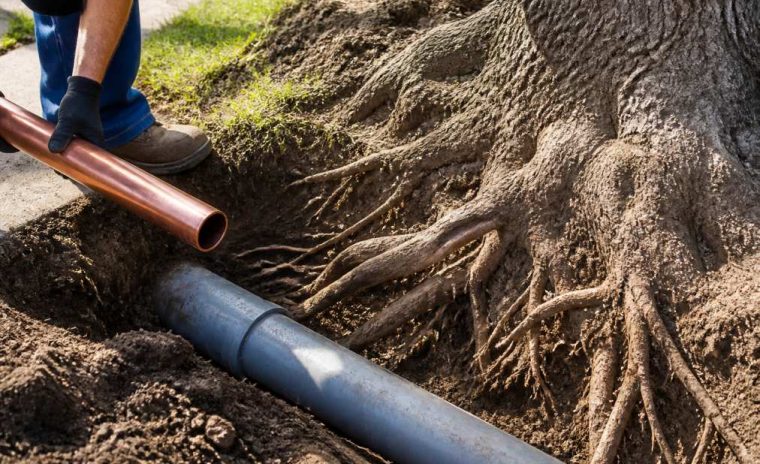
Table of Contents
- What Is Tree Root Intrusion and Why It Matters
- Signs of Tree Roots in Sewer Line
- Physical Pipe Maintenance to Prevent Root Intrusion
- Chemical and Mechanical Root Barriers Explained
- Tree Species to Avoid Near Sewer Lines
- Preventative Maintenance Schedule for Long-Term Protection
- When to Call a Professional Plumber
- Frequently Asked Questions
Last Updated: September 1, 2026
What Is Tree Root Intrusion and Why It Matters
Tree root intrusion occurs when roots penetrate sewer lines, drain pipes, and water service lines, causing blockages and structural damage. Roots seek moisture and nutrients, gravitating toward small cracks and joints where water flows. Once inside, they multiply rapidly, creating dense mats that trap debris and obstruct water flow.
Your sewer lateral sits directly in soil where tree roots thrive. Older homes with clay or concrete pipes face higher risk, as these materials deteriorate and develop fractures roots exploit. Prevention preserves your plumbing infrastructure and protects property value.
Pro Tip
Most homeowners don’t notice root problems until sewage backs up into their home. Early detection through sewer camera inspection can catch root intrusion before it becomes an emergency.
Most homeowners don’t notice root problems until sewage backs up into their home. Early detection through sewer camera inspection can catch root intrusion before it becomes an emergency.
Signs of Tree Roots in Sewer Line
Recognizing early warning signs allows you to address problems before they escalate into full blockages or pipe failure.
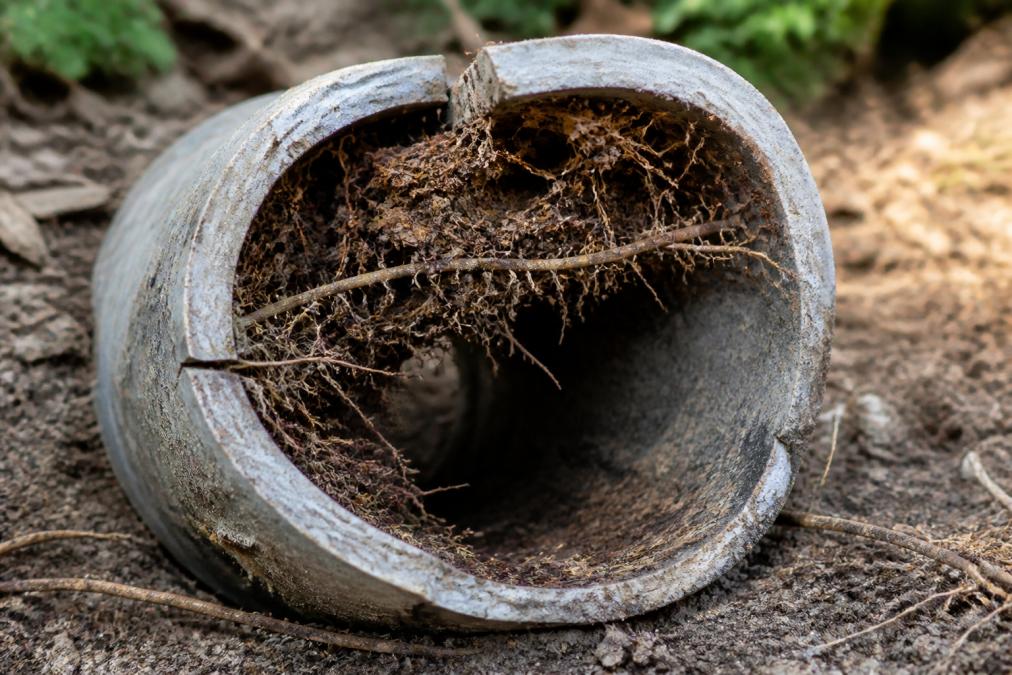
Slow drains throughout your home, particularly in lower-level fixtures like basement bathrooms, often signal root intrusion. Water moves sluggishly because roots have narrowed the pipe’s internal diameter, intensifying during wet seasons.
Recurring clogs in the same drain line point directly to root problems. If clogs return within weeks, roots are likely the culprit. Chemical drain cleaners and snaking provide only temporary relief because they don’t address underlying root growth.
Sewage backups into your home represent a more advanced stage. Wastewater backing up into showers, toilets, or floor drains indicates significant obstruction and requires immediate professional attention.
Gurgling noises from drains suggest air pockets created by partial blockages as water struggles to pass around root masses.
Patches of unusually lush grass over your sewer line are often a red flag. These areas stay greener because roots in the sewer line have created a leak, providing extra moisture to soil above and allowing roots to enter the pipe more easily.
Foundation cracks or settling can develop if root intrusion has caused pipe collapse or significant leakage, as soil subsidence occurs when water escapes from broken pipes.
Watch Out
If you notice multiple warning signs, slow drains, recurring clogs, and patches of extra-green grass over your sewer line, don’t wait for a backup. Root intrusion progresses quickly once it begins, and emergency repairs cost significantly more than preventative treatment.
If you notice multiple warning signs, slow drains, recurring clogs, and patches of extra-green grass over your sewer line, don’t wait for a backup. Root intrusion progresses quickly once it begins, and emergency repairs cost significantly more than preventative treatment.
Physical Pipe Maintenance to Prevent Root Intrusion
Preventative maintenance focused on your pipes’ physical condition forms the foundation of root intrusion prevention.
Regular Sewer Camera Inspection
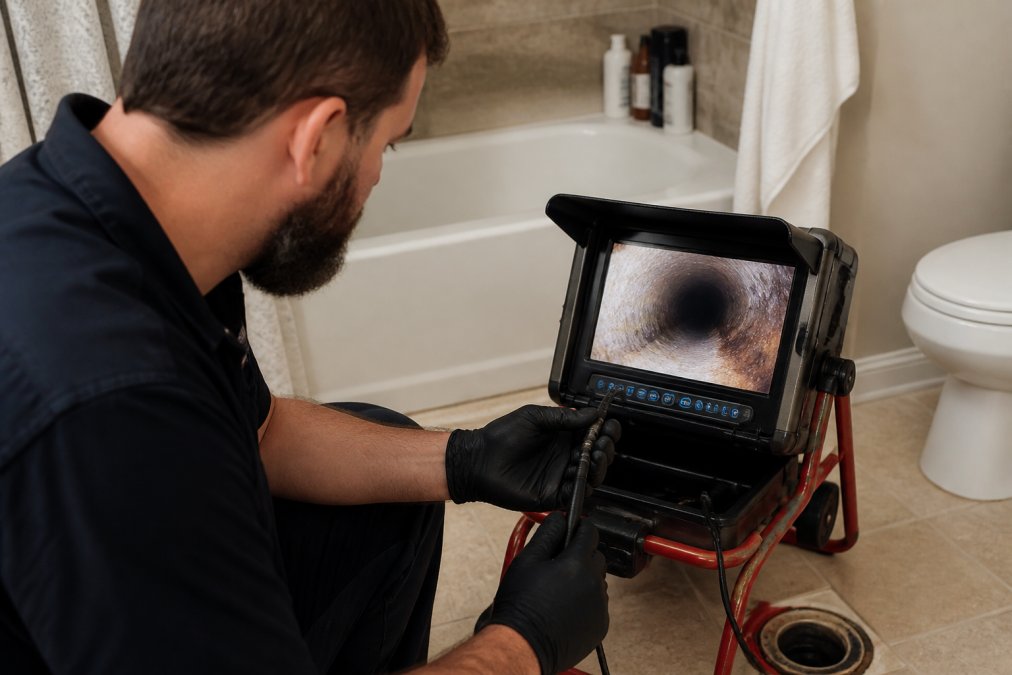
A sewer camera inspection provides the most accurate assessment of your pipe’s condition and presence of early-stage root intrusion. This diagnostic tool sends a waterproof camera through your sewer line, allowing technicians to see cracks, deterioration, and root penetration in real time.
Schedule sewer camera inspections every 2-3 years if your home is over 40 years old or if you have mature trees within 10 feet of your sewer line. Homes with newer pipes and no nearby trees may only need inspection every 5 years. If you’ve experienced root intrusion, annual inspections catch regrowth before it blocks the line again.
The inspection takes 1-2 hours and costs less than emergency sewer repair. Video documentation shows exactly where problems exist, allowing you to prioritize treatment and understand your repair options.
Hydro Jetting for Root Removal
Hydro jetting uses high-pressure water, typically 3,000 to 4,000 PSI, to blast away root masses, mineral buildup, and debris from inside your pipes (peer-reviewed research). Unlike chemical drain cleaners or snaking, hydro jetting removes the entire blockage rather than just punching a hole through it.
The process inserts a specialized nozzle into your sewer line that sprays water in multiple directions, dislodging roots, grease, and scale buildup from pipe walls. For root intrusion, hydro jetting clears the immediate blockage but doesn’t prevent regrowth, making it most effective as part of a comprehensive prevention strategy.
Hydro jetting works best when performed before roots become severely entangled. Once roots have penetrated deeply and wrapped around internal pipe structures, the procedure becomes less effective. Timing matters: catching root problems early makes hydro jetting a reliable, non-invasive solution.
After hydro jetting, your sewer line should be inspected again to confirm complete removal and assess whether the pipe itself needs repair. A pipe with significant cracks will simply become reinfected with roots if structural damage isn’t addressed.
Chemical and Mechanical Root Barriers Explained
Root barriers prevent trees from sending roots toward your sewer line in the first place.
Chemical root barriers use herbicide foaming agents that kill root tips as they attempt to penetrate soil near your pipes. Products containing dichlobenil or metolachlor are applied to the soil above the sewer line, creating a zone of toxicity that roots avoid or that kills them on contact (the EPA). Chemical barriers typically last 1-2 years and require reapplication.
Chemical barriers require no excavation and can be applied annually as preventative maintenance. However, they’re reactive treatments for existing tree roots and don’t address trees already established near your pipes.
Mechanical root barriers are physical structures installed between trees and sewer lines, typically made of reinforced plastic, metal, or composite materials. They work by forcing roots to grow around the barrier rather than toward your pipes.
Mechanical barriers offer permanent protection if installed correctly and require no ongoing maintenance. However, installation requires excavation and is most practical during new construction or when trees are planted.
The most effective approach combines both strategies: install mechanical barriers during landscaping or tree planting, and apply chemical treatments to manage existing root systems. Neither method works if your sewer line already has structural cracks.
Claim Your Free Estimate Today →
Key Takeaway
Chemical barriers are best for managing existing trees with active root systems. Mechanical barriers are best for new plantings and long-term protection. For maximum effectiveness, use both in combination with regular sewer camera inspections to catch any breakthrough growth early.
Chemical barriers are best for managing existing trees with active root systems. Mechanical barriers are best for new plantings and long-term protection. For maximum effectiveness, use both in combination with regular sewer camera inspections to catch any breakthrough growth early.
Tree Species to Avoid Near Sewer Lines
Certain tree and shrub species are far more aggressive in seeking moisture and developing invasive root systems.
Willows, poplars, and cottonwoods are the most notorious offenders. These trees have shallow, fibrous root systems that spread rapidly in search of water. A willow planted 30 feet from your sewer line can still send roots toward it (extension.oregonstate.edu). These species should never be planted within 50 feet of underground plumbing infrastructure.
Maples, birches, and elms develop extensive root systems and are moderately aggressive toward pipes. Plant these species at least 20-30 feet away from sewer lines. If already established near your plumbing, monitor them closely with regular camera inspections.
Ash, oak, and hickory trees are less aggressive but still pose some risk if planted directly over sewer lines. Keep these species at least 10 feet away from main sewer lines.
Fruit trees, ornamental trees, and shrubs like apple, cherry, dogwood, and viburnum generally pose minimal risk because their root systems are less extensive and less aggressive in seeking water.
Avoid shallow-rooted, water-seeking species near sewer lines. If you already have problematic trees on your property, removal may be the most cost-effective long-term solution.
Preventative Maintenance Schedule for Long-Term Protection
Establishing a maintenance schedule ensures that preventing tree root intrusion becomes routine home care rather than emergency response.
Year 1: Establish a baseline with a professional sewer camera inspection. This reveals your current pipe condition, identifies any existing root intrusion, and shows where trees are positioned relative to your sewer line.
Years 2-3: If the baseline inspection showed no root intrusion and your pipes are in good condition, perform another camera inspection every 2-3 years. If you have mature trees within 20 feet of your sewer line, move to annual inspections. Apply chemical root barrier treatments if roots are beginning to penetrate.
Annually (for high-risk properties): Homes with willows, poplars, or other aggressive tree species should have annual camera inspections. Schedule inspections during late fall or early winter when root growth slows.
After any sewer backup or clog: Always follow up with a camera inspection to confirm the blockage is fully cleared and to assess whether root intrusion was the cause.
Maintenance membership benefits: Many plumbing companies, including Acclaimed Drain And Plumbing Solutions, LLC, offer preventative maintenance memberships that bundle regular inspections, priority service, and discounted rates on repairs. These programs make sense for older homes or properties with known risk factors.
When to Call a Professional Plumber
Recognizing when to involve a licensed plumber prevents wasting time and money on DIY approaches that won’t solve root intrusion problems.
Call a professional immediately if sewage backs up into your home, as this indicates an advanced blockage requiring urgent intervention. Don’t attempt to clear this yourself with chemical drain cleaners, which won’t work on root-caused blockages.
Contact a plumber for a sewer camera inspection if you notice multiple warning signs: slow drains, recurring clogs, patches of extra-green grass over your sewer line, or if your home is over 40 years old with mature trees nearby.
Professional hydro jetting should be performed by licensed plumbers with proper equipment. The high-pressure water can damage pipes if used incorrectly.
For root barrier installation, professional application ensures proper coverage and effectiveness. Chemical barriers require careful soil application to avoid groundwater contamination. Mechanical barriers require precise installation at the right depth and angle.
Acclaimed Drain And Plumbing Solutions, LLC provides 24/7 emergency plumbing service with live dispatchers and fast response times. Our team uses professional diagnostic equipment and sewer cameras to identify root intrusion accurately. We explain our findings clearly and provide practical options so you can make informed decisions about prevention and repair, recommending solutions tailored to your property’s specific conditions.
Tree root intrusion doesn’t have to become a crisis. Early detection through regular sewer camera inspections, combined with strategic tree planting and preventative maintenance, keeps your plumbing system functioning reliably for decades. If you’re noticing slow drains, recurring clogs, or have mature trees near your sewer line, don’t wait for a backup. Acclaimed Drain And Plumbing Solutions, LLC offers professional sewer camera inspections, hydro jetting, and preventative maintenance programs designed to catch root problems before they become emergencies. Claim Your Free Estimate Today and get a clear assessment of your sewer line’s condition from licensed professionals who stand behind their work.
Frequently Asked Questions
How do I know if tree roots are in my sewer line?
Common signs include slow drains throughout your home, sewage backups, gurgling sounds from fixtures, and patches of unusually green grass in your yard. Roots seek moisture and nutrients, so they infiltrate pipes at joints and cracks. The only definitive way to confirm root intrusion is through a sewer camera inspection, which allows a plumber to visually inspect the interior of your pipes and identify root damage, pipe breaks, or blockages caused by root growth.
What is the best way to remove tree roots from sewer pipes?
Hydro jetting for root removal uses high-pressure water streams to cut through and flush out roots from your pipes. This mechanical method is effective for active root blockages and helps clear the line temporarily. For long-term prevention, root barriers (both chemical foaming agents and mechanical barriers) can be installed to inhibit future root growth. A professional plumber can assess your situation and recommend whether mechanical removal, chemical treatment, or barrier installation best suits your drainage system.
Can I prevent tree roots from entering my sewer pipes?
Yes. Preventative maintenance includes regular sewer camera inspections to catch root intrusion early, maintaining your plumbing infrastructure through timely repairs, and avoiding planting water-loving trees near your sewer lateral. Chemical foaming agents applied to your pipes create an environment that hinders root growth. Mechanical root barriers installed at pipe joints physically impede roots from entering. A consistent maintenance schedule, typically annual or biennial inspections for homes with trees nearby, helps obviate costly repairs.
Which trees are most likely to damage sewer pipes?
Willows, poplars, maples, and birches are attracted to the moisture in sewer lines and have aggressive root systems that easily penetrate pipes. These species should be planted at least 10 feet away from your sewer line. Avoid planting any water-seeking trees directly over or near your drainage system. If you already have these trees on your property, preventative measures like root barriers and regular inspections become especially important to protect your plumbing infrastructure from damage.