Claim Your Free Estimate Today
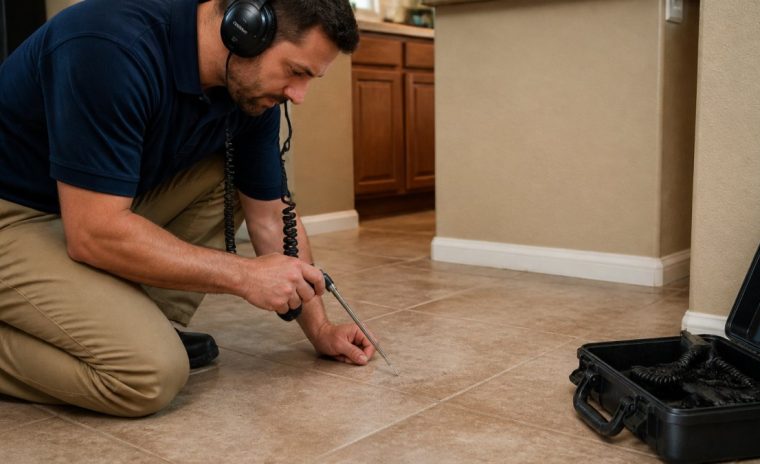
Table of Contents
- What Is a Slab Leak and Why Early Detection Matters
- Signs of a Slab Leak: What to Look For in Your Home
- How to Check for a Water Leak with a Water Meter
- Slab Leak Detection Methods: Comparing Your Options
- How Long Can a Slab Leak Go Undetected and Why It Matters
- Distinguishing a Slab Leak from Other Moisture Sources
- What to Do If You Suspect a Hidden Slab Leak
- Frequently Asked Questions
Last Updated: October 12, 2026
What Is a Slab Leak and Why Early Detection Matters
A slab leak is a water leak beneath your home’s concrete foundation, typically in the water supply or hot-water lines under the slab, and learning to detect hidden slab leaks early prevents catastrophic damage. Out of sight, it seeps into the soil, erodes the foundation, and causes structural cracks, mold, and expensive repairs.
Slab leaks worsen quickly: a small leak becomes a major foundation problem in months. Catching it early saves thousands and prevents safety hazards.
This guide walks you through detection step by step.
Signs of a Slab Leak: What to Look For in Your Home
The first step in detecting a slab leak is recognizing the warning signs. Most homeowners miss these clues because they seem minor at first, but together they point to a problem beneath your foundation.
Water Bill Increases and Meter Movement
An unexpectedly high water bill is often the first red flag, a jump of 25% or more without a change in usage suggests a hidden leak. Your water meter never lies: if it moves when all water sources are off, water is leaking somewhere.
Physical Indicators: Warm Spots, Damp Floors, and Cracks
Walk barefoot across your floors. Warm spots, especially in random areas, suggest a hot-water line is leaking beneath the slab and radiating heat upward. Damp flooring or unexplained wet spots point to water accumulating under the slab, often showing up as discoloration or soft areas in carpet or tile. Foundation cracks, gaps between floor and baseboards, and sticking doors or windows signal slab movement from water erosion.
Sounds and Odors
Listen for running water or dripping when all fixtures are off. A constant hissing or flowing noise suggests water moving through pipes beneath the slab.
Musty odors or mold indicate excess moisture from water leaking under the foundation, both a health concern and a structural warning.
How to Check for a Water Leak with a Water Meter
The water meter test is the most reliable DIY method to confirm a slab leak. It takes minutes and gives you concrete evidence for a professional plumber. Here’s how to read the meter, run the test, and interpret what the result does, and does not, prove.
Locating and Reading Your Meter
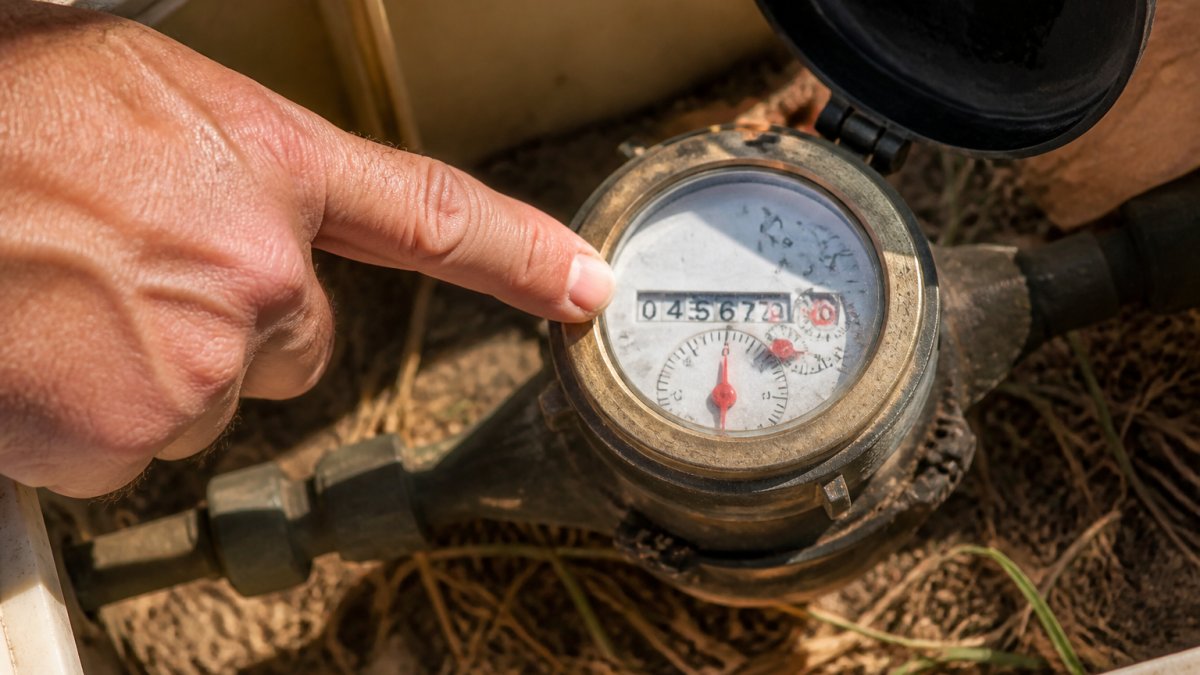
Your water meter is usually near the street in a concrete or plastic meter box, sometimes on the side of your home.
You’ll see one of two meter types:
- Analog (dial) meter: A large sweep hand that makes one full revolution per unit, plus smaller dials for tens, hundreds, and thousands. The large hand matters for leak testing, it moves with even tiny flows.
- Digital meter: A numeric display, often cycling through readings. Many also have a small flow indicator, a triangle, a plus sign, or a spinning icon, that appears when any water is moving through the meter.
Write down the current reading, including the decimal or sweep-hand position, and photograph it for a timestamped record.
Performing the Meter Test
Turn off every water source in the home:
- All indoor and outdoor faucets
- Toilets (none running or refilling)
- Washing machine, dishwasher, and ice maker
Tell everyone not to use water during the test, a single flush invalidates the result.
Now watch the meter. There are two ways to run the test:
- Quick check (5-10 minutes): Watch the large sweep hand or digital flow indicator. If it moves at all with everything off, water is passing through the meter.
- Extended check (1-3 hours): Record the reading, wait, then read again. This catches slow leaks the quick check may miss. Overnight is ideal.
Pro Tip
If your meter has a leak indicator (a small triangle or dial), it will spin or move any time water is flowing, even a trickle. This is the fastest visual confirmation you can get.
If your meter has a leak indicator (a small triangle or dial), it will spin or move any time water is flowing, even a trickle. This is the fastest visual confirmation you can get.
Interpreting Your Results
No movement over an extended test means no active leak on the pressurized side right now. That’s good news, but it does not rule out:
- A drain-line leak (drains aren’t pressurized, so they don’t register)
- A slab leak that only occurs under certain conditions, such as when hot water is running
- A very slow seep the meter can’t resolve in a short window
Continuous movement with everything off confirms water is escaping somewhere on the supply side, but not that it’s under the slab. A running toilet flapper, leaking hose bib, irrigation valve, or pinhole in a wall line could be the cause, rule those out first.
How to estimate severity:
- A sweep hand that creeps slowly, or a leak indicator that turns only occasionally, suggests a slow leak, often a few gallons per hour.
- A sweep hand that moves steadily, or a leak indicator that spins continuously, suggests a faster leak, potentially dozens of gallons per hour or more.
- A meter that visibly advances over a 30-minute window with everything off is a strong signal to shut off the main and call a plumber.
Watch Out
A moving meter tells you that water is leaking, not where. Do not start breaking concrete based on a meter test alone. Use the meter result as evidence to bring to a professional who can pinpoint the location with acoustic or thermal equipment.
A moving meter tells you that water is leaking, not where. Do not start breaking concrete based on a meter test alone. Use the meter result as evidence to bring to a professional who can pinpoint the location with acoustic or thermal equipment.
Document your findings with photos of the meter before and after, plus the time of each reading. This helps a plumber diagnose faster and gives you a baseline if the first result was ambiguous.
Slab Leak Detection Methods: Comparing Your Options
Several methods exist to locate a slab leak precisely, each with strengths, limitations, and a specific job it does best. Understanding them helps you ask better questions when you call a professional.
A Safe, Step-by-Step Home Diagnostic Workflow
Before spending money on detection, run this free sequence. It takes about a day and rules out the most common false alarms.
- Shut off every water source and confirm nothing is running. Check toilets, appliances, irrigation, and water softeners.
- Run the meter test (see the previous section). Record the reading, wait at least 30 minutes, overnight if possible, and read again.
- If the meter moves, rule out non-slab sources first. A running toilet flapper, leaking hose bib, or stuck irrigation valve will all move the meter. Fix or isolate each one and retest.
- If the meter still moves with everything isolated, listen. In a quiet house, walk each room and listen near the floor for hissing or dripping. Mark where the sound is loudest.
- Check for warm spots. Walk barefoot across tile, vinyl, or hardwood. Hot-water slab leaks often create a warm patch noticeably different from the rest of the floor.
- Look for moisture and staining. Check baseboards, carpet edges, and seams where flooring meets walls for discoloration, curling, or softness.
- Document everything, photos, meter readings, times, and areas where you noticed signs.
- Call a licensed plumber with your findings. The more specific your notes, the faster and cheaper the diagnosis.
Key Takeaway
A homeowner’s job is to confirm a leak exists and narrow the general area. A professional’s job is to pinpoint the leak and recommend a repair. Trying to do the second job yourself risks breaking concrete over the wrong spot.
A homeowner’s job is to confirm a leak exists and narrow the general area. A professional’s job is to pinpoint the leak and recommend a repair. Trying to do the second job yourself risks breaking concrete over the wrong spot.
DIY Detection Techniques and Their Limitations
The meter test is your best DIY option to detect hidden slab leaks. It confirms a leak exists but doesn’t pinpoint its location, you’ll know water is leaking under the slab, but not where. Listening for running water can narrow the area; this works best in quiet homes and only identifies larger leaks, since a slow seep is usually inaudible.
Claim Your Free Estimate Today →
Professional Detection Equipment: What Each Tool Does Best
| Method | Best For | Limitations | Can It Pinpoint Location? |
|---|---|---|---|
| Acoustic listening | Active leaks that produce sound | Quiet leaks, deep slabs, and noisy environments reduce accuracy | Yes, with experienced operators |
| Thermal imaging | Hot-water line leaks | Won’t detect cold-water leaks; sun exposure and HVAC can create false warm spots | Yes, for hot-water leaks |
| Moisture testing | Confirming water presence in concrete or soil | Shows where moisture is, not where the pipe is leaking | No, narrows the area only |
| Pressure testing | Confirming a supply-line leak exists | Requires isolating sections; doesn’t locate the leak by itself | No, confirms, doesn’t locate |
| Electronic leak detection / tracer gas | Hard-to-find leaks in low-pressure or drain lines | Requires specialized equipment and training | Yes, in skilled hands |
Acoustic sensors listen for the sound frequencies leaking water creates.
Thermal imaging detects temperature differences in the concrete caused by water movement.
Moisture testing measures moisture in concrete and soil.
Pressure testing checks supply-line pressure. A sudden drop points to a leak, but isolating the exact location usually requires acoustic or thermal follow-up.
Professional plumbers use these tools together to tell you exactly where the leak is, how severe it is, and what repair options exist.
Pro Tip
Ask any plumber you hire which detection methods they use and whether the detection fee is credited toward the repair. A shop that relies on a single tool may miss leaks that a multi-method approach would find.
Ask any plumber you hire which detection methods they use and whether the detection fee is credited toward the repair. A shop that relies on a single tool may miss leaks that a multi-method approach would find.
How Long Can a Slab Leak Go Undetected and Why It Matters
A slab leak can go undetected for weeks or months, especially if it’s slow. By the time most homeowners notice signs, significant damage has already occurred beneath the foundation. A slow leak might take months to raise water bills noticeably; during that time, water erodes soil under the slab, creating voids and weak spots, and the foundation shifts as support is lost.
Distinguishing a Slab Leak from Other Moisture Sources
High water bills and damp floors can come from other sources. Before assuming you have a slab leak, rule out these alternatives.
A running toilet wastes enormous amounts of water quietly.
Leaking outdoor faucets or hose connections waste water but aren’t slab leaks. Inspect all exterior water sources for drips or spray.
Condensation on pipes or fixtures can create moisture that looks like a leak, especially in humid climates or around cold-water lines in summer.
The meter test is your key tool.
What to Do If You Suspect a Hidden Slab Leak
Finding signs of a potential slab leak means taking action. The steps you take now determine how much damage occurs and what the repair costs.
Immediate Steps and Safety Considerations
First, confirm the leak using the meter test. This gives you solid evidence to share with a professional and helps them respond faster. Turn off your main water supply if you suspect an active, significant leak, this stops water flowing under your foundation and prevents further damage; you can turn it back on as needed. Document everything: photos of warm spots, damp areas, cracks, and meter readings, plus when you first noticed signs and how they’ve changed.
When to Call a Professional Plumber
Call a professional plumber immediately if your meter test confirms a leak.
A professional can use acoustic sensors, thermal imaging, and pressure testing to locate the leak precisely.
The team at Acclaimed Drain And Plumbing Solutions, LLC provides 24/7 emergency plumbing service for situations like this.
Don’t wait for a slab leak to become a foundation emergency.
A hidden slab leak threatens your home’s foundation and your wallet.
Frequently Asked Questions
Can you have a slab leak and not know it?
Yes. Many slab leaks develop slowly and go undetected for weeks or months because they occur beneath the concrete foundation where they’re hidden from view. Early-stage leaks may produce only subtle signs: a slight increase in your water bill, a barely noticeable warm spot on the floor, or very quiet running water sounds that you might dismiss as normal. Without regular monitoring of your water meter and attention to small changes in your home, a slab leak can persist undetected until significant water damage or mold growth develops. This is why early detection is critical.
How long can a slab leak go undetected?
A slab leak can go undetected for months or even longer, depending on its size and your awareness of water usage patterns. Small leaks may cause minimal noticeable damage for 6-12 months, while larger leaks might become obvious within weeks as water bills spike and physical signs appear. The longer a leak remains unaddressed, the greater the risk of foundation damage, mold growth, and structural problems. That’s why catching a slab leak early through regular meter checks and attention to warning signs is so important. If you notice any suspicious signs, get a professional assessment promptly.
How can I tell if a leak is under my concrete slab?
The most reliable indicators of a slab leak include unexplained increases in your water bill, warm spots on your floor (especially over hot-water lines), damp or wet flooring without an obvious source, low water pressure, cracks in floors or walls, sticking doors or windows, musty odors suggesting mold, and a water meter that continues to move when all water sources are shut off. A water meter test is your best DIY diagnostic tool: turn off all water sources, check if the meter dial still moves, and note any changes over 1-2 hours. If you detect movement, a professional plumber can use thermal imaging, acoustic sensors, or pressure testing to pinpoint the exact location.
What should I do if I suspect a hidden slab leak?
First, confirm your suspicion by performing a water meter test with all water sources off. If the meter moves, you likely have a leak. Next, document your observations: note your water bill history, photograph any visible signs like warm spots or damp areas, and record when you first noticed symptoms. Avoid ignoring the problem, as hidden water leaks worsen over time and cause costly damage. Contact a licensed plumber for professional leak detection using specialized equipment like thermal imaging or acoustic sensors. They can locate the leak precisely and discuss repair options. While waiting for professional help, monitor your water usage and consider shutting off the main water supply if the leak is severe.